


The 2026 Research Showcase Poster Collection showcases the innovative scholarship of St. Mary's University students and Faculty mentors. Inspired by the theme, From Ideas to Impact: Scholarship for a Changing World, the collection reflects the breadth of research across disciplines, exploring topics ranging from scientific discovery and emerging technologies to health, environmental sustainability, history, public policy, business, and the social sciences. Together, these works illustrate how academic research can deepen understanding, inspire innovation, and address the complex challenges facing our world today

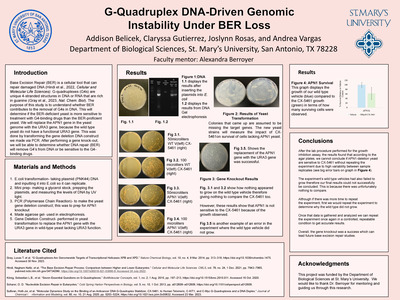
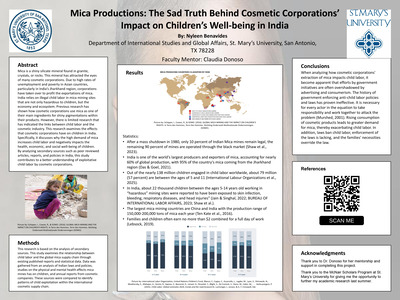
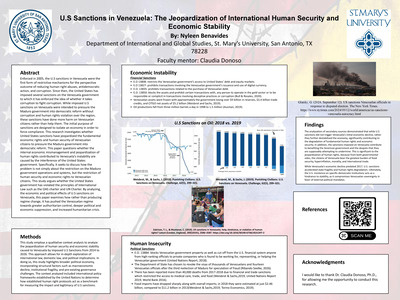
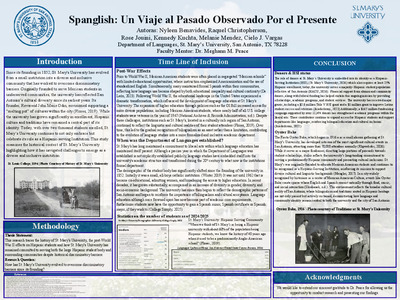


-

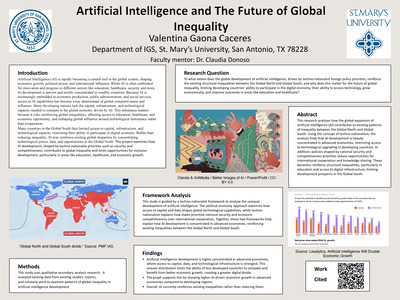
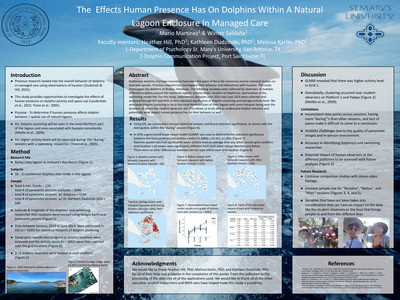
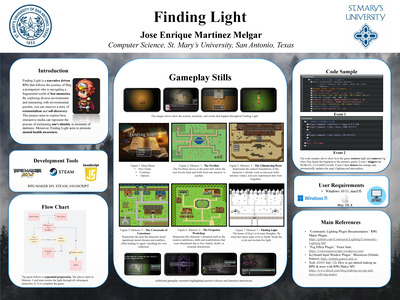
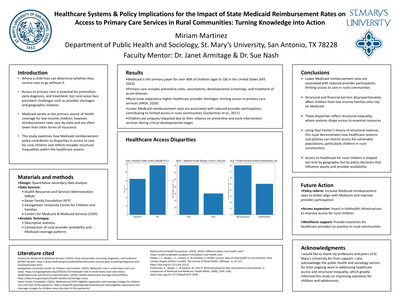
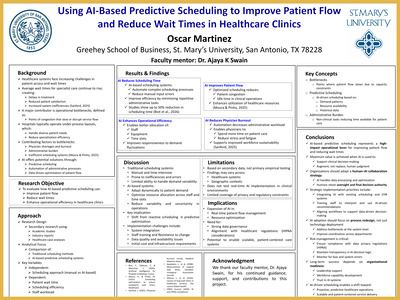
The Invisible Filipina Migrant Worker in Saudi Arabia: Analyzing the Perpetuation of Colonial Power Dynamics Through the Feminization of Migrant Care Labor
Allyson Collado
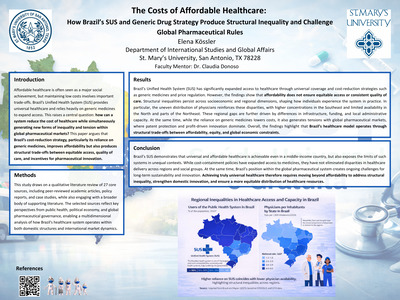
Every year, over a million Filipino women move overseas as domestic migrant workers, sending remittances that sustain almost a tenth of the Philippine economy. The Philippine government glorifies these Overseas Filipino Workers (OFWs) as heroesm, but they are still under-protected and treated as invisible, replaceable commodities in nations like Saudi Arabia.
This paper argues that the exploitation of Filipina migrant care workers is not just a side effect of neoliberal globalization, but a perpetuation of colonial power relations that is built into Philippine labor export policy and Saudi Arabia's legal architecture. -
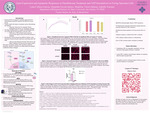
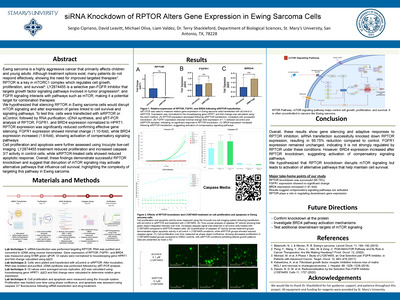
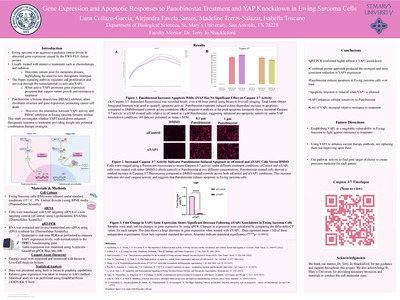
Gene Expression and Apoptotic Responses to Panobinostat Treatment and YAP Knockdown in Ewing Sarcoma Cells
Luna Collazo-Garcia, Alejandra Favela Santos, Madeline Torres-Salazar, and Isabella Toscano
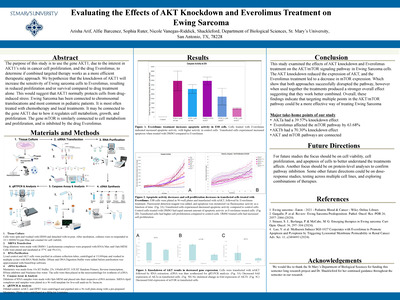
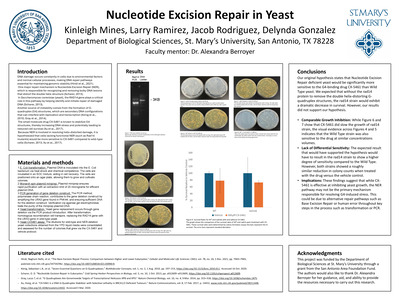
Ewing sarcoma is an aggressive pediatric cancer driven by abnormal gene expression caused by the EWS-FLI1 fusion protein
Usually treated with intensive treatments such as chemotherapy and radiation
Outcomes remain poor for metastatic disease, highlighting the need for new therapeutic strategies
The Hippo signaling pathway regulates cell proliferation and survival through the transcriptional co-activator YAP1
-
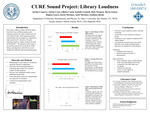
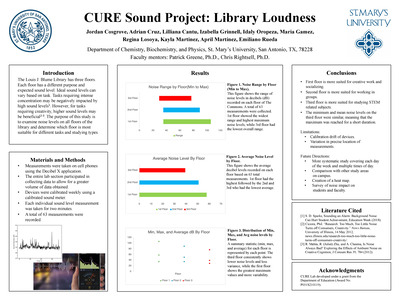
CURE Sound Project: Library Loudness
Jordan Cosgrove, Adrian Cruz, Lilliana Cantu, Izabella Grinnell, Idaly Oropeza, Maria Gamez, Regina Losoya, Kayla Martinez, April Martinez, and Emiliano Rueda
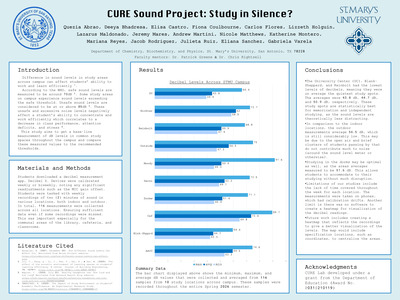
The Louis J. Blume Library has three floors. Each floor has a different purpose and expected sound level. Ideal sound levels can vary based on task. Tasks requiring intense concentration may be negatively impacted by high sound levels1. However, for tasks requiring creativity, higher sound levels may be beneficial2-3. The purpose of this study is to examine noise levels on all floors of the library and determine which floor is most suitable for different tasks and studying types.
-
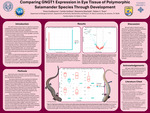
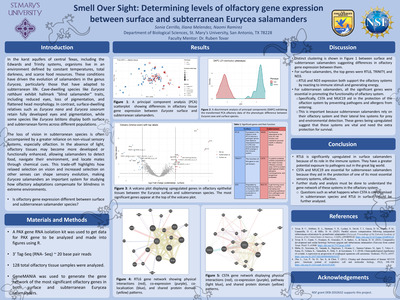
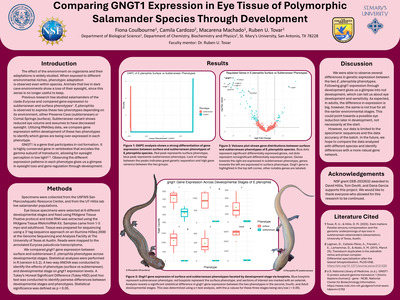
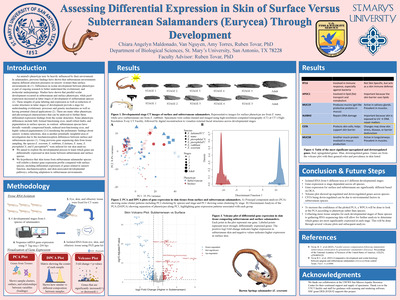
Comparing GNGT1 Expression in Eye Tissue of Polymorphic Salamander Species Through Development
Fiona Coulbourne, Camila Cardozo, Macarena Machado, and Ruben Tovar
The effect of the environment on organisms and their adaptations is widely studied. When exposed to different environmental niches, phenotypic adaptation is observed even within species. Animals that live in dark cave environments show a loss of their eyesight, since this sense is no longer useful to keep. Previous research has studied salamanders of the clade Eurycea and compared gene expression to subterranean and surface phenotypes1. E.pterophila is observed to express these two phenotypes depending on its environment, either Preserve Cave (subterranean) or Comal Springs (surface). Subterranean variant shows reduced eye volume and assumes to have decreased eyesight. Utilizing RNASeq data, we compare gene expression within development of these two phenotypes to identify which genes are being over-expressed in each phenotype. GNGT1 is a gene that participates in rod formation. It is highly conserved gene in vertebrates that encodes the gamma subunit of transducin, allowing for eyesight perception in low light2,3. Observing the different expression patterns in each phenotype gives us a glimpse in eyesight loss and gene regulation through development.
-
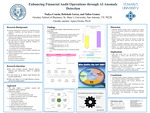
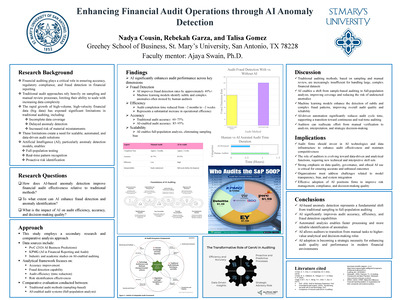
Enhancing Financial Audit Operations through AI Anomaly Detection
Nadya Cousin, Rebekah Garza, and Talisa Gomez
❖ Financial auditing plays a critical role in ensuring accuracy, regulatory compliance, and fraud detection in financial reporting
❖ Traditional audit approaches rely heavily on sampling and manual review processes, limiting their ability to scale with increasing data complexity
❖ The rapid growth of high-volume, high-velocity financial data (big data) has exposed significant limitations in traditional auditing, including:
- Incomplete data coverage
- Delayed anomaly detection
- Increased risk of material misstatements
❖ These limitations create a need for scalable, automated, and data-driven audit solutions
❖ Artificial Intelligence (AI), particularly anomaly detection models, enables:
- Full-population testing
- Real-time pattern recognition
- Proactive risk identification
-
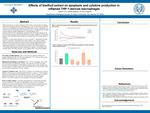
Effects of kiwifruit extract on apoptosis and cytokine production in inflamed THP-1-derived macrophages
Adrian Cruz and Isbella Brigman
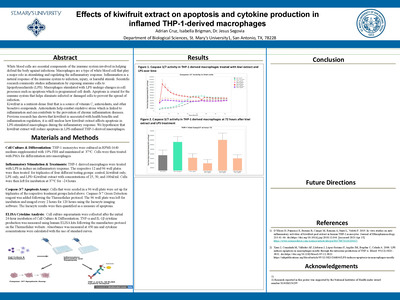
White blood cells are essential components of the immune system involved in helping defend the body against infections. Macrophages are a type of white blood cell that play a major role in stimulating and regulating the inflammatory response. Inflammation is a natural response of the immune system to infection, injury, or harmful stimuli. Scientific research commonly studies inflammation by exposing immune cells to lipopolysaccharide (LPS). Macrophages stimulated with LPS undergo changes in cell processes such as apoptosis which is programmed cell death. Apoptosis is crucial for the immune system that helps eliminate infected or damaged cells to prevent the spread of infection. Kiwifruit is a nutrient-dense fruit that is a source of vitamin C, antioxidants, and other bioactive compounds. Antioxidants help combat oxidative stress which is linked to inflammation and can contribute to the prevention of chronic inflammation diseases. Previous research has shown that kiwifruit is associated with health benefits and inflammation regulation, it is still unclear how kiwifruit extract affects apoptosis in LPS-stimulated macrophages during the inflammatory response. We hypothesize that kiwifruit extract will reduce apoptosis in LPS-inflamed THP-1-derived macrophages.
-
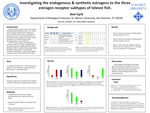
Investigating the endogenous & synthetic estrogens to the three estrogen receptor subtypes of teleost fish
Ann Cyril
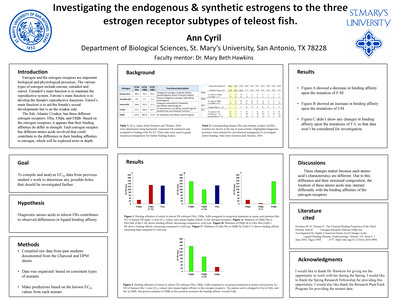
Estrogen and the estrogen receptors are important biological and physiological processes. The various types of estrogen include estrone, estradiol and estriol. Estradiol’s main function is to maintain the reproductive system. Estrone’s main function is to develop the female's reproductive functions. Estriol’s main function is to aid the female's sexual developments but is on the weaker side. The fish, Atlantic Croaker, has three different estrogen receptors: ERα, ERβa, and ERβb. Based on the estrogen receptors, it appears that their binding affinities do differ in strength. Each estrogen receptor has different amino acids involved that could contribute to the difference in their binding affinities to estrogen, which will be explored more in depth.
-
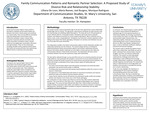
Family Communication Patterns and Romantic Partner Selection: A Proposed Study of Divorce Risk and Relationship Stability
Lilliana De Leon, Maria Reeves, Joel Burgess, and Monique Rodriguez
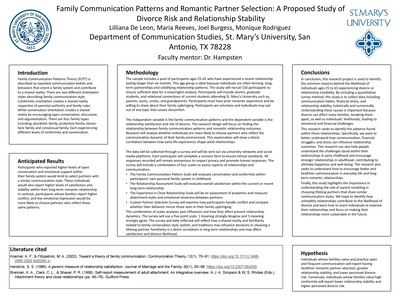
Family Communication Patterns Theory (FCPT) is described as repeated communication beliefs and behaviors that orient a family system and contribute to a shared reality. There are two different orientation styles describing family communication style. Conformity orientation creates a shared reality respective of parental authority and family rules. While conversation orientation creates a shared reality by encouraging open conversation, discussion, and argumentation. There are four family types including; pluralistic family, protective family, laissez-faire family and consensual family. Each experiencing different levels of conformity and conversation.
-
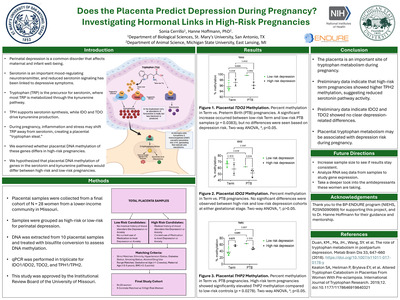
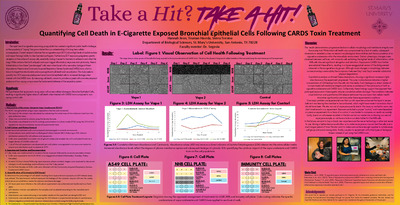
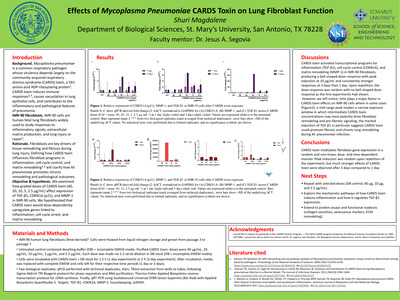
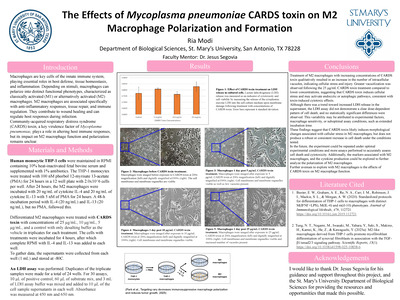
Hyperglycemia and Mycoplasma pneumoniae CARDS Toxin Impacts on Lung Epithelial and Fibroblast Injury and Recovery
Alejandra Y. Delgado, Naila Villagomez, and Shuri Magdalene
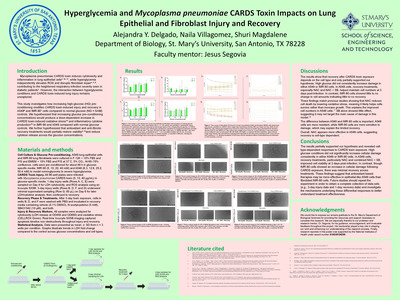
Mycoplasma pneumoniae CARDS toxin induces cytotoxicity and inflammation in lung epithelial cells²·¹⁰·¹¹, while hyperglycemia independently elevates ROS and disrupts fibroblast repair¹·⁵·⁸, contributing to the heightened respiratory infection severity seen in diabetic patients¹. However, the interaction between hyperglycemic conditions and CARDS toxin-induced lung injury remains unexplored.
This study investigates how increasing high-glucose (HG) pre-conditioning modifies CARDS toxin-induced injury and recovery in A549⁶ and IMR-90⁷ cells compared to normal glucose (NG ≈ 5mM) controls. We hypothesized that increasing glucose pre-conditioning concentrations would produce a dose-dependent increase in CARDS toxin-induced oxidative stress¹² and inflammatory cytokine production¹⁵ in IMR-90 and A549 compared with normal glucose controls. We further hypothesized that antioxidant and anti-fibrotic recovery treatments would partially restore viability⁴·¹³and reduce cytokine release across the glucose concentrations.
-

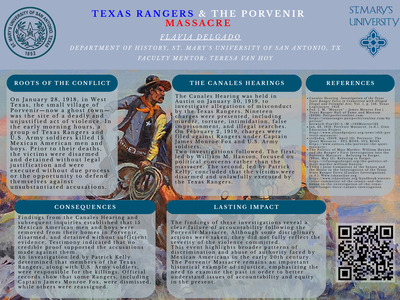
Texas Rangers & the Porvenir Massacre
Flavia Delgado
On January 28, 1918, in West Texas, the small village of Porvenir - now a ghost town - was the site of a deadly and unjustified act of violence. In the early morning hours, a group of Texas Rangers an U.S Army soliders killed 15 Mexican American men and boys. Prior to their deaths, the victims were disarmed and detained without legal justification and were executed without due process or the opportunity to defend themselves against unsubstantiated accusations.
-
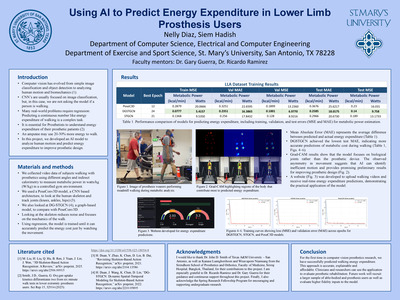
Using AI to predict Energy Expenditure in Lower Limb Prosthesis Users
Nelly Diaz and Siem Hadish
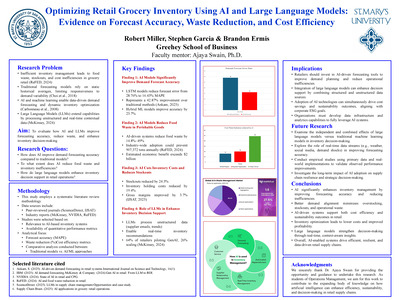
• Computer vision has evolved from simple image classification and object detection to analyzing human motion and biomechanics (1). • CNN’s are usually focused on image classification, but, in this case, we are not asking the model if a person is walking. • Many real-world problems require regression: Predicting a continuous number like energy expenditure of walking is a complex task. • It is essential for Prosthetists to understand energy expenditure of their prosthetic patients (2). • An amputee may use 20-30% more energy to walk. • In this project, we developed an AI model to analyze human motion and predict energy expenditure to improve prosthetic design.
-
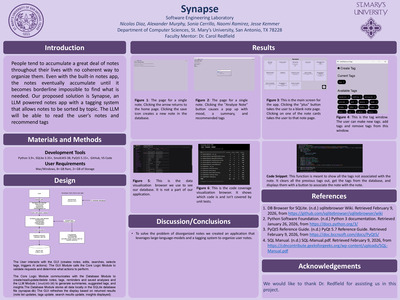
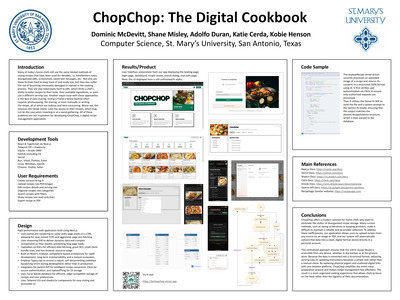
Synapse
Nicolas Diaz, Alexander Murphy, Sonia Cerrillo, Naomi Ramirez, and Jesse Kemmer
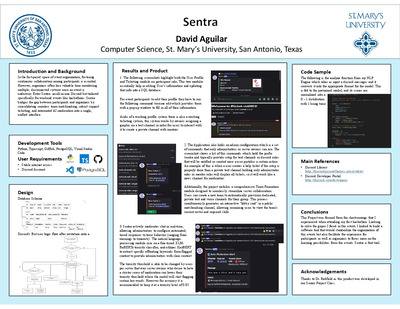
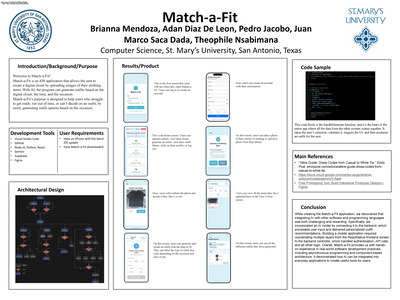
People tend to accumulate a great deal of notes throughout their lives with no coherent way to organize them. Even with the built-in notes app, the notes eventually accumulate until it becomes borderline impossible to find what is needed. Our proposed solution is Synapse, an LLM powered notes app with a tagging system that allows notes to be sorted by topic. The LLM will be able to read the user's notes and recommend tags
-
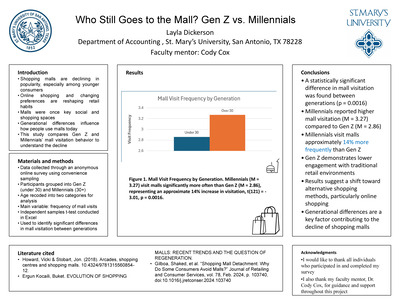
Who still goes to the mall? Genz vs. Millennials
Layla Dickerson
• Shopping malls are declining in popularity, especially among younger consumers
• Online shopping and changing preferences are reshaping retail habits
• Malls were once key social and shopping spaces
• Generational differences influence how people use malls today
• This study compares Gen Z and Millennials’ mall visitation behavior to understand the decline
-
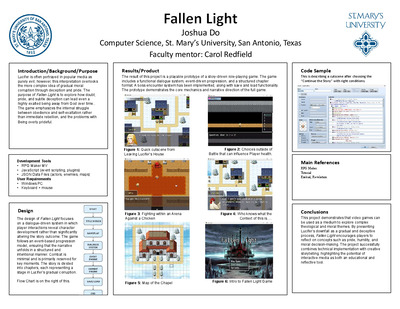
Fallen Light
Joshua Do
Lucifer is often portrayed in popular media as purely evil; however, this interpretation overlooks the more complex idea of gradual moral corruption through deception and pride. The purpose of Fallen Light is to explore how doubt, pride, and subtle deception can lead even a highly exalted being away from God over time.. The game emphasizes the internal struggle between obedience and self-exaltation rather than immediate rebellion, and the problems with Being overly prideful.
-
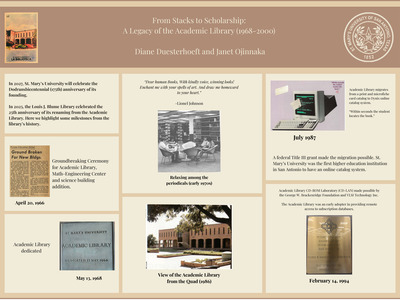
From Stacks to Scholarship: A Legacy of the Academic Library (1968-2000)
Diane Duesterhoeft and Janet Ojinnaka
In 2027, St. Mary's University will celebrate the Dodransbicentennial (175th) anniversary of its founding.
In 2025, the Louis J. Blume Library celebrated the 25th anniversary of its renaming from the Academic Library. Here, we highlight some milestones from the library's history.More information is available here: https://lib.stmarytx.edu/tour/timeline
-
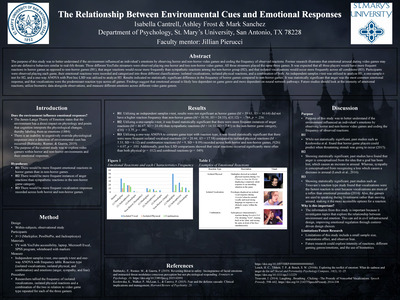
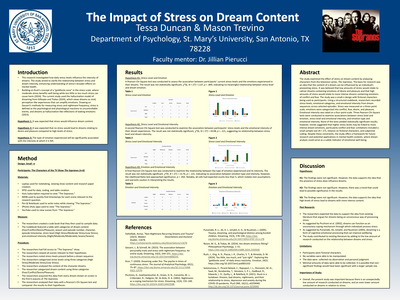
The Impact of Stress on Dream Content
Tessa Duncan and Mason Trevino
• This research investigated how daily stress levels influence the intensity of dreams. The study aimed to clarify the relationship between stress and dream intensity, enhancing understanding of stress’s broader effects on mental health. • Building on Rush’s concept of a “goldilocks zone” in the stress scale, where moderate stress benefits well-being while too little or too much stress can cause harm (2024). The current study used the hallucination model of dreaming from Gillespie and Trakas (2024), which views dreams as vivid, perception-like experiences that can amplify emotions. Drawing on Gessert’s methods for measuring stress and nightmare frequency, stress is defined as the psychological and physiological reactions to uncontrollable events, and dreams as hallucination-like reflections of waking emotions (2023).
-
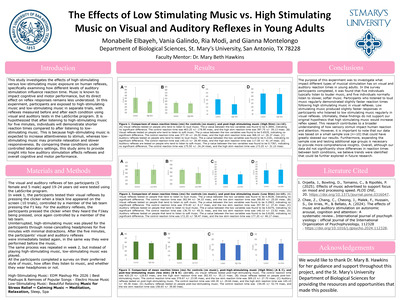
The Effects of Low Stimulating Music vs. High Stimulating Music on Visual and Auditory Reflexes in Young Adults
Monabelle Elbayeh, Vania Galindo, Ria Modi, and Gianna Montelongo
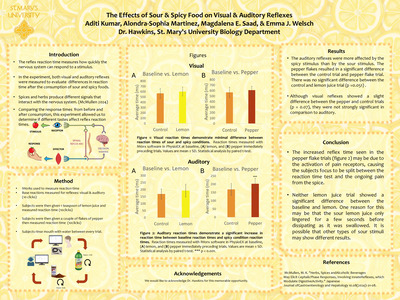
This study investigates the effects of high-stimulating versus low-stimulating music exposure on human reflexes, specifically examining how different levels of auditory stimulation influence reaction time. Music is known to impact cognitive and motor performance, but its direct effect on reflex responses remains less understood. In this experiment, participants are exposed to high-stimulating music and low-stimulating music in separate trials, with reflexes measured before and after each condition using visual and auditory tests in the LabScribe program. It is hypothesized that after listening to high-stimulating music for five minutes, individuals will demonstrate shorter reaction times compared to after listening to low-stimulating music. This is because high-stimulating music is expected to increase attentiveness to stimuli, whereas low-stimulating music may promote relaxation and slower responsiveness. By comparing these conditions under controlled laboratory settings, this study aims to provide insight into how auditory stimulation affects reflexes and overall cognitive and motor performance.
-
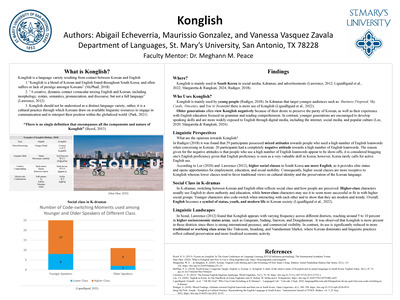
Konglish
Abigail Escheveria, Juan Maurissio Gomez Gonzalez, and Vanessa Vasquez Zavala
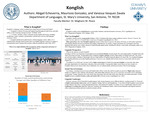
Konglish is a language variety resulting from contact between Korean and English
1.“Konglish is a blend of Korean and English found throughout South Korea, and often suffers or lack of prestige amongst Koreans” (McPhail, 2018)
2. “A creative, dynamic contact vernacular mixing English and Korean, including morphology, syntax, semantics, pronunciation, and discourse, but not a full language” (Lawrence, 2012)
3. Konglish should not be understood as a distinct language variety; rather, it is a cultural practice through which Koreans draw on available linguistic resources to engage in communication and to interpret their position within the globalized world. (Park, 2021)
-
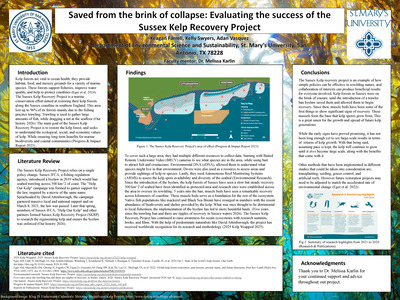
Saved from the brink of collapse: Evaluating the success of the Sussex Kelp Recovery Project
Keagan Farrell, Kelly Swyers, and Adan Vasquez
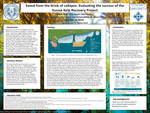
Kelp forests are vital to ocean health, they provide habitat, food, and nursery grounds for a variety of marine species. These forests support fisheries, improve water quality, and help to protect coastlines (Eger et al. 2024). The Sussex Kelp Recovery Project is a marine conservation effort aimed at restoring their kelp forests along the Sussex coastline in southern England. This area lost up to 96% of its forests mainly due to the fishing practice trawling. Trawling is used to gather large amounts of fish, while dragging a net at the seafloor (Our history 2026). The main goal of the Sussex Kelp Recovery Project is to restore the kelp forest, and seeks to understand the ecological, social, and economic values of kelp. While ensuring long term benefits for marine biodiversity and coastal communities (Progress & Impact Report 2023).
-
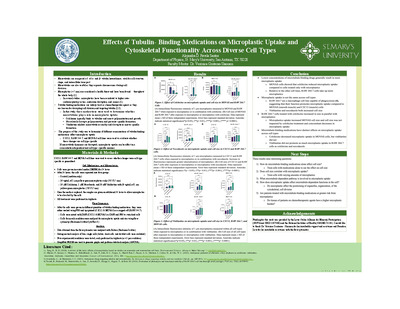
Effects of Tubulin-Binding Medications on Microplastic Uptake and Cyotoskeletal Functionality across Diverse Cell Types
Alejandra D. Favela Santos
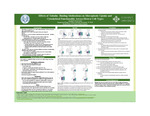
• Microtubules are composed of of a- and b- tubulin heterodimers, vital for cell structure, shape, and intracellular transport • Microtubules are also useful as they separate chromosomes during cell division • Microplastics (< 5 mm) are considered a health threat and have been found throughout the whole body (1) o In several studies, microplastics have been correlated to higher rates cardiorespiratory issues, endocrine disruption, and cancer (1) • Tubulin-binding medications are widely used as chemotherapeutic agents as they are known for disrupting cell division and targeting tubulin (2,3) o In this study, these medications were used to determine whether microtubules play a role in microplastic uptake § Colchicine typically binds to tubulins and arrests polymerization and growth § Nocodazole disrupts polymerization and prevents spindle formation § Vinblastine inhibits microtubule assembly and disruptions miotic spindle formation.
• The purpose of this study was to determine if different concentrations of tubulin-binding medications affect microplastic uptake o C2C12, RAW 264.7, and MOVAS cell lines were used to evaluate whether these changes are cell type specific
If microtubule dynamics are disrupted, microplastic uptake can be affect in a concentration-dependent and cell type- specific manner. -
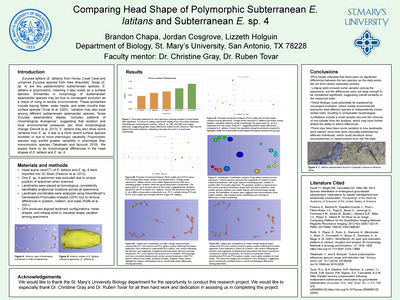
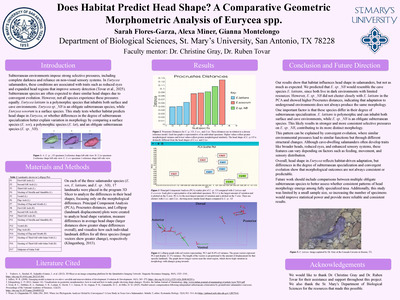
Does Habitat Predict Head Shape? A Comparative Geometric Morphometric Analysis of Eurycea spp.
Sarah Flores-Garza, Alexa Miner, and Gianna Montelongo
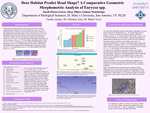
Subterranean environments impose strong selective pressures, including complete darkness and reliance on non-visual sensory systems. In Eurycea salamanders, these conditions are associated with traits such as reduced eyes and expanded head regions that improve sensory detection (Tovar et al., 2025). Subterranean species are often expected to share similar head shapes due to convergent evolution. However, not all species experience these pressures equally. Eurycea latitans is a polymorphic species that inhabits both surface and cave environments. Eurycea sp._NB is an obligate subterranean species, while Eurcyea sosorum is a surface species. This study tests whether habitat predicts head shape in Eurycea, or whether differences in the degree of subterranean specialization better explain variation in morphology by comparing a surface species (E. sos), a polymorphic species (E. lat), and an obligate subterranean species (E. sp._NB).
-
Mapping Sensory Landscapes: Distribution and Arrangement of the Anterior Lateral Line System in Texas Catfish
Tatiana K. Flores and Ruben Tovar
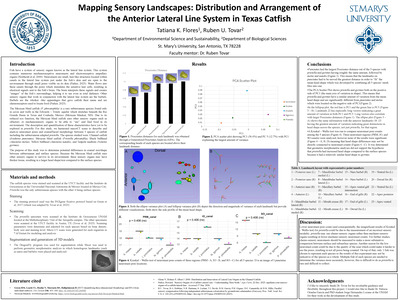
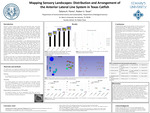
Fish have a system of sensory organs known as the lateral line system. This system contains numerous mechanoreceptive neuromasts and electroreceptive ampullary organs (Northcutt et al, 2000). Neuromasts are small, hair-like structures located within canals in the lateral line system just under the fish’s skin and are open to the environment through small pores visible on its skin (Parker, 2025). Water flows into these canals through the pores which stimulates the sensitive hair cells, resulting in electrical signals sent to the fish’s brain. The brain interprets these signals and creates “images” of the fish’s surroundings, helping it to see even in total darkness. Other sensory organs that work in conjunction with the lateral line system are the barbels. Barbels are the whisker -like appendages that gave catfish their name and are chemoreceptors used to locate food (Parker, 2025). The Mexican blind catfish (P. phreatophila) is a rare subterranean species found only in caves and wells in the Edwards – Trinity aquifer which stretches beneath the Rio Grande Basin in Texas and Coahuila, Mexico (Mexican blindcat, ND). Due to its reduced eye function, the Mexican blind catfish uses other sensory organs such as olfactory or mechanosensory organs to be able to “see” and find food in its environment. The description and quantification of these characteristics have yet to be explored in prietella. For this study, we harnessed microCT scans to describe and analyze neuromast pores and cranial/facial morphology between 5 species of catfish including the subterraneun adapted prietella. The species studied were: Channel catfish (Ictalurus punctatus), Mexican blind catfish (Prietella phreatofila), Black bullhead (Ameiurus melas), Yellow bullhead (Ameiurus natalis), and Tadpole madtom (Noturus gyrinus). The purpose of this study was to determine potential differences in cranial size/shape between subterranean and surface species. Because the Mexican blind catfish uses other sensory organs to survive in its environment, these sensory organs may have thicker tissue, resulting in a larger head shape/size compared to the surface species.
-
Bound by brotherhood: Social networks predict job satisfaction and trust among frefighters
Ashley Frost
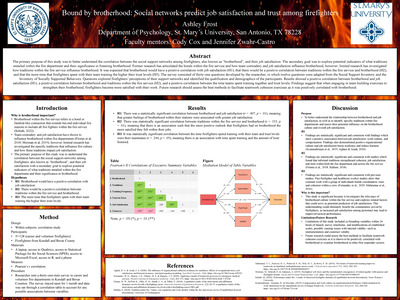
The primary purpose of this study was to better understand the correlation between the social support networks among firefighters, also known as “brotherhood”, and their job satisfaction. The secondary goal was to explore potential indicators of what traditions entailed within the fire department and their significance in fostering brotherhood. Former research has articulated the bonds within the fire service and how team comradery and job satisfaction influence brotherhood, however; limited research has investigated how traditions within the fire service influence brotherhood. It was expected that brotherhood would have a positive correlation with job satisfaction (H1), that there would be a positive correlation between traditions within the fire service and brotherhood (H2), and that the more time that firefighters spent with their team training the higher their trust levels (H3). The survey consisted of thirty-one questions developed by the researcher, in which twelve questions were adapted from the Social Support Inventory and the Inventory of Socially Supported Behaviors. Questions explored firefighters’ perceptions of their support networks and identified the qualification and demographics of the participants. Results showed a positive correlation between brotherhood and job satisfaction (H1), a positive correlation between brotherhood and traditions within the fire service (H2), and a positive correlation between the time teams spent training together and trust levels. Findings suggest that when engaging in team building exercises to strengthen their brotherhood, firefighters become more satisfied with their work. Future research should assess the best methods to facilitate teamwork cohesion exercises as it was positively correlated with brotherhood.
-
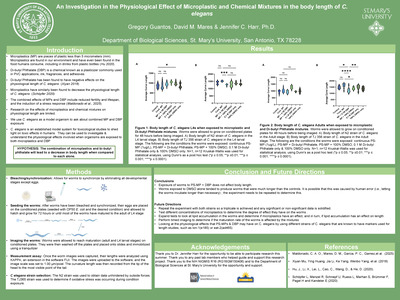
Polylactic Acid (PLA) Microplastic toxicity in C. elegans
Maria Gamez, Dana Farley, Chiara Maldonado, and David Mares
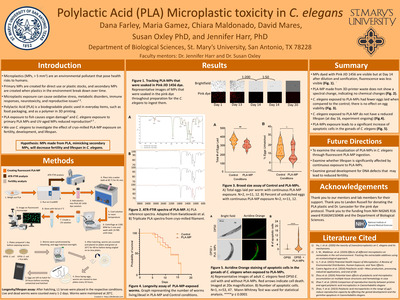
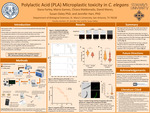
• Microplastics (MPs, > 5 mm1) are an environmental pollutant that pose health risks to humans. • Primary MPs are created for direct use or plastic stocks, and secondary MPs are created when plastics in the environment break down over time. • Microplastic exposure can cause oxidative stress, metabolic disorders, immune responses, neurotoxicity, and reproductive issues2-3. • Polylactic Acid (PLA) is a biodegradable plastic used in everyday items, such as food packaging, and as a polymer in 3D printing. • PLA exposure to fish causes organ damage5 and C. elegans exposure to primary PLA MPs and UV-aged MPs reduced reproduction6-7 . • We use C. elegans to investigate the effect of cryo-milled PLA-MP exposure on fertility, development, and lifespan.
-
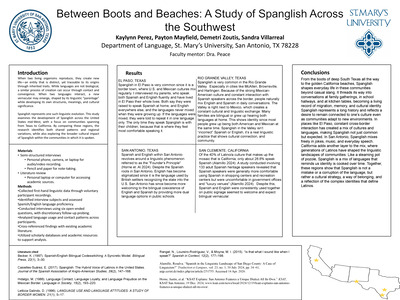
The Integration of Spanglish Throughout Texas
Alexa Garcia, Renata Taboada, Dariela Galindo, and Julianne Pena
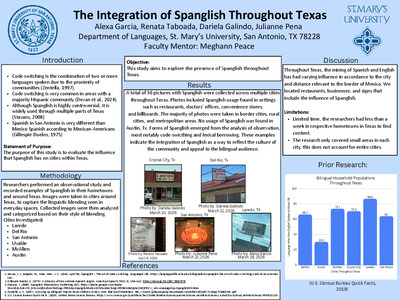
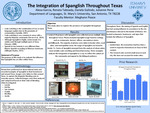
Code switching is the combination of two or more languages spoken due to the proximity of communities (Zentella, 1997). Code switching is very common in areas with a majority Hispanic community (Devan et al., 2024). Although Spanglish is highly controversial, it is widely used through multiple parts of Texas (Stavans, 2008) Spanish in San Antonio is very different than Mexico Spanish according to Mexican-Americans (Gillespie-Duelos, 1975)