


Files
Download Full Text (1.3 MB)
Contributor
Tovar, Ruben (Faculty Mentor)
Digital Publisher
Digital Commons at St. Mary's University
Publication Date
Spring 2026
Keywords
Sensory Organs, Texas Catfish, Neuromasts
Description
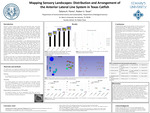
Fish have a system of sensory organs known as the lateral line system. This system contains numerous mechanoreceptive neuromasts and electroreceptive ampullary organs (Northcutt et al, 2000). Neuromasts are small, hair-like structures located within canals in the lateral line system just under the fish’s skin and are open to the environment through small pores visible on its skin (Parker, 2025). Water flows into these canals through the pores which stimulates the sensitive hair cells, resulting in electrical signals sent to the fish’s brain. The brain interprets these signals and creates “images” of the fish’s surroundings, helping it to see even in total darkness. Other sensory organs that work in conjunction with the lateral line system are the barbels. Barbels are the whisker -like appendages that gave catfish their name and are chemoreceptors used to locate food (Parker, 2025). The Mexican blind catfish (P. phreatophila) is a rare subterranean species found only in caves and wells in the Edwards – Trinity aquifer which stretches beneath the Rio Grande Basin in Texas and Coahuila, Mexico (Mexican blindcat, ND). Due to its reduced eye function, the Mexican blind catfish uses other sensory organs such as olfactory or mechanosensory organs to be able to “see” and find food in its environment. The description and quantification of these characteristics have yet to be explored in prietella. For this study, we harnessed microCT scans to describe and analyze neuromast pores and cranial/facial morphology between 5 species of catfish including the subterraneun adapted prietella. The species studied were: Channel catfish (Ictalurus punctatus), Mexican blind catfish (Prietella phreatofila), Black bullhead (Ameiurus melas), Yellow bullhead (Ameiurus natalis), and Tadpole madtom (Noturus gyrinus). The purpose of this study was to determine potential differences in cranial size/shape between subterranean and surface species. Because the Mexican blind catfish uses other sensory organs to survive in its environment, these sensory organs may have thicker tissue, resulting in a larger head shape/size compared to the surface species.
Format
Size
1 poster
City
San Antonio, Texas
Creative Commons License

This work is licensed under a Creative Commons Attribution-NonCommercial-No Derivative Works 4.0 International License.