


The 2026 Research Showcase Poster Collection showcases the innovative scholarship of St. Mary's University students and Faculty mentors. Inspired by the theme, From Ideas to Impact: Scholarship for a Changing World, the collection reflects the breadth of research across disciplines, exploring topics ranging from scientific discovery and emerging technologies to health, environmental sustainability, history, public policy, business, and the social sciences. Together, these works illustrate how academic research can deepen understanding, inspire innovation, and address the complex challenges facing our world today

-
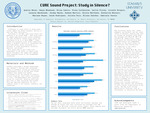
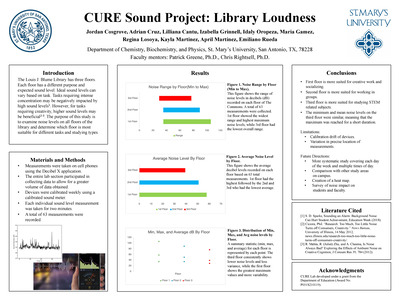
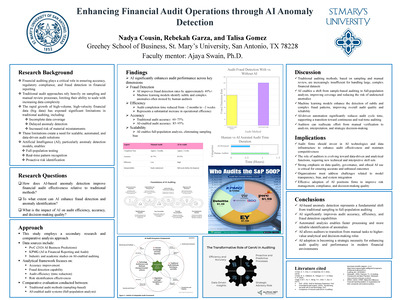
CURE Sound Project: Study in Silence?
Quezia Abrao, Deeya Bhadresa, Elisa Castro, Fiona Coulbourne, Carlos Flores, Lizzeth Holguin, Lazarus Maldonado, Jeremy Mares, Andrew Martini, Nicole Matthews, Katherine Montero, Mariana Reyes, Jacob Rodriguez, Julieta Ruiz, Eliana Sanchez, and Gabriela Varela
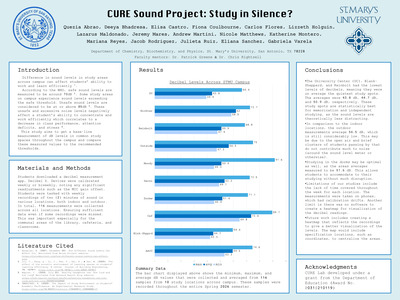
Difference in sound levels in study areas across campus can affect students’ ability to work and learn efficiently 1.
According to the WHO, safe sound levels are measured to be around 70dB 2. Some study areas on campus experience sound levels exceeding the safe threshold. Unsafe sound levels are considered to be at or above 85dB 3. These unsafe and excessive noise levels negatively affect a student’s ability to concentrate and work efficiently which correlates to a decrease in class performance, attention deficits, and stress 4.
This study aims to get a base-line measurement of dB levels in common study spaces throughout the campus and compare these measured values to the recommended thresholds.
-
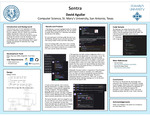
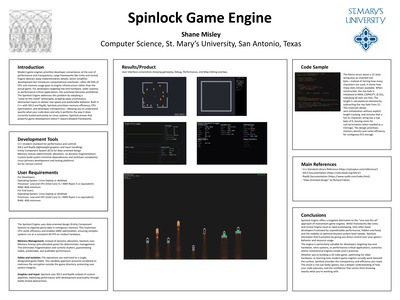
Sentra
David Aguilar
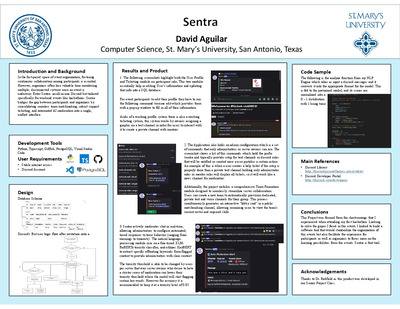
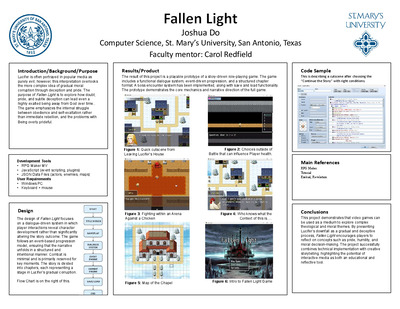
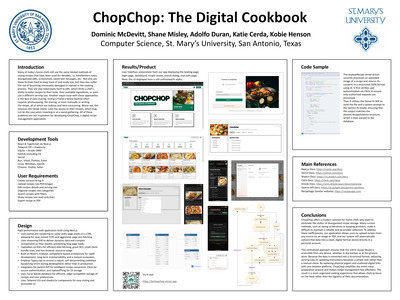
In the fast-paced space of event organization, fostering continuous collaboration among participants is essential. However, organizers often lose valuable time monitoring multiple, disconnected systems once an event is underway. Enter Sentra: an all-in-one Discord bot tailored specifically for weekend events like hackathons. Sentra bridges the gap between participants and organizers by consolidating seamless team matchmaking, robust support ticketing, and automated AI moderation into a single, unified interface.
-
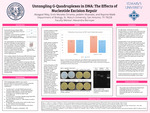
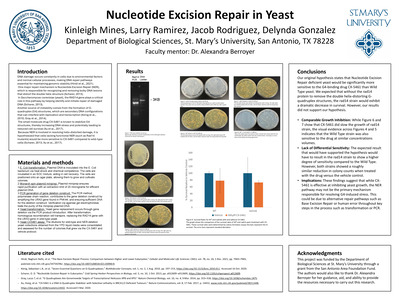
Untangling G-Quadruplexes in DNA: The Effects of Nucleotide Excision Repair
Jaidelin Alvardo, Abiageal Riley, Erick Morales Orrante, and Raynne Malik
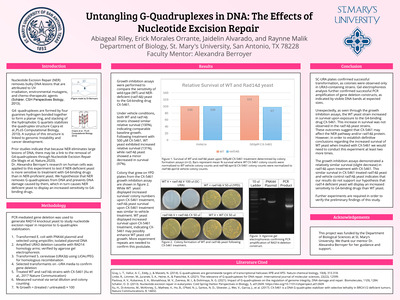
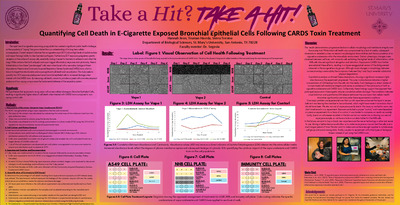
Nucleotide Excision Repair (NER) remo ves bulky DNA lesions that are attributed to UV irradiation, environmental mutagens, and chemo-therapeutic agents (Schärer, CSH Perspectives Biology, 2013). G4- quadruplexes are formed by four guanines hydrogen bonded together to form a planar ring, and stacking of the hydrophobic G quartets stabilizes the quadruplex structure Capra et al.,PLoS Computational Biology, 2010). A surplus of this structure is linked to genomic Instability and cancer development.
Prior studies indicate that because NER eliminates large lesions of DNA, there may be a link to the removal of G4-quadruplexes through Nucleotide Excision Repair (De Magis et al, Nature,2020). Dr. Alexandra Berroyer's research on human cells was applied to this experiment to test if NER-deficient yeast is more sensitive to treatment with G4-binding drugs than in NER-proficient yeast. We hypothesize that NER removes G-quadruplexes from DNA and prevents DNA damage caused by them, which in turn causes NER deficient yeast to display an increased sensitivity to G4-binding drugs.
-

Chasing the Enslaved, Not Justice: Rangers of Oppression
MacKenzie Arendall
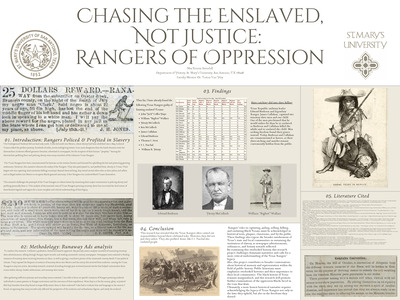
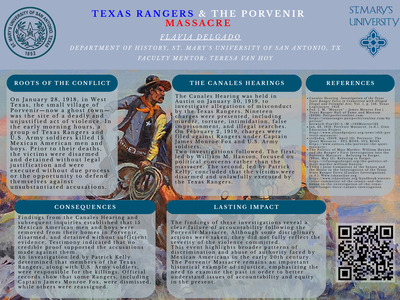
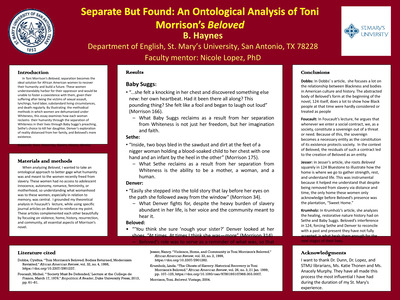
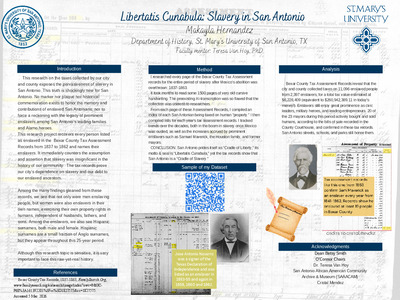
01. Introduction: Rangers Policed & Profited in Slavery The Underground Railroad did not lead only north. It also led south into Mexico, where slavery had been abolished since 1829. Enslaved Texans risked the perilous journey, hundreds of miles, across unforgiving terrain. Even more dangerous than the harsh elements were the slavecatchers. Enslavers offered generous bounties, advertised in newspapers, for the recapture of their human “property.” Among the slavecatchers profiting from and policing slavery were many members of the infamous Texas Rangers. The Texas Rangers have been commemorated for heroism on the western frontier and honored for upholding the law and protecting growing settlements. However, this narrative obscures the reality of the Rangers. They also participated in, and profited from, slavery in Texas. Their largest role was capturing (and sometimes killing) runaways. Beyond slavecatching, they served several other roles: as slave jailors and sellers, and as illegal raiders into Mexico to recapture Blacks granted sanctuary. A few Rangers even enslaved Black Texans themselves. This research challenges the portrayal of the Texas Rangers as valiant heroes by examining their major commitment to policing slavery and profiting personally from it. This analysis of documented cases of Texas Rangers pursuing runaway slaves has uncovered the dual nature of these frontier legends and argues for a more complete and critical understanding of their legacy.
-
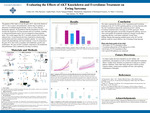
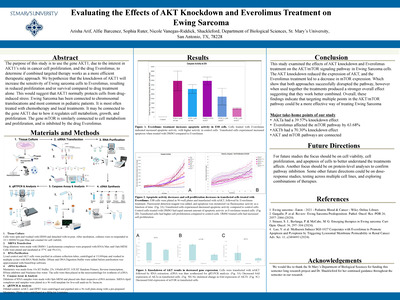
Evaluating the Effects of AKT Knockdown and Everolimus Treatment on Ewing Sarcoma
Arisha Arif, Alfie Barcenez, and Nicole Vanegas-Riddick
The purpose of this study is to use the gene AKT1, due to the interest in AKT1’s role in cancer cell proliferation, and the drug Everolimus, to determine if combined targeted therapy works as a more efficient therapeutic approach. We hypothesize that the knockdown of AKT1 will increase the sensitivity of Ewing sarcoma cells to Everolimus, resulting in reduced proliferation and/or survival compared to drug treatment alone. This would suggest that AKT1 normally protects cells from drug-induced stress. Ewing Sarcoma has been connected to chromosomal translocations and most common in pediatric patients. It is most often treated with chemotherapy and local treatments. It may be connected to the gene AKT1 due to how it regulates cell metabolism, growth, and proliferation. The gene mTOR is similarly connected to cell metabolism and proliferation, and is inhibited by the drug Everolimus.
-
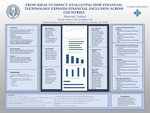
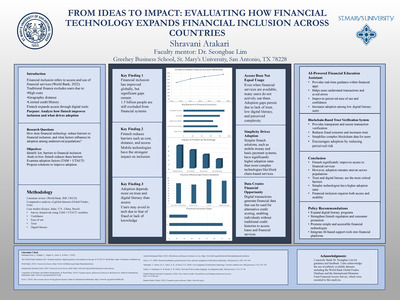
From Ideas to Impact: Evaluating How Financial Technology Expands Financial Inclusion Across Countries
Shravani Atakari
Financial inclusion refers to access and use of financial services (World Bank, 2022). Traditional finance excludes users due to:
• High costs • Geographic distance • Limited credit History . Fintech expands access through digital tools Purpose: Analyze how fintech improves inclusion and what drives adoption
Research Questions How does financial technology reduce barriers to financial inclusion, and what factors influence its adoption among underserved populations? Objectives Identify key barriers to financial inclusion Analyze how fintech reduces these barriers Examine adoption factors (TAM + UTAUT) Propose solutions to improve adoption
-
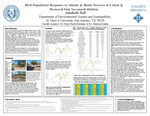
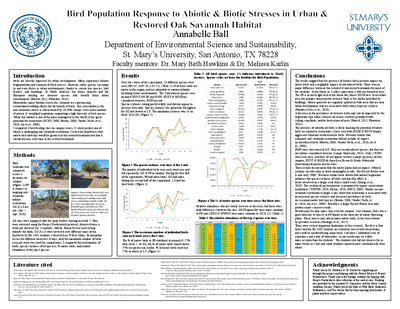
Bird population response to abiotic and biotic stresses in urban & restored oak savannah habitat
Annabelle Ball
Birds are heavily impacted by urban development. Many experience habitat fragmentation and removal of food sources. However, other species can adapt to and even thrive in urban environments, thanks to certain tree species, bird feeders, and buildings. In North America, the house sparrow and the European starling are invasive species that benefit from urban environments (Bartelt, 2011; Fitzwater, 2014). Meanwhile, many habitats across the continent are experiencing restoration/rewilding efforts for the benefit of birds. One such habitat is the oak-savannah, which is characterized by 10-30% canopy cover and a mixture of prairie & woodland vegetation, supporting a high diversity of bird species. While this habitat is one of the most endangered in the world, it has great potential for restoration (NCRS, 2008; Brawn, 2006; Vander Yacht, et al., 2016; Au et al., 2008). I compared 3 bird-feeding sites on campus over a 12-week period, one of which is undergoing oak-savannah restoration. I tested the hypotheses that native bird diversity would be greatest in the restored treatment and that it would increase over time in the restored treatment.
-
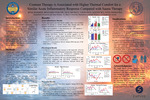
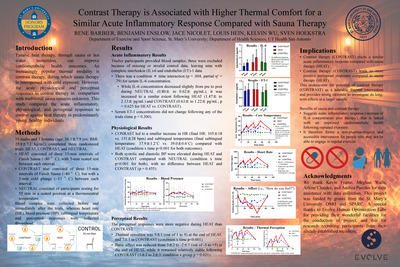
Contrast Therapy is Associated with Higher Thermal Comfort for a Similar Acute Inflammatory Response Compared with Sauna Therapy
Rene Barbier, Benjamin Enslow, Jace Nicolet, Louis Hein, Kelvin Wu, and Sven Hoekstra
Passive heat therapy, through sauna or hot water immersion, can improve cardiometabolic health outcomes. An increasingly popular thermal modality is contrast therapy, during which sauna therapy is interspersed with cold exposure. However, the acute physiological and perceptual responses to contras therapy in comparison with traditional sauna remains unknown. This study compared the acute inflammatory, physiological, and perceptual responses to contras against heat therapy in predominantly young, healthy individuals
-
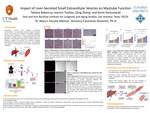
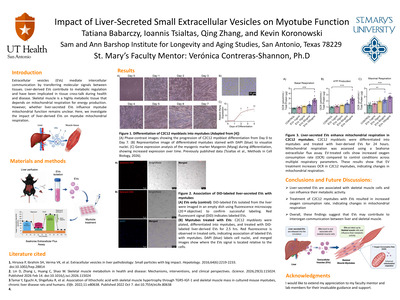
Impact of Liver-Secreted Small Extracellular Vesicles on Myotube Funcation
Tatiana Barrantes, Ioannis Tsialtas, Qing Zhang, and Kevin Koronowski
Extracellular vesicles (EVs) mediate intercellular communication by transferring molecular signals between tissues. Liver-derived EVs contribute to metabolic regulation and have been implicated in tissue cross-talk during health and disease. Skeletal muscle is a highly metabolic tissue that depends on mitochondrial respiration for energy production. However, whether liver-secreted EVs influence myotube mitochondrial function remains unclear. Here, we investigate the impact of liver-derived EVs on myotube mitochondrial respiration.
-
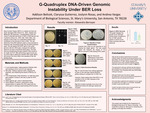
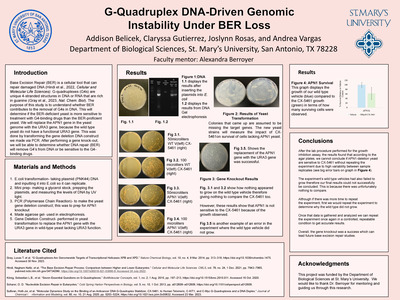
G-Quadruplex DNA-Driven genomic instability under BER loss
Addison Belick, Claryssa Gutierrez, Joslynn Rosas, and Andrea Vargas
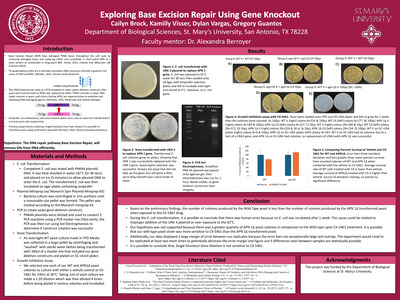
Base Excision Repair (BER) is a cellular tool that can repair damaged DNA (Hindi et al., 2022, Cellular and Molecular Life Sciences). G-quadruplexes (G4s) are unique 4-stranded structures in DNA or RNA that are rich in guanine (Gray et al., 2023, Nat. Chem. Biol). The purpose of this study is to understand whether BER contributes to the removal of G4s in DNA. This will determine if the BER-deficient yeast is more sensitive to treatment with G4-binding drugs than the BER-proficient yeast. We will replace the APN1 gene in the yeast genome with the URA3 gene, because the wild type yeast do not have a functional URA3 gene. This was done by transforming the gene deletion DNA construct we made via PCR. After performing a gene knock-out, we will be able to determine whether DNA repair (BER) will remove G4’s from DNA or be sensitive to the G4-binding drugs.
-
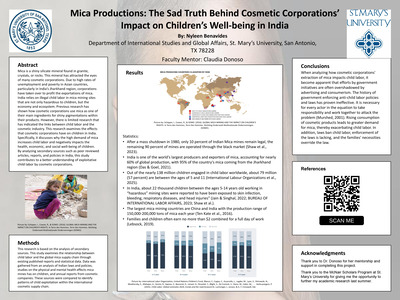
Mica Productions: The Sad Truth Behind Cosmetic Corporations' Impact on Children's Well-being in India
Nyleen Benavides
Mica is a shiny silicate mineral found in granite, crystals, or rocks. This mineral has attracted the eyes of many cosmetic corporations. Due to high rates of unemployment and poverty in Asian countries, particularly in India’s Jharkhand region, corporations have taken over to profit the exportations of mica. India relies on illegal child labor in mica mining sites that are not only hazardous to children, but the economy and ecosystem. Previous research has shown how cosmetic corporations use mica as one of their main ingredients for shiny pigmentations within their products. However, there is limited research that has indicated the links between child labor and the cosmetic industry. This research examines the effects that cosmetic corporations have on children in India. Specifically, it discusses why the high demand of mica increases child labor and negatively impacts the health, economic, and social well-being of children. By analyzing secondary sources such as peer reviewed articles, reports, and policies in India, this study contributes to a better understanding of exploitative child labor by cosmetic corporations.
-
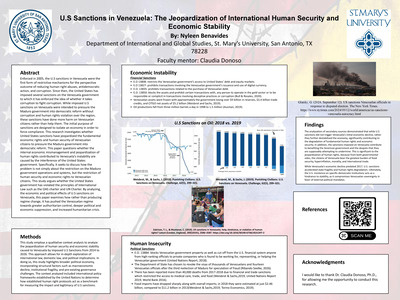
U.S Sanctions in Venezuela: The Jeopardization of International Human Security and Economic Stability
Nyleen Benavides
Enforced in 2005, the U.S sanctions in Venezuela were the first form of restrictive mechanisms for the perspective outcome of reducing human right abuses, antidemocratic action, and corruption. Since then, the United States has imposed several sanctions on the Venezuela government to which it has enforced the idea of whether it takes corruption to fight corruption. While imposed U.S sanctions on Venezuela were intended to pressure the Maduro government into democratic reform without corruption and human rights violation over the region, these sanctions have done more harm on Venezuelan citizens rather than help them. The initial purpose of sanctions are designed to isolate an economy in order to force compliance. This research investigates whether United States sanctions have jeopardized the fundamental economic rights and human security of Venezuelan citizens to pressure the Maduro government into democratic reform. This paper questions whether the internal economic mismanagement and jeopardization of human rights contributed to Venezuela’s instability are caused by the interference of the United States government. Specifically, it seeks to discuss how the problem is not simply about the restriction on the Maduro government operations and systems, but the restriction of human security and economic rights to Venezuelan citizens. This study argues whether the United States government has violated the principles of International Law such as the OAS charter and UN Charter. By analyzing, the economic and political effects of U.S sanctions on Venezuela, this paper examines how rather than producing regime change, it has pushed the Venezuelan regime towards greater authoritarian control, deeper political and economic suppression, and increased humanitarian crisis.
-
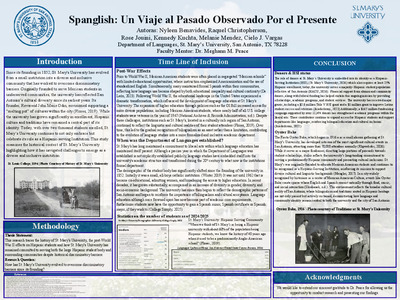
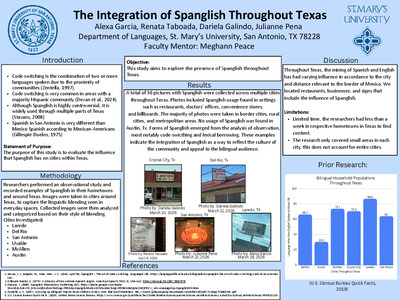
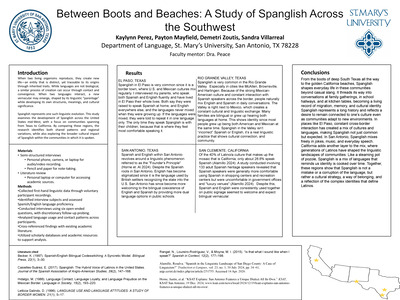
Spanglish: Un Viaje al Pasado Observado Por el Presente
Nyleen Benavides, Raquel Christopherson, Rose Jouini, and Kennedy Kuchta
Since its founding in 1852, St. Mary’s University has evolved from a small institution into a diverse and inclusive community that has worked to overcome discriminatory barriers. Originally founded to serve Mexican students in underserved communities, the university has reflected San Antonio’s Cultural diversity since its earliest years. Its founder, Reverend John Marie Odin, envisioned supporting a “melting pot” of cultures within the city (Flores, 2019). While the university has grown significantly in enrollment, Hispanic culture and traditions have remained a central part of its identity. Today, with over two thousand students enrolled, St. Mary’s University continues to not only embrace but celebrate its role as a Hispanic-serving Institution. This study examines the historical context of St. Mary’s University highlighting how it has navigated challenges to emerge as a diverse and inclusive institution.
-
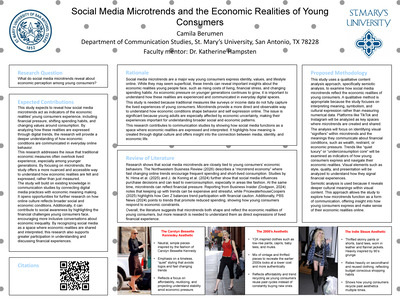
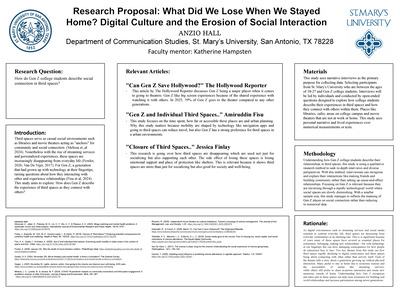
Social Media Microtrends and the Economic Realities of Young Consumers
Camila Berumen
This study expects to reveal how social media microtrends act as indicators of the economic realities' young consumers experience, including financial pressure, shifting spending habits, and changing values around consumption. By analyzing how these realities are expressed through digital trends, the research will provide a deeper understanding of how economic conditions are communicated in everyday online behavior. This research addresses the issue that traditional economic measures often overlook lived experience, especially among younger generations. By focusing on microtrends, the study offers a more nuanced and accessible way to understand how economic realities are felt and expressed, rather than just measured. The study will build on existing knowledge in communication studies by connecting digital media practices with economic meaning making. It opens opportunities for further research on how online culture reflects broader social and economic conditions. Additionally, it can contribute to social awareness by highlighting the financial challenges young consumers face, encouraging more inclusive conversations about economic inequality. By recognizing social media as a space where economic realities are shared and interpreted, this research also supports greater participation in understanding and discussing financial experiences.
-
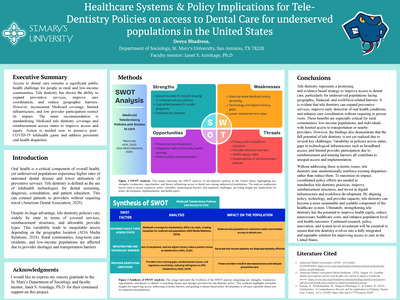
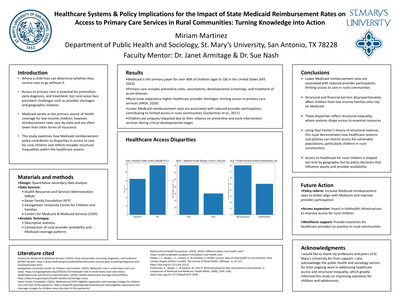
Healthcare Systems & Policy Implications for Tele-Dentistry Policies on access to Dental Care for underserved populations in the United States
Deeya Bhadresa
Access to dental care remains a significant public health challenge for people in rural and low-income communities. Tele dentistry has shown the ability to expand preventive services, improve care coordination, and reduce geographic barriers. However, inconsistent Medicaid coverage, limited infrastructure, and low provider participation restrict its impact. The main recommendation is standardizing Medicaid tele dentistry coverage and reimbursement across states to improve access and equity. Action is needed now to preserve post–COVID-19 telehealth gains and address persistent oral health disparities.
-
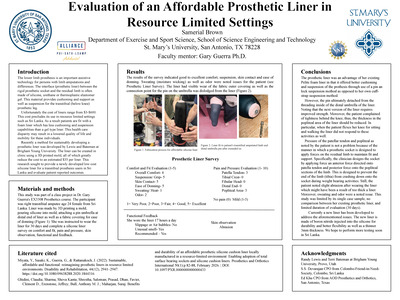
Evaluation of an affordable prosthetic liner in resource limited settings
Samerial Brown
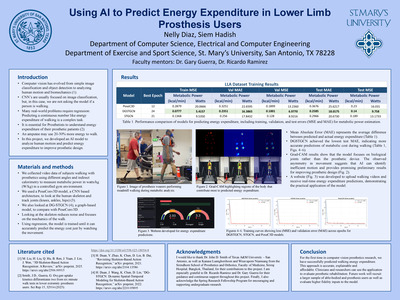
The lower limb prosthesis is an important assistive technology for persons with limb amputations and differences. The interface (prosthetic liner) between the rigid prosthetic socket and the residual limb is often made of silicone, urethane or thermoplastic elastomer gel. This material provides cushioning and support as well as suspension for the transtibial (below knee) prosthetic leg. Unfortunately the cost of liners range from $3-$600. This cost precludes its use in resource limited settings such as Sri Lanka. As a result patients are fit with a foam liner which has less cushioning and suspension capabilities than a gel type liner. This health care disparity may result in a lowered quality of life and mobility for these individuals. Recently a method for sustainably developing a prosthetic liner was developed by Lewis and Bateman at Brigham Young University. The liner can be created in clinic using a 3D printed mold, all of which greatly reduce the cost to an estimated $35 per liner. This research sought to provide a newly developed low cost silicone liner for a transtibial prosthesis users in Sri Lanka and evaluate patient reported outcomes.
-
America First: U.S Justification for Intervention in Latin America
Lenardo Buentello
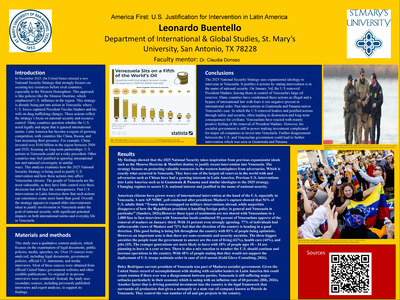
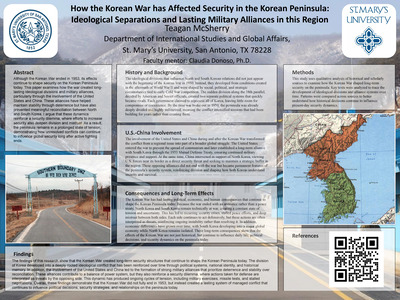
In November 2025, the United States released a new National Security Strategy that strongly focuses on securing key resources before rival countries, especially in the Western Hemisphere. This approach is like policies like the Monroe Doctrine, which emphasized U.S. influence in the region. This strategy is already being put into action in Venezuela, where U.S. forces captured President Nicolás Maduro and his wife on drug trafficking charges. These actions reflect the strategy’s focus on national security and resource control. Many countries question whether the U.S. acted legally and argue that it ignored international norms. Latin America has become a region of growing competition, with countries like China, Russia, and Iran increasing their presence. For example, China invested over $160 billion in the region between 2000 and 2020, focusing on long-term partnerships. U.S. actions in Venezuela could set a risky precedent. Other countries may feel justified in ignoring international law and national sovereignty in similar ways. This analysis examines how the 2025 National Security Strategy is being used to justify U.S. intervention and how these actions may affect Venezuelan citizens. The people of Venezuela are the most vulnerable, as they have little control over these decisions but will face the consequences. Past U.S. interventions in Latin America show that such actions can sometimes create more harm than good. Overall, the strategy appears to expand older interventionist ideas to justify involvement in Venezuela under the goal of national security, with significant potential impacts on both international norms and everyday life in Venezuela.
-
Artificial Intelligence and the Future of Global Inequality
Valentina Caceres
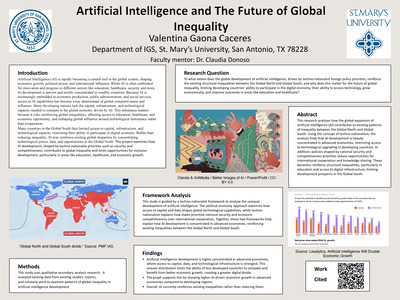
Artificial Intelligence (AI) is rapidly becoming a central tool in the global system, shaping economic growth, political power, and international influence. While AI is often celebrated for innovation and progress in different sectors like education, healthcare, security and more, its development is uneven and mostly concentrated in wealthy countries. Because AI is increasingly embedded in economic production, public administration, and social services, access to AI capabilities has become a key determinant of global competitiveness and influence. Many developing nations lack the capital, infrastructure, and technological capacity needed to compete in the global economy driven by AI. This imbalance matters because it risks reinforcing global inequalities, affecting access to education, healthcare, and economic opportunity, and reshaping global influence around technological dominance rather than cooperation. Many countries in the Global South face limited access to capital, infrastructure, and technological capacity, restricting their ability to participate in digital economy. Rather than reducing inequality, AI may reinforce existing global disparities by concentrating technological power, data, and opportunities in the Global North. This project examines how AI development, shaped by techno-nationalist priorities such as security and competitiveness, contributes to global inequality and limits opportunities for inclusive development, particularly in areas like education, healthcare, and economic growth.
-
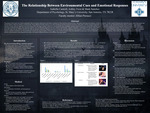
The relationship between environmental cues and emotional responses
Isbella Cantrell, Ashley Frost, and Mark Sanchez
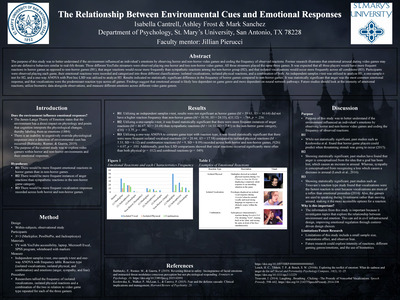
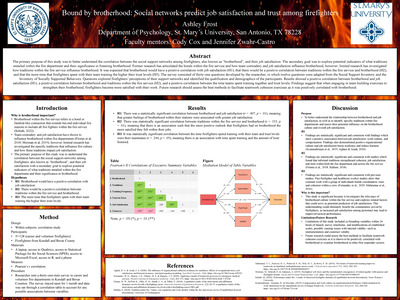
The purpose of this study was to better understand if the environment influenced an individual’s emotions by observing horror and non-horror video games and coding the frequency of observed reactions. Former research illustrates that emotional arousal during video games may activate defensive behaviors similar to real-life threats. Three different YouTube streamers were observed playing one horror and two non-horror video games. All three streamers played the same three games. It was expected that all three players would have more frequent reactions to horror games as opposed to non-horror games (H1), that anger reactions would occur more frequently than sympathetic reactions among the non-horror group (H2), and that isolated vocalizations would occur more frequently across all conditions (H3). Participants were observed playing each game, their emotional reactions were recorded and categorized into three different classifications: isolated vocalizations, isolated physical reactions, and a combination of both. An independent samples t-test was utilized to analyze H1, a one-sample t-test for H2, and a one-way ANOVA with Post hoc LSD was utilized to analyze H3. Results indicated no statistically significant difference in the frequency of horror games compared to non-horror games. It was statistically significant that anger was the most common emotional response, and that vocalizations were the predominant reaction type across all games. Findings suggest that emotional arousal is likely less dependent on game genre and more dependent on neural network pathways. Future studies should look at the intensity of emotional reactions, utilize biometric data alongside observations, and measure different emotions across different video game genres.
-
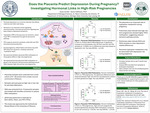
Does the placenta predict depression during pregnancy? Investigating hormonal links in high-risk pregnancies
Sonia Cerrillo and Hanne Hoffmann PhD
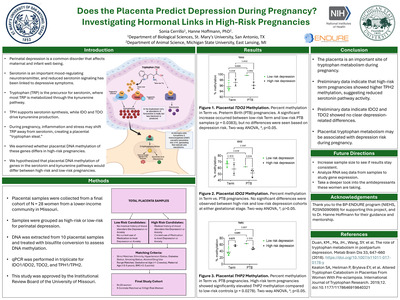
• Perinatal depression is a common disorder that affects maternal and infant well-being.
• Serotonin is an important mood-regulating neurotransmitter, and reduced serotonin signaling has been linked to depressive symptoms.
• Tryptophan (TRP) is the precursor for serotonin, where most TRP is metabolized through the kynurenine pathway.
• TPH supports serotonin synthesis, while IDO and TDO drive kynurenine production.
• During pregnancy, inflammation and stress may shift TRP away from serotonin, creating a placental “tryptophan steal.”
• We examined whether placental DNA methylation of these genes differs in high-risk pregnancies.
• We hypothesized that placental DNA methylation of genes in the serotonin and kynurenine pathways would differ between high-risk and low-risk pregnancies.
-
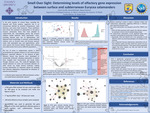
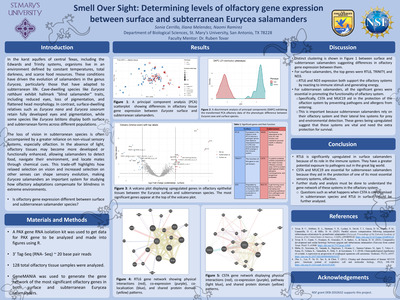
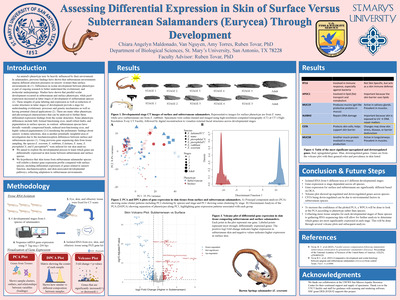
Smell Over Sight: Determining levels of olfactory gene expression between surface and subterranean Eurycea salamanders
Sonia Cerrillo, Iliana Melendez, and Naomi Ramirez
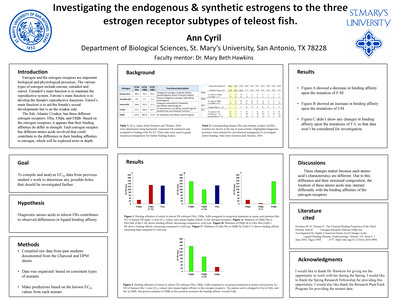
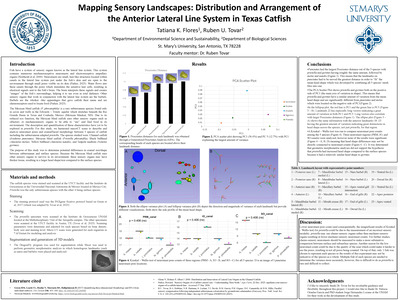
In the karst aquifers of central Texas, including the Edwards and Trinity systems, organisms live in an environment defined by constant temperatures, total darkness, and scarce food resources. These conditions have driven the evolution of salamanders in the genus Eurycea, particularly those that have adapted to subterranean life. Cave-dwelling species like Eurycea rathbuni exhibit hallmark “blind salamander” traits, including educed eyes, loss of pigmentation, and flattened head morphology. In contrast, surface-dwelling relatives such as Eurycea nana and Eurycea sosorum retain fully developed eyes and pigmentation, while some species like Eurycea latitans display both surface and subterranean forms across different populations.
-
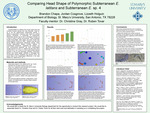
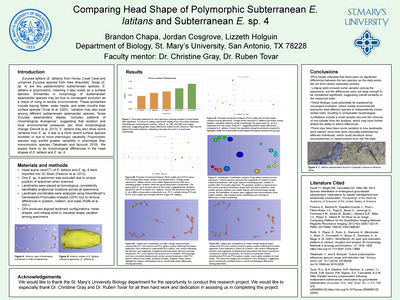
Comparing Head Shape of Polymorphic Subterranean E. latitans and Subterranean E. sp. 4
Brandon Chapa, Jordan Cosgrove, and Lizzeth Holguin
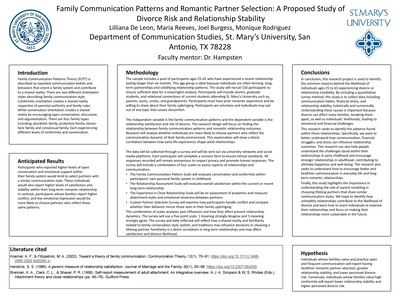
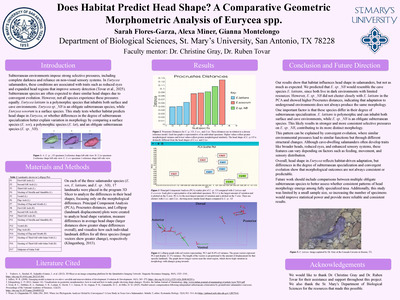
Eurycea latitans (E. latitans) from Honey Creek Cave and unnamed Eurycea species from New Braunfels, Texas (E. sp. 4) are two paedomorphic subterranean species. E. latitans is polymorphic, meaning it also exists as a surface species. Similarities in morphology of subterranean salamander species may be due to convergent evolution as a result of living in similar environments. These similarities include having flatter, wider heads, and wider mouths than surface species (Tovar et al. 2025). Variation may also exist among different subterranean salamander species. Texas Eurycea salamanders display “complex patterns of morphological divergence”, suggesting that isolation and local environmental pressures can drive morphological change (Devvitt et al, 2013). E. latitans may also show some variance from E. sp. 4 due to a more recent surface species ancestor or due to more phenotypic variability. Polymorphic species may exhibit greater variability in phenotype than monomorphic species (Takahashi and Noriyuki 2019). We expect there to be morphological differences in the head shapes of E. latitans and E. sp. 4.
-
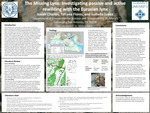
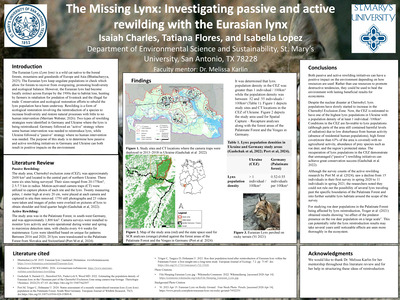
The Missing Lynx: Ivestigating passive and active rewilding with the Eurasian lynx
Isaiah Charles, Tatiana Flores, and Isabella Lopez
The Eurasian Lynx (Lynx lynx) is a wild cat native to the boreal forests, mountains and grasslands of Europe and Asia (Bhattacharyya, 2025). The Eurasian lynx keep ungulate populations in check which allow for forests to recover from overgrazing, promoting biodiversity and ecological balance. However, the Eurasian lynx had become locally extinct across Europe by the 1900s due to habitat loss, hunting by farmers in retaliation for predation of livestock and the illegal fur trade. Conservation and ecological restoration efforts to rebuild the lynx population have been underway. Rewilding is a form of ecological restoration involving the reintroduction of a species to increase biodiversity and restore natural processes with little to no human intervention (Merriam Webster, 2026). Two types of rewilding strategies were identified in Germany and Ukraine where the lynx is being reintroduced. Germany followed an “active” strategy where some human intervention was needed to reintroduce lynx, while Ukraine followed a “passive” strategy where no human intervention was needed. The purpose of this study is to determine how passive and active rewilding initiatives in Germany and Ukraine can both result in positive impacts on the environment.
-
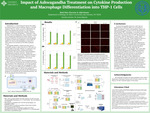
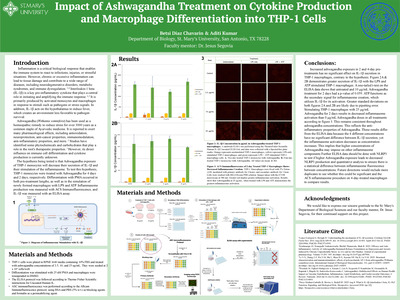
Impact of Ashwagandha Treatment on Cytokine Production and Macrophage Differentiation into THP-1 Cells
Betsi Diaz Chavarin and Aditi Kumar
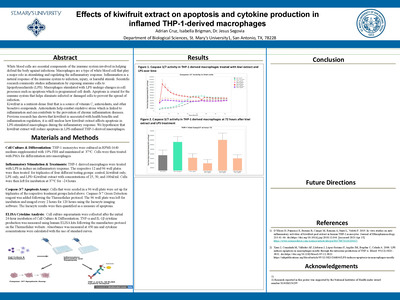
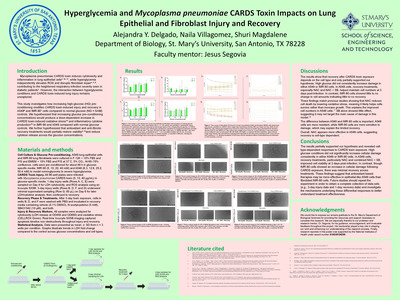
Inflammation is a critical biological response that enables the immune system to react to infections, injuries, or stressful situations. However, chronic or excessive inflammation can lead to tissue damage and contribute to a wide range of diseases, including neurodegenerative disorders, metabolic syndromes, and immune dysregulation. 3,4 Interleukin-1 beta (IL-1β) is a key pro-inflammatory cytokine that plays a central role in initiating and amplifying the immune response. 1,2 It is primarily produced by activated monocytes and macrophages in response to stimuli such as pathogens or stress signals. In addition, IL-1β acts on the hypothalamus to induce fever, which creates an environment less favorable to pathogen survival. Ashwagandha (Withania somnifera) has been used as a homeopathic remedy to reduce stress for over 3000 years as a common staple of Ayurvedic medicine. It is reported to exert many pharmacological effects, including antioxidation, neuroprotection, anti-cancer properties, immunomodulation, anti-inflammatory properties, and more. 2 Studies have identified some phytochemicals and carbohydrates that play a role in the root's therapeutic properties. 3 However, its direct influence on immune cell differentiation and cytokine production is currently unknown. The hypothesis being tested is that Ashwagandha exposure of THP-1 monocytes will decrease their secretion of IL-1β and their stimulation of the inflammasome. To test this hypothesis, THP-1 monocytes were treated with Ashwagandha for 4 days and 2 days, respectively. Differentiation with PMA occurred in both pre-treatment lengths, as well as in the simulation of newly formed macrophages with LPS and ATP. Inflammasome production was measured with ACS Immunofluorescence, and IL-1β was measured with an ELISA assay.
-
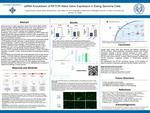
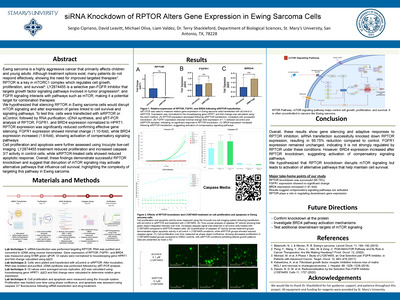
siRNA Knockdown of RPTOR Alters Gene Expression in Ewing Sarcoma Cells
Sergio Cipriano, David Leavitt, Michael Oliva, and Liam Valdez
Ewing sarcoma is a highly aggressive cancer that primarily affects children and young adults. Although treatment options exist, many patients do not respond effectively, showing the need for improved targeted therapies¹. RPTOR is a key in mTORC1 complex which regulates cell growth, proliferation, and survival². LY2874455 is a selective pan-FGFR inhibitor that targets growth factor signaling pathways involved in tumor progression³, and FGFR signaling interacts with pathways such as mTOR, making it a potential target for combination therapies. We hypothesized that silencing RPTOR in Ewing sarcoma cells would disrupt mTOR signaling and alter expression of genes linked to cell survival and signaling pathways. To test this, cells were transfected with siRPTOR or siControl, followed by RNA purification, cDNA synthesis, and qRT-PCR analysis of RPTOR, FGFR1, and BRD4 expression normalized to HPRT1. RPTOR expression was significantly reduced confirming effective gene silencing. FGFR1 expression showed minimal change (1.10-fold), while BRD4 expression increased (1.9-fold), showing activation of compensatory signaling pathways. Cell proliferation and apoptosis were further assessed using Incucyte live-cell imaging. LY2874455 treatment reduced proliferation and increased caspase 3/7 activity in control cells, while siRPTOR-treated cells showed reduced apoptotic response. Overall, these findings demonstrate successful RPTOR knockdown and suggest that disruption of mTOR signaling may activate alternative pathways that influence cell survival, highlighting the complexity of targeting this pathway in Ewing sarcoma.