


The 2026 Research Showcase Poster Collection showcases the innovative scholarship of St. Mary's University students and Faculty mentors. Inspired by the theme, From Ideas to Impact: Scholarship for a Changing World, the collection reflects the breadth of research across disciplines, exploring topics ranging from scientific discovery and emerging technologies to health, environmental sustainability, history, public policy, business, and the social sciences. Together, these works illustrate how academic research can deepen understanding, inspire innovation, and address the complex challenges facing our world today



-
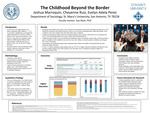
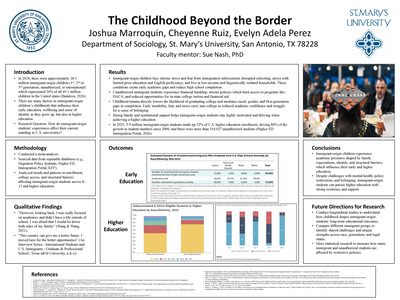
The Childhood Beyond the Border
Joshua Marroquin, Cheyenne Ruiz, and Evelyn Adela Perez
• In 2024, there were approximately 18.3 million immigrant-origin children (1st, 2nd or 3rd generation; unauthorized; or international) which represented 26% of all 69.1 million children in the United states (Batalova, 2026). • There are many factors in immigrant-origin children’s childhoods that influence their early education, wellbeing and sense of identity as they grow up, but also in higher education. • Research Question: How do immigrant-origin students' experiences affect their current standing in U.S. universities?
-
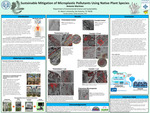
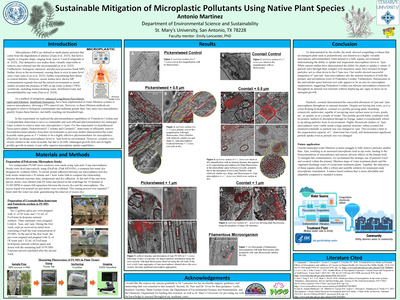
Sustainable Mitigation of Microplastic Pollutants Using Native Plant Species
Antonio Martinez
Microplastics (MPs) are defined as small plastic particles that come from the degradation of plastics [Ziani et al. 2023], that hold a regular or irregular shape, ranging from 1μm to 5 mm [Campanale et al. 2025]. This diminutive size makes them virtually impossible to remove once released into the environment[Lee et al. 2023]. Furthermore, biological, chemical, and physical processes break MP's further down in the environment, causing them to exist in nano-level sizes (1nm-1μm) [Lee et al. 2023], further exacerbating their threat to critical habitats. However, recent studies have shown MP contamination expands beyond the natural environment as recent studies revealed the presence of MPs in tap water systems (TWS) worldwide, including treated drinking water, distributed water and household/public tap water [Sun et al. 2024].
As a method of mitigation, enhanced coagulation-flocculation, rapid sand filtration, membrane bioreactors, have been implemented in water filtration systems to remove microplastics, showing a 99% removal rate. However, as these filtration methods are designed to remove biological contaminants and sediment greater than 1um, nano-size microplastics quickly bypass these barriers, inevitably reaching our household taps.
In this experiment we explored the phytoremediation capabilities of Pontederia Cordata and Ceratophyllum demersum to serve as sustainable and cost-efficient phytoremediators for municipal water systems to remove nano-size microplastics (< 1μm). For this experiment we hypothesized Texas native plants; Pickerelweed(P. Cordata) and Coontail(C. demersum) to efficiently remove microplastics/nano-plastics from their environments as previous studies demonstrated the water hyacinth (same genus as P. Cordata) to be a highly effective phytoremediator for microplastics, effectively up taking microspheres down to .5μm from its environment. However, coontail is not closely related to the water hyacinth, but due to its fully submerged growth style and its highly prolific growth in nature, it may offer superior microplastic uptake capabilities.
-

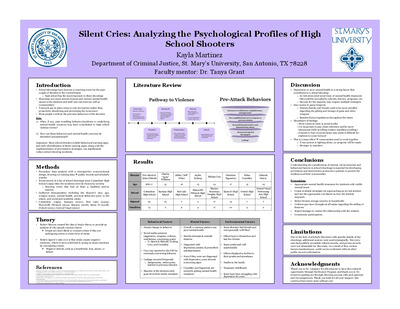
Silent Cries: Analyzing the Psychological Profiles of High School Shooters
Kayla Martinez
- School shootings have become a recurring event for the past couple of decades in the United States
- high school has the most exposure to these shootings
- Shootings can cause serious trauma and various mental health issues in the students and staff who survived (as well as communities)
- Protocols put in place seem to only be reactive rather than proactively identifying and preventing the occurrence
- Most people overlook the previous behaviors of the shooters
- School shootings have become a recurring event for the past couple of decades in the United States
-
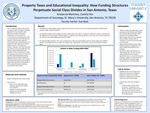
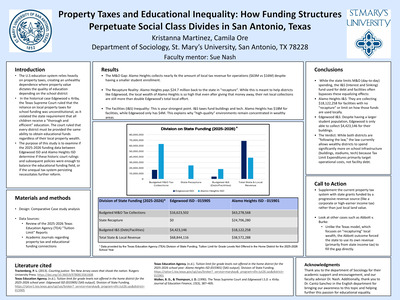
Property Taxes and Educational Inequality: How Funding Structures Perpetuate Social Class Divides in San Antonio, Texas
Kristanna Martinez and Camila Ore
The U.S education system relies heavily on property taxes, creating an unhealthy dependence where property value dictates the quality of education depending on the school district
• In the historical case Edgewood v. Kriby, the Texas Supreme Court ruled that the reliance on local property taxes for school funding was unconstitutional, as it violated the state requirement that all children receive a “thorough and efficient” education. The court ruled that every district must be provided the same ability to obtain educational funds regardless of their local property wealth. • The purpose of this study is to examine if the 2025-2026 funding data between Edgewood ISD and Alamo Heights ISD determine if these historic court rulings and subsequent policies were enough to balance the educational funding field, or if the unequal tax system persisting necessitates further reform.
-

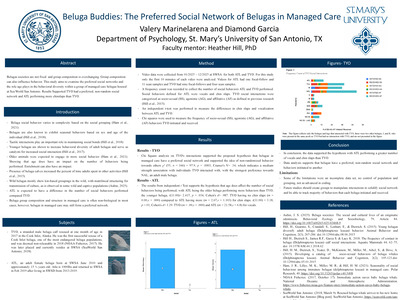
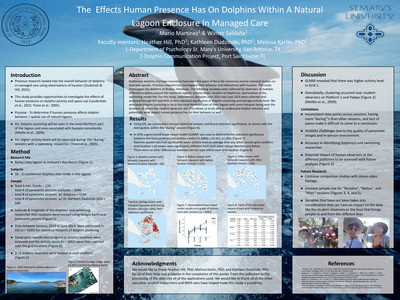
The Effects Human Presence has on Dolphins within a Natural Lagoon Enclosure in Managed Care
Mario Martinez and Winter Saldaña
● Previous research looked into the overall behavior of dolphins in managed care using observations of location (Dudzinski & Hill, 2025).
● This study provides opportunities to investigate the effects of human presence on dolphin activity and space use (Lauderdale et al., 2022; Trone et al., 2005).
● Purpose - To determine if human presence affects dolphin behavior / spatial use of natural lagoon.
● H1: Dolphin clustering will be seen in the most Northern part of the lagoon and area associated with humans consistently (Melillo et al., 2009).
● H2: Higher activity levels will be observed during the “during” sessions with a swimming researcher (Trone et al., 2005).
-
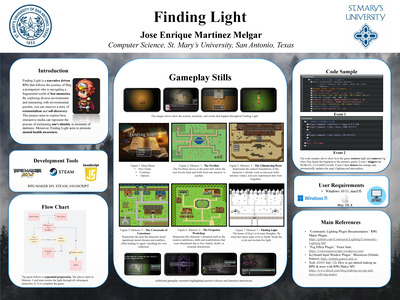
Finding Light
Jose Enrique Martinez Melgar
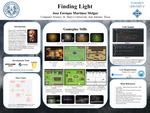
Finding Light is a narrative driven RPG that follows the journey of Hop, a protagonist who is navigating a fragmented world of lost memories. By exploring diverse environments and interacting with environmental puzzles, you can uncover a story of existentialism and self-discovery. This project aims to explore how interactive media can represent the process of reclaiming one's identity in moments of darkness. Moreover, Finding Light aims to promote mental health awareness.
-
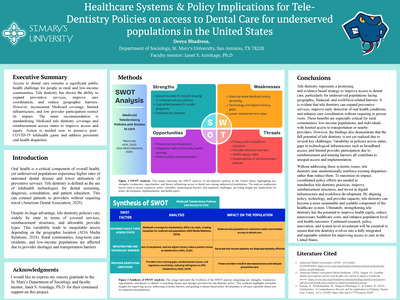
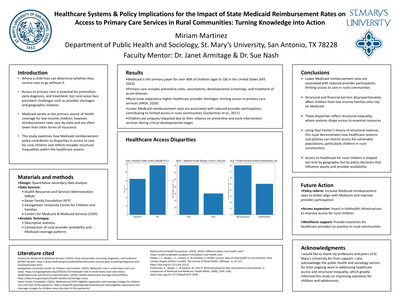
Healthcare Systems & Policy Implications for the Impact of State Medicaid Reimbursement Rates on Access to Primary Care Services in Rural Communities: Turning Knowledge into Action
Miriam Martinez
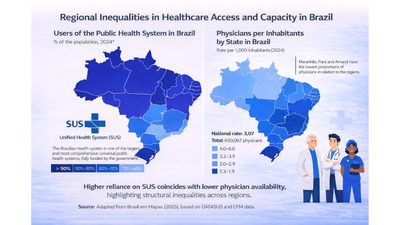
• Where a child lives can determine whether they receive care or go without it. • Access to primary care is essential for prevention, early diagnosis, and treatment, but rural areas face persistent challenges such as provider shortages and geographic isolation. • Medicaid serves as the primary source of health coverage for low-income children; however, reimbursement rates vary by state and are often lower than other forms of insurance. • This study examines how Medicaid reimbursement policy contributes to disparities in access to care for rural children and reflects broader structural inequalities within the healthcare system.
-
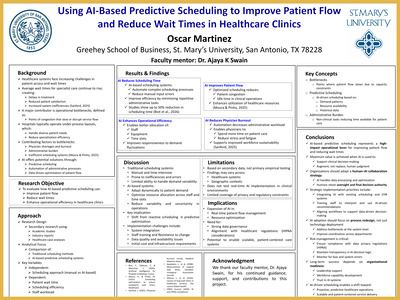
Using AI-based predictive scheduling to improve patient flow and reduce wait times in healthcare clinics
Oscar Martinez
- Healthcare systems face increasing challenges in patient access and wait times
- Average wait times for specialist care continue to rise, creating:
- Delays in treatment
- Reduced patient satisfaction
- Increased system inefficiencies (Sanford, 2025)
- A major contributor is operational bottlenecks, defined as:
- Points of congestion that slow or disrupt service flow
- Hospitals typically operate under process layouts, which:
- Handle diverse patient needs
- Reduce specialization efficiency
- Contributing factors to bottlenecks:
- Physician shortages and burnout
- Administrative burden
- Inefficient scheduling systems (Moura & Pinho, 2025)
- AI offers potential solutions through:
- Predictive scheduling
- Automation of administrative processes
- Data-driven optimization of patient flow
-
St. Mary's ROTC, One Hundred Years of Military Science
Pedro Martinez
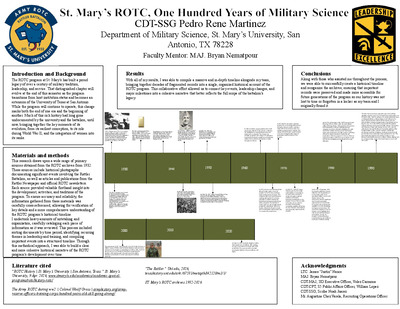
The ROTC program at St. Mary’s has built a proud legacy of over a century of military tradition, leadership, and service. That distinguished chapter will evolve at the end of this semester as the program transitions from host institution status and becomes an extension of the University of Texas at San Antonio. While the program will continue to operate, this change marks both the end of one era and the beginning of another. Much of this rich history had long gone undocumented by the university and the battalion, until now, bringing together the key moments of its evolution, from its earliest conception, to its role during World War II, and the integration of women into its ranks.
-
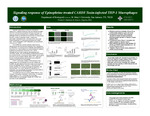
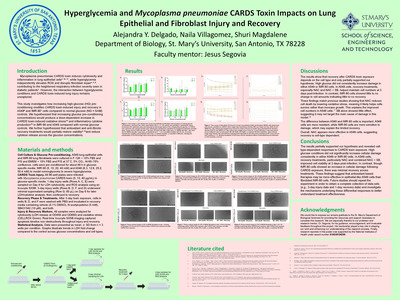
Signaling response of Epinephrine treated CARDS Toxin-infected THP-1 Macrophages
Trinity Martinez
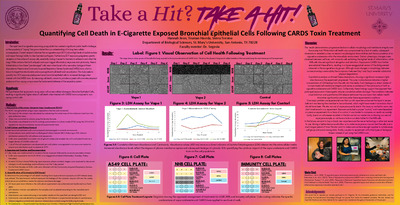
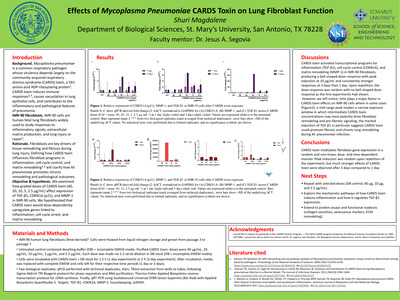
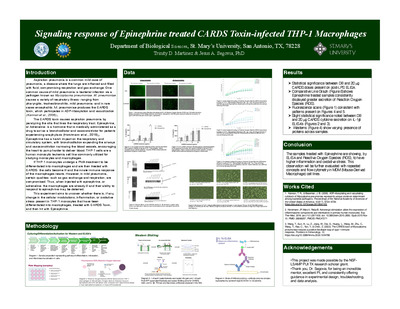
Aspiration pneumonia is a common mild case of pneumonia, a disease where the lungs are inflamed and filled with fluid, compromising respiration and gas exchange. One common cause of mild pneumonia is bacterial infection via a pathogen known as Mycoplasma pneumoniae. M. pneumoniae causes a variety of respiratory illness- ranging from pharyngitis, tracheobronchitis, mild pneumonia- and in rare cases encephalitis. M. pneumoniae produces the CARDS toxin, which participates in ADP-ribosylation and vacuolization (Kannan et al., 2006)1. The CARDS toxin causes aspiration pneumonia by paralyzing the cilia that lines the respiratory tract. Epinephrine, or Adrenaline- is a hormone that is medically administered as a drug to act as a bronchodilator and vasoconstrictor for patients experiencing anaphylaxis (Horstmann et al., 2015)2. Epinephrine has a harsh impact on the respiratory and circulatory system, with bronchodilation expanding the airways and vasoconstriction narrowing the blood vessels, encouraging the heart to pump harder to deliver blood. THP-1 cells are a human monocytic leukemia cell line commonly utilized for studying monocytes and macrophages. If THP-1 monocytes undergo a PMA treatment to be differentiated into macrophages and are then treated with CARDS- the cells become ill and the innate immune response of the macrophages reacts. However, in mild pneumonia, certain qualities- such as gas exchange and respiration, are compromised. Thus, when injected with epinephrine, or adrenaline- the macrophages are already ill and their ability to respond to epinephrine may be deterred. This experiment aims to uncover whether there is, if any, change in the cellular modulations, inflammation, or oxidative stress present in THP-1 monocytes that have been differentiated into macrophages, treated with CARDS Toxin, and then hit with Epinephrine.
-
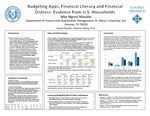
Budgeting Apps, Financial Literacy and Financial Distress: Evidence from U.S. Households
Max Ngenzi Masabo
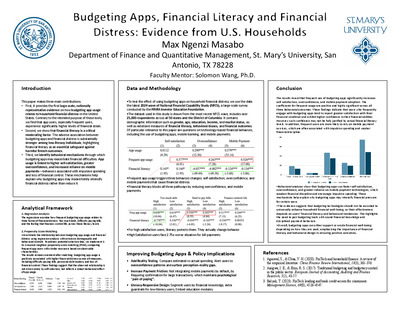
• First, it provides the first large-scale, nationally representative evidence on how budgeting app usage relates to household financial distress in the United States. Contrary to the intended purpose of these tools, we find that app users, especially frequent users, experience significantly higher levels of financial strain. • Second, we show that financial literacy is a critical moderating factor. The adverse association between budgeting apps and financial distress is substantially stronger among low-literacy individuals, highlighting financial literacy as an essential safeguard against harmful fintech outcomes. • Third, we identify behavioral mechanisms through which budgeting apps may exacerbate financial difficulties. App usage is linked to higher self-satisfaction, greater overconfidence, and increased reliance on mobile payments—behaviors associated with impulsive spending and loss of financial control. These mechanisms help explain why budgeting apps may inadvertently intensify financial distress rather than reduce it.
-
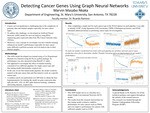
Detecting Cancer Genes Using Graph Neural Networks
Marvin Masabo Nkaka
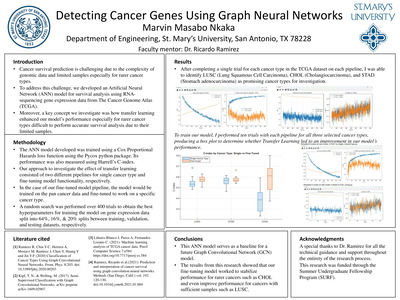
• Cancer survival prediction is challenging due to the complexity of genomic data and limited samples especially for rarer cancer types. • To address this challenge, we developed an Artificial Neural Network (ANN) model for survival analysis using RNA-sequencing gene expression data from The Cancer Genome Atlas (TCGA). • Moreover, a key concept we investigate was how transfer learning enhanced our model’s performance especially for rarer cancer types difficult to perform accurate survival analysis due to their limited samples.
-
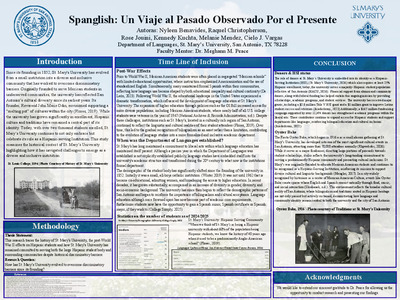
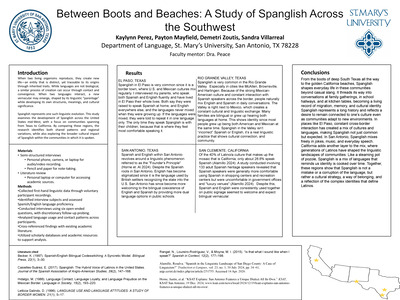
Between Boots and Beaches: A Study of Spanglish Across the Souothwest
Payton Mayfield, Kaylynn Perez, Demetri Zoutis, and Sandra Villarreal
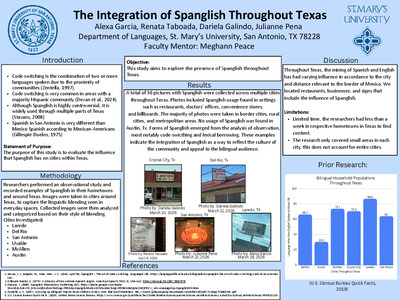
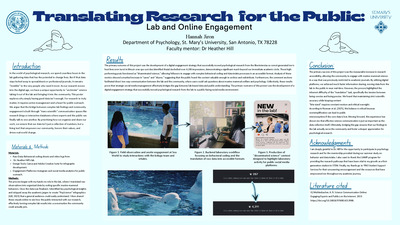
When two living organisms reproduce, they create new life—an entity that is distinct, yet traceable to its origins through inherited traits. While languages are not biological, a similar process of creation can occur through contact and convergence. When two languages interact, a new vernacular may emerge, shaped by its linguistic “parentage” while developing its own structures, meanings, and cultural significance. Spanglish represents one such linguistic evolution. This study examines the development of Spanglish across the United States mid-West, with a focus on communities spanning from Texas to California. By comparing these regions, the research identifies both shared patterns and regional variations, while also exploring the broader cultural impact of Spanglish within the communities in which it is spoken.
-
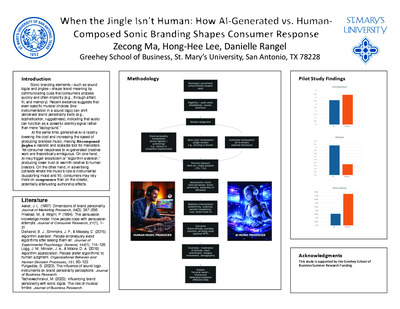
When the Jingle isn't Human: How AI-Generated vs. Human Composed Sonic Branding Shapes Consumer Response
Zecong Ma, Hong-Hee Lee, and Danielle Rangel
Sonic branding elements—such as sound logos and jingles—shape brand meaning by communicating cues that consumers process quickly and often implicitly (e.g., through affect, fit, and memory). Recent evidence suggests that even specific musical choices (like instrumentation in a sound logo) can shift perceived brand personality traits (e.g., sophistication, ruggedness), indicating that audio can function as a powerful identity signal rather than mere “background.” At the same time, generative AI is rapidly lowering the cost and increasing the speed of producing branded music, making AI-composed jingles a realistic and scalable tool for marketers. Yet consumer responses to AI-generated creative work are theoretically ambiguous. On one hand, AI may trigger skepticism or “algorithm aversion,” producing lower trust or warmth relative to human creators. On the other hand, in advertising contexts where the music’s role is instrumental (supporting mood and fit), consumers may rely more on congruence than on the creator, potentially attenuating authorship effects.
-
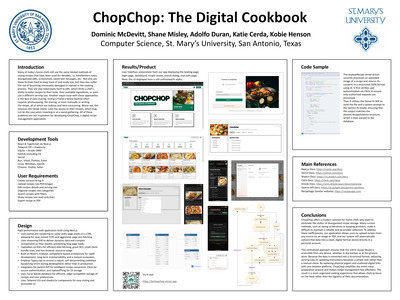
ChopChop: The Digital Cookbook
Dominc McDevitt, Shane Misley, Adolfo Duran, Katie Cerda, and Kobie Henson
Many of today's home chefs still use the same limited methods of saving recipes that have been used for decades, i.e. handwritten notes, disorganized pdfs, screenshots, saved text messages, etc. Not only are these formats hard to keep track of and easily lost, but they also suffer the risk of becoming irrevocably damaged or stained in the cooking process. They are also notoriously hard to edit, which limits a chef's ability to tailor recipes to their taste, their available ingredients, or even just a different serving size. Another major issue with these approaches is the lack of easy sharing. Giving a friend a family favorite often requires photocopying, file sharing, or even manually re-writing the recipe, all of which are tedious and time-consuming. Worse yet, this assumes the recipe-sharer even has access to their recipes, which may not be the case when traveling or at a social gathering. All of these problems are our inspiration for developing ChopChop, a digital recipe management application.
-

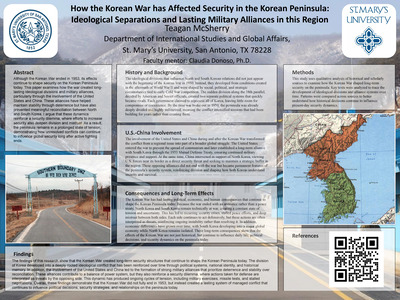
How the Korean War has Affected Security in the Korean Peninsula: Ideological Separations and Lasting Military Alliances in this Region
Teagan McSherry
Although the Korean War ended in 1953, its effects continue to shape security on the Korean Peninsula today. This paper examines how the war created long-lasting ideological divisions and military alliances, particularly through the involvement of the United States and China. These alliances have helped maintain stability through deterrence but have also prevented meaningful reconciliation between North and South Korea. I argue that these dynamics reinforce a security dilemma, where efforts to increase security also deepen division and mistrust. As a result, the peninsula remains in a prolonged state of tension, demonstrating how unresolved conflicts can continue to influence global security long after active fighting ends.
-
Match-a-Fit
Brianna Mendoza, Adan Diaz De Leon, Pedro Jacobo, and Juan Marco Saca Dada
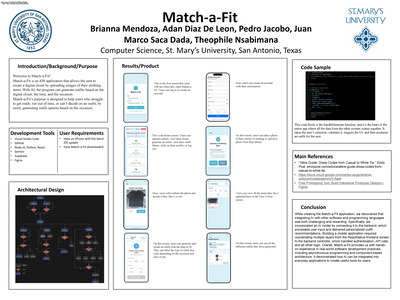
Welcome to Match-a-Fit! Match-a-Fit is an iOS application that allows the user to create a digital closet by uploading images of their clothing items. With AI, the program can generate outfits based on the digital closet, the time, and the occasion. Match-a-Fit’s purpose is designed to help users who struggle to get ready, run out of time, or can’t decide on an outfit, by easily generating outfit options based on the occasion.
-
Optimizing retail grocery inventory using AI and large language models: Evidence on forecast accuracy, waste reduction, and cost efficiency
Robert Miller, Stephen Garcia, and Brandon Ermis
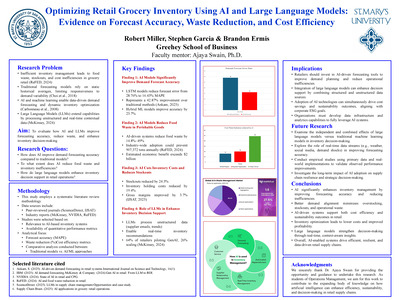
Aim: To evaluate how AI and LLMs improve forecasting accuracy, reduce waste, and enhance inventory decision-making
-
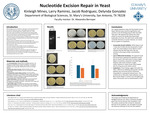
Nucleotide Excision Repair in Yeast
Kinleigh Mines, Larry Ramirez, Jacob Rodriguez, and Delynda Gonzalez
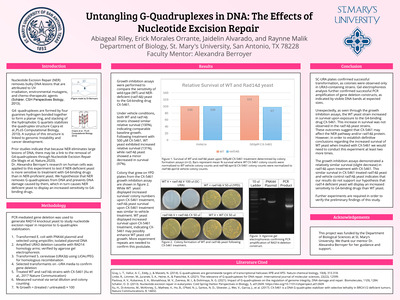
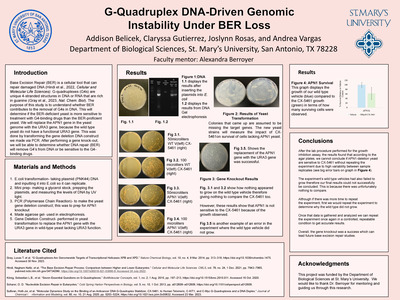
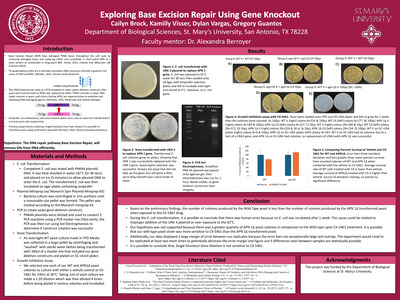
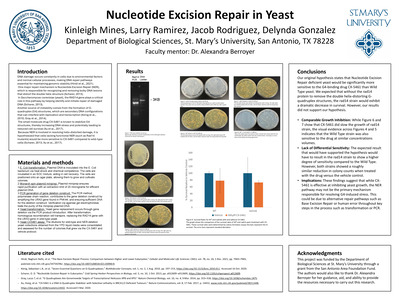
DNA damage occurs constantly in cells due to environmental factors and normal cellular processes, making DNA repair pathways essential for maintaining genomic stability (Hindi et al., 2021). One major repair mechanism is Nucleotide Excision Repair (NER), which is responsible for recognizing and removing bulky DNA lesions that distort the double helix structure (Scharer, 2013). In Saccharomyces cerevisiae (yeast), the RAD14 gene plays a critical role in this pathway by helping identify and initiate repair of damaged DNA (Scharer, 2013). Another source of instability comes from the formation of G-quadruplex (G4) structures, which are secondary DNA configurations that can interfere with replication and transcription (König et al., 2010; Gray et al., 2014). The small molecule drug CX-5461 is known to stabilize G4 structures, thereby increasing DNA stress and potentially leading to reduced cell survival (Xu et al., 2017). Because NER is involved in resolving helix-distorted damage, it is hypothesized that cells lacking functional NER (such as Rad14 mutants) would be more sensitive to CX-5461 compared to wild-type cells (Scharer, 2013; Xu et al., 2017).
-
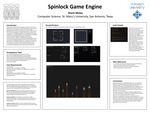
Spinlock Game Engine
Shane Misley
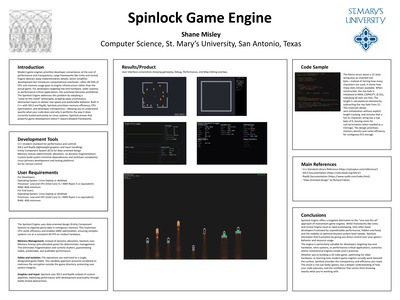
Modern game engines prioritize developer convenience at the cost of performance and transparency. Large frameworks like Unity and Unreal Engine abstract away implementation details, which simplifies development but introduces computational overhead—often 40-50% of CPU and memory usage goes to engine infrastructure rather than the actual game. For developers targeting low-end hardware, older systems, or performance-critical applications, this overhead becomes prohibitive. The Spinlock Engine addresses this problem by adopting a "close-to-the-metal" philosophy, stripping away unnecessary abstraction layers to deliver raw speed and predictable behavior. Built in C++ with SDL3 and Raylib, Spinlock prioritizes memory efficiency, CPU optimization, and developer transparency—allowing you to understand exactly what your code does and why it performs the way it does. Currently tested exclusively on Linux systems, Spinlock proves that powerful game development doesn't require bloated frameworks.
-
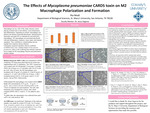
The Effects of Mycoplasma pneumoniae CARDS toxin on M2 Macrophage Polarization and Formation
Ria Modi
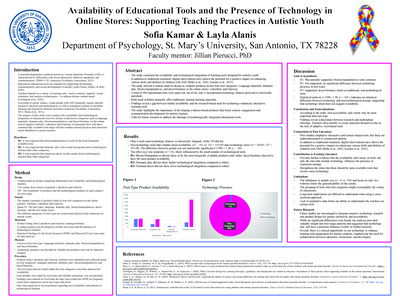
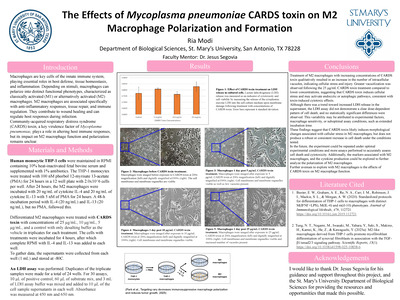
Macrophages are key cells of the innate immune system, playing essential roles in host defense, tissue homeostasis, and inflammation. Depending on stimuli, macrophages can polarize into distinct functional phenotypes, characterized as classically activated (M1) or alternatively activated (M2) macrophages. M2 macrophages are associated specifically with anti-inflammatory responses, tissue repair, and immune regulation. They contribute to wound healing and can regulate host responses during infection. Community-acquired respiratory distress syndrome (CARDS) toxin, a key virulence factor of Mycoplasma pneumoniae, plays a role in altering host immune responses, but its impact on M2 macrophage function and polarization remains unclear.
-
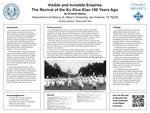
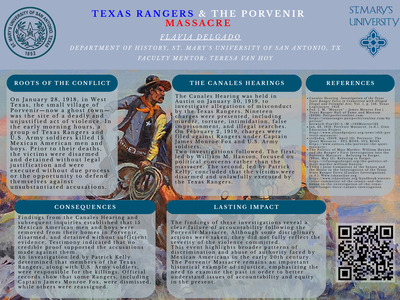
Visible and Invisible Empires: The Revival of the Ku Klux Klan 100 years ago
Christian Molina
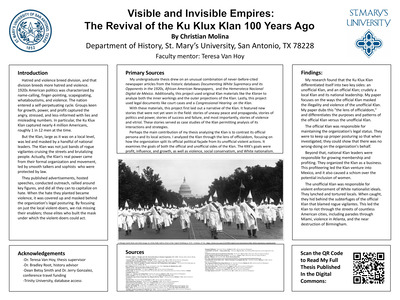
Hatred and violence breed division, and that division breeds more hatred and violence. 1920s American politics was characterized by name-calling, finger-pointing, scapegoating, whataboutisms, and violence. The nation entered a self-perpetuating cycle. Groups keen for growth, power, and profit captured the angry, stressed, and less-informed with lies and misleading numbers. In particular, the Ku Klux Klan captured nearly 4 million Americans, roughly 1 in 12 men at the time. But the Klan, large as it was on a local level, was led and masked by a handful of national leaders. The Klan was not just bands of rogue vigilantes cruising the streets and brutalizing people. Actually, the Klan's real power came from their formal organization and movement, led by smooth talkers and sophists who were protected by law. They published advertisements, hosted speeches, conducted outreach, rallied around key figures, and did all they can to capitalize on hate. When the hate they planted became violence, it was covered up and masked behind the organization's legal posturing. By focusing on just the local violent-doers, we risk missing their enablers; those elites who built the mask under which the violent-doers could act.
-
The Role of Leadership Style in Team and Individual Performance in Collegiate Athletics
Luke Mulkey
• Measuring the effectiveness of leadership is important because strong leaders can bring significant contributions to both organizations and individuals
• Previous studies have said that intrinsic motivation of the individual plays a larger role than the leadership style of a coach
• Studies also show that leadership style has an influence on team success and cohesion
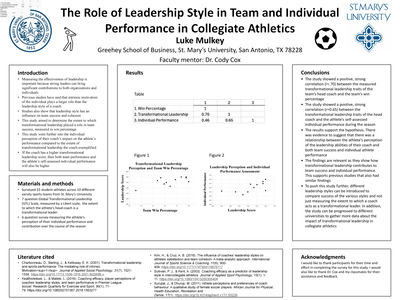
• This study aimed to determine the extent to which transformational leadership played a role in team success, measured in win percentage
• This study went further into the individual perception of their coach’s impact on the athlete’s performance compared to the extent of transformational leadership the coach exemplified
• If the coach has a higher transformational leadership score, then both team performance and the athlete’s self-assessed individual performance will also be higher
-
Faith in Action: How Liberation Theology Connected Communities Around the World
Jaizeth Andrea Munoz
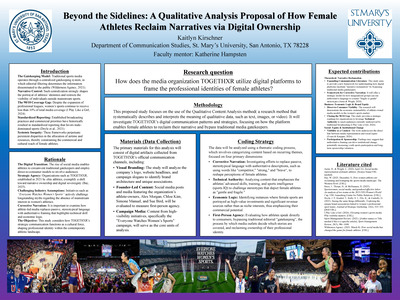
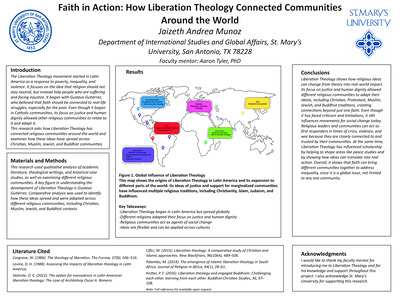
The Liberation Theology movement started in Latin America as a response to poverty, inequality, and violence. It focuses on the idea that religion should not stay neutral, but instead help people who are suffering and facing injustice. It began with Gustavo Gutiérrez, who believed that faith should be connected to real-life struggles, especially for the poor. Even though it began in Catholic communities, its focus on justice and human dignity allowed other religious communities to relate to it and adapt it.
The research asks how Liberation Theology has connected religious communities around the world and examines how these ideas have spread across Christian, Muslim, Jewish, and Buddhist communities.
-
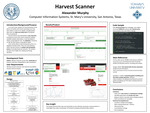
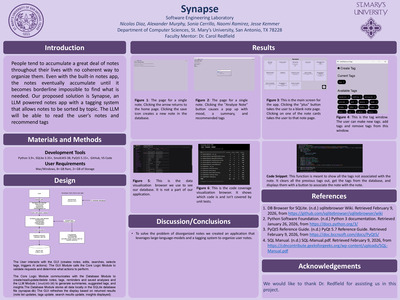
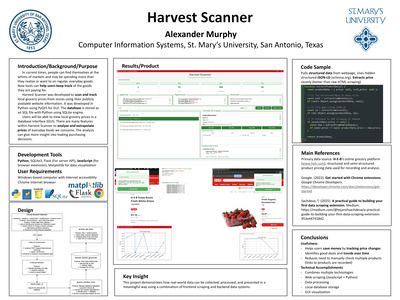
Harvest Scanner
Alexander Murphy
In current times, people can find themselves at the whims of markets and may be spending more than they realize or want to on regular, everyday goods. New tools can help users keep track of the goods they are paying for. Harvest Scanner was developed to scan and track local grocery prices from stores using their publicly available website information. It was developed in Python using PyQt5 for GUI. The database is stored as an SQL file with Python using SQLite engine. Users will be able to view local grocery prices in a database interface (GUI). There are many features within Harvest Scanner to analyze and extrapolate prices of everyday foods we consume. The analysis can give more insight into making purchasing decisions.