


Files
Download Full Text (1.2 MB)
Contributor
Segovia, Jesus (Faculty Mentor)
Digital Publisher
Digital Commons at St. Mary's University
Publication Date
Spring 2026
Keywords
Aspiration pneumonia, CARDS toxin, THP-1 monocytes
Description
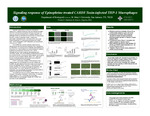
Aspiration pneumonia is a common mild case of pneumonia, a disease where the lungs are inflamed and filled with fluid, compromising respiration and gas exchange. One common cause of mild pneumonia is bacterial infection via a pathogen known as Mycoplasma pneumoniae. M. pneumoniae causes a variety of respiratory illness- ranging from pharyngitis, tracheobronchitis, mild pneumonia- and in rare cases encephalitis. M. pneumoniae produces the CARDS toxin, which participates in ADP-ribosylation and vacuolization (Kannan et al., 2006)1. The CARDS toxin causes aspiration pneumonia by paralyzing the cilia that lines the respiratory tract. Epinephrine, or Adrenaline- is a hormone that is medically administered as a drug to act as a bronchodilator and vasoconstrictor for patients experiencing anaphylaxis (Horstmann et al., 2015)2. Epinephrine has a harsh impact on the respiratory and circulatory system, with bronchodilation expanding the airways and vasoconstriction narrowing the blood vessels, encouraging the heart to pump harder to deliver blood. THP-1 cells are a human monocytic leukemia cell line commonly utilized for studying monocytes and macrophages. If THP-1 monocytes undergo a PMA treatment to be differentiated into macrophages and are then treated with CARDS- the cells become ill and the innate immune response of the macrophages reacts. However, in mild pneumonia, certain qualities- such as gas exchange and respiration, are compromised. Thus, when injected with epinephrine, or adrenaline- the macrophages are already ill and their ability to respond to epinephrine may be deterred. This experiment aims to uncover whether there is, if any, change in the cellular modulations, inflammation, or oxidative stress present in THP-1 monocytes that have been differentiated into macrophages, treated with CARDS Toxin, and then hit with Epinephrine.
Format
Size
1 poster
City
San Antonio, Texas
Creative Commons License

This work is licensed under a Creative Commons Attribution-NonCommercial-No Derivative Works 4.0 International License.