


Files
Download Full Text (1.5 MB)
Contributor
Donoso, Claudia (Faculty Mentor)
Digital Publisher
Digital Commons at St. Mary's University
Publication Date
Spring 2026
Keywords
Artificial Intelligence, Global inequality, Political power, International Influence
Description
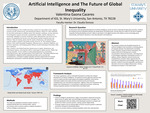
Artificial Intelligence (AI) is rapidly becoming a central tool in the global system, shaping economic growth, political power, and international influence. While AI is often celebrated for innovation and progress in different sectors like education, healthcare, security and more, its development is uneven and mostly concentrated in wealthy countries. Because AI is increasingly embedded in economic production, public administration, and social services, access to AI capabilities has become a key determinant of global competitiveness and influence. Many developing nations lack the capital, infrastructure, and technological capacity needed to compete in the global economy driven by AI. This imbalance matters because it risks reinforcing global inequalities, affecting access to education, healthcare, and economic opportunity, and reshaping global influence around technological dominance rather than cooperation. Many countries in the Global South face limited access to capital, infrastructure, and technological capacity, restricting their ability to participate in digital economy. Rather than reducing inequality, AI may reinforce existing global disparities by concentrating technological power, data, and opportunities in the Global North. This project examines how AI development, shaped by techno-nationalist priorities such as security and competitiveness, contributes to global inequality and limits opportunities for inclusive development, particularly in areas like education, healthcare, and economic growth.
Format
Size
1 poster
City
San Antonio, Texas
Creative Commons License

This work is licensed under a Creative Commons Attribution-NonCommercial-No Derivative Works 4.0 International License.
Included in
Growth and Development Commons, International Relations Commons, Science and Technology Policy Commons