




-
CURE Sound Project: Study in Silence?
Quezia Abrao, Deeya Bhadresa, Elisa Castro, Fiona Coulbourne, Carlos Flores, Lizzeth Holguin, Lazarus Maldonado, Jeremy Mares, Andrew Martini, Nicole Matthews, Katherine Montero, Mariana Reyes, Jacob Rodriguez, Julieta Ruiz, Eliana Sanchez, and Gabriela Varela
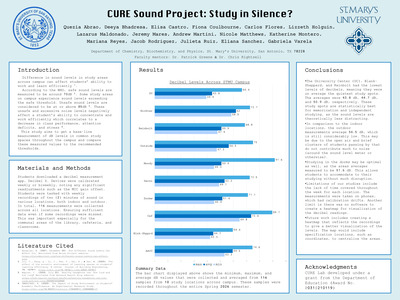
Difference in sound levels in study areas across campus can affect students’ ability to work and learn efficiently 1.
According to the WHO, safe sound levels are measured to be around 70dB 2. Some study areas on campus experience sound levels exceeding the safe threshold. Unsafe sound levels are considered to be at or above 85dB 3. These unsafe and excessive noise levels negatively affect a student’s ability to concentrate and work efficiently which correlates to a decrease in class performance, attention deficits, and stress 4.
This study aims to get a base-line measurement of dB levels in common study spaces throughout the campus and compare these measured values to the recommended thresholds.
-
Untangling G-Quadruplexes in DNA: The Effects of Nucleotide Excision Repair
Jaidelin Alvardo, Abiageal Riley, Erick Morales Orrante, and Raynne Malik
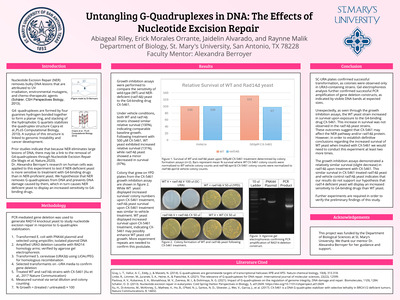
Nucleotide Excision Repair (NER) remo ves bulky DNA lesions that are attributed to UV irradiation, environmental mutagens, and chemo-therapeutic agents (Schärer, CSH Perspectives Biology, 2013). G4- quadruplexes are formed by four guanines hydrogen bonded together to form a planar ring, and stacking of the hydrophobic G quartets stabilizes the quadruplex structure Capra et al.,PLoS Computational Biology, 2010). A surplus of this structure is linked to genomic Instability and cancer development.
Prior studies indicate that because NER eliminates large lesions of DNA, there may be a link to the removal of G4-quadruplexes through Nucleotide Excision Repair (De Magis et al, Nature,2020). Dr. Alexandra Berroyer's research on human cells was applied to this experiment to test if NER-deficient yeast is more sensitive to treatment with G4-binding drugs than in NER-proficient yeast. We hypothesize that NER removes G-quadruplexes from DNA and prevents DNA damage caused by them, which in turn causes NER deficient yeast to display an increased sensitivity to G4-binding drugs.
-
Bird population response to abiotic and biotic stresses in urban & restored oak savannah habitat
Annabelle Ball
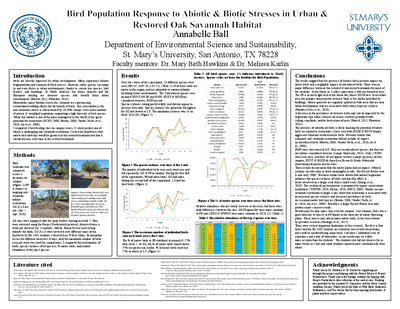
Birds are heavily impacted by urban development. Many experience habitat fragmentation and removal of food sources. However, other species can adapt to and even thrive in urban environments, thanks to certain tree species, bird feeders, and buildings. In North America, the house sparrow and the European starling are invasive species that benefit from urban environments (Bartelt, 2011; Fitzwater, 2014). Meanwhile, many habitats across the continent are experiencing restoration/rewilding efforts for the benefit of birds. One such habitat is the oak-savannah, which is characterized by 10-30% canopy cover and a mixture of prairie & woodland vegetation, supporting a high diversity of bird species. While this habitat is one of the most endangered in the world, it has great potential for restoration (NCRS, 2008; Brawn, 2006; Vander Yacht, et al., 2016; Au et al., 2008). I compared 3 bird-feeding sites on campus over a 12-week period, one of which is undergoing oak-savannah restoration. I tested the hypotheses that native bird diversity would be greatest in the restored treatment and that it would increase over time in the restored treatment.
-
Contrast Therapy is Associated with Higher Thermal Comfort for a Similar Acute Inflammatory Response Compared with Sauna Therapy
Rene Barbier, Benjamin Enslow, Jace Nicolet, Louis Hein, Kelvin Wu, and Sven Hoekstra
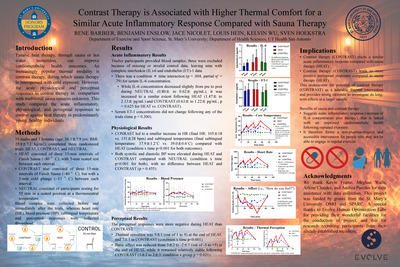
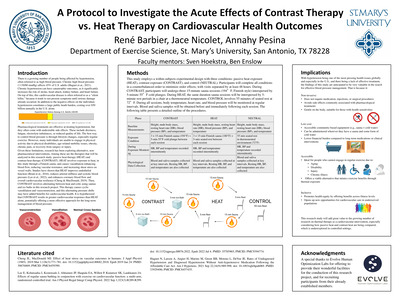
Passive heat therapy, through sauna or hot water immersion, can improve cardiometabolic health outcomes. An increasingly popular thermal modality is contrast therapy, during which sauna therapy is interspersed with cold exposure. However, the acute physiological and perceptual responses to contras therapy in comparison with traditional sauna remains unknown. This study compared the acute inflammatory, physiological, and perceptual responses to contras against heat therapy in predominantly young, healthy individuals
-
Mica Productions: The Sad Truth Behind Cosmetic Corporations' Impact on Children's Well-being in India
Nyleen Benavides
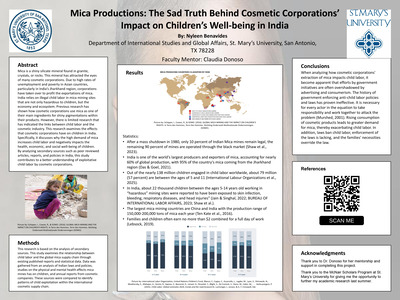
Mica is a shiny silicate mineral found in granite, crystals, or rocks. This mineral has attracted the eyes of many cosmetic corporations. Due to high rates of unemployment and poverty in Asian countries, particularly in India’s Jharkhand region, corporations have taken over to profit the exportations of mica. India relies on illegal child labor in mica mining sites that are not only hazardous to children, but the economy and ecosystem. Previous research has shown how cosmetic corporations use mica as one of their main ingredients for shiny pigmentations within their products. However, there is limited research that has indicated the links between child labor and the cosmetic industry. This research examines the effects that cosmetic corporations have on children in India. Specifically, it discusses why the high demand of mica increases child labor and negatively impacts the health, economic, and social well-being of children. By analyzing secondary sources such as peer reviewed articles, reports, and policies in India, this study contributes to a better understanding of exploitative child labor by cosmetic corporations.
-
U.S Sanctions in Venezuela: The Jeopardization of International Human Security and Economic Stability
Nyleen Benavides
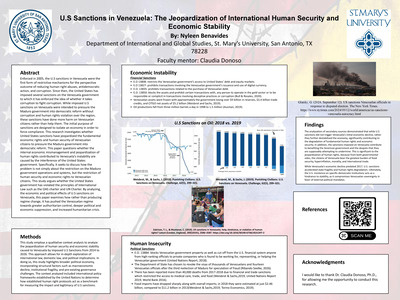
Enforced in 2005, the U.S sanctions in Venezuela were the first form of restrictive mechanisms for the perspective outcome of reducing human right abuses, antidemocratic action, and corruption. Since then, the United States has imposed several sanctions on the Venezuela government to which it has enforced the idea of whether it takes corruption to fight corruption. While imposed U.S sanctions on Venezuela were intended to pressure the Maduro government into democratic reform without corruption and human rights violation over the region, these sanctions have done more harm on Venezuelan citizens rather than help them. The initial purpose of sanctions are designed to isolate an economy in order to force compliance. This research investigates whether United States sanctions have jeopardized the fundamental economic rights and human security of Venezuelan citizens to pressure the Maduro government into democratic reform. This paper questions whether the internal economic mismanagement and jeopardization of human rights contributed to Venezuela’s instability are caused by the interference of the United States government. Specifically, it seeks to discuss how the problem is not simply about the restriction on the Maduro government operations and systems, but the restriction of human security and economic rights to Venezuelan citizens. This study argues whether the United States government has violated the principles of International Law such as the OAS charter and UN Charter. By analyzing, the economic and political effects of U.S sanctions on Venezuela, this paper examines how rather than producing regime change, it has pushed the Venezuelan regime towards greater authoritarian control, deeper political and economic suppression, and increased humanitarian crisis.
-
Social Media Microtrends and the Economic Realities of Young Consumers
Camila Berumen
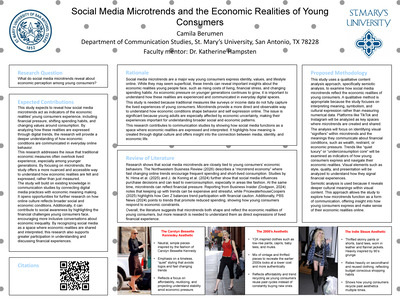
This study expects to reveal how social media microtrends act as indicators of the economic realities' young consumers experience, including financial pressure, shifting spending habits, and changing values around consumption. By analyzing how these realities are expressed through digital trends, the research will provide a deeper understanding of how economic conditions are communicated in everyday online behavior. This research addresses the issue that traditional economic measures often overlook lived experience, especially among younger generations. By focusing on microtrends, the study offers a more nuanced and accessible way to understand how economic realities are felt and expressed, rather than just measured. The study will build on existing knowledge in communication studies by connecting digital media practices with economic meaning making. It opens opportunities for further research on how online culture reflects broader social and economic conditions. Additionally, it can contribute to social awareness by highlighting the financial challenges young consumers face, encouraging more inclusive conversations about economic inequality. By recognizing social media as a space where economic realities are shared and interpreted, this research also supports greater participation in understanding and discussing financial experiences.
-
Investigating the endogenous & synthetic estrogens to the three estrogen receptor subtypes of teleost fish
Ann Cyril
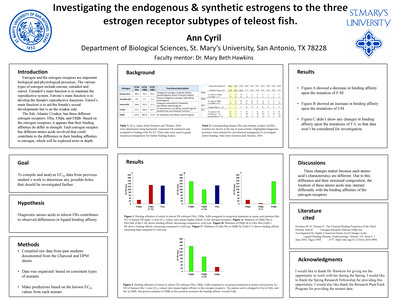
Estrogen and the estrogen receptors are important biological and physiological processes. The various types of estrogen include estrone, estradiol and estriol. Estradiol’s main function is to maintain the reproductive system. Estrone’s main function is to develop the female's reproductive functions. Estriol’s main function is to aid the female's sexual developments but is on the weaker side. The fish, Atlantic Croaker, has three different estrogen receptors: ERα, ERβa, and ERβb. Based on the estrogen receptors, it appears that their binding affinities do differ in strength. Each estrogen receptor has different amino acids involved that could contribute to the difference in their binding affinities to estrogen, which will be explored more in depth.
-
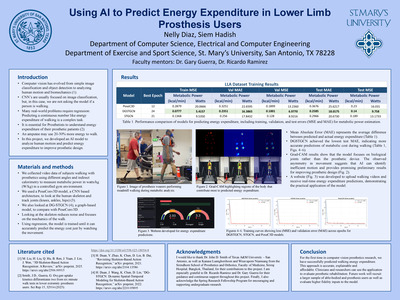
Using AI to predict Energy Expenditure in Lower Limb Prosthesis Users
Nelly Diaz and Siem Hadish
• Computer vision has evolved from simple image classification and object detection to analyzing human motion and biomechanics (1). • CNN’s are usually focused on image classification, but, in this case, we are not asking the model if a person is walking. • Many real-world problems require regression: Predicting a continuous number like energy expenditure of walking is a complex task. • It is essential for Prosthetists to understand energy expenditure of their prosthetic patients (2). • An amputee may use 20-30% more energy to walk. • In this project, we developed an AI model to analyze human motion and predict energy expenditure to improve prosthetic design.
-

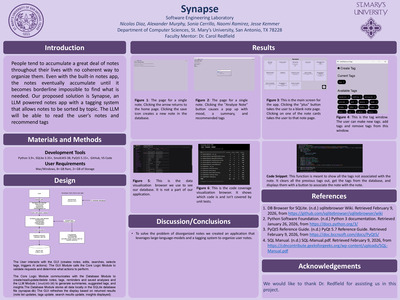
Synapse
Nicolas Diaz, Alexander Murphy, Sonia Cerrillo, Naomi Ramirez, and Jesse Kemmer
People tend to accumulate a great deal of notes throughout their lives with no coherent way to organize them. Even with the built-in notes app, the notes eventually accumulate until it becomes borderline impossible to find what is needed. Our proposed solution is Synapse, an LLM powered notes app with a tagging system that allows notes to be sorted by topic. The LLM will be able to read the user's notes and recommend tags
-
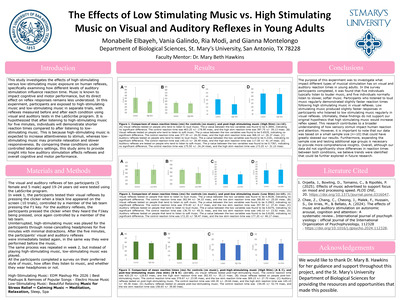
The Effects of Low Stimulating Music vs. High Stimulating Music on Visual and Auditory Reflexes in Young Adults
Monabelle Elbayeh, Vania Galindo, Ria Modi, and Gianna Montelongo
This study investigates the effects of high-stimulating versus low-stimulating music exposure on human reflexes, specifically examining how different levels of auditory stimulation influence reaction time. Music is known to impact cognitive and motor performance, but its direct effect on reflex responses remains less understood. In this experiment, participants are exposed to high-stimulating music and low-stimulating music in separate trials, with reflexes measured before and after each condition using visual and auditory tests in the LabScribe program. It is hypothesized that after listening to high-stimulating music for five minutes, individuals will demonstrate shorter reaction times compared to after listening to low-stimulating music. This is because high-stimulating music is expected to increase attentiveness to stimuli, whereas low-stimulating music may promote relaxation and slower responsiveness. By comparing these conditions under controlled laboratory settings, this study aims to provide insight into how auditory stimulation affects reflexes and overall cognitive and motor performance.
-
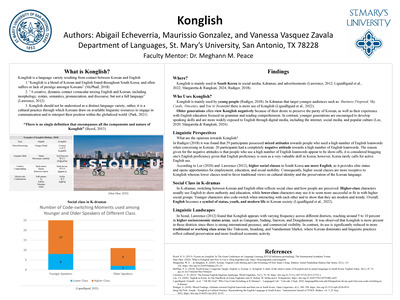
Konglish
Abigail Escheveria, Juan Maurissio Gomez Gonzalez, and Vanessa Vasquez Zavala
Konglish is a language variety resulting from contact between Korean and English
1.“Konglish is a blend of Korean and English found throughout South Korea, and often suffers or lack of prestige amongst Koreans” (McPhail, 2018)
2. “A creative, dynamic contact vernacular mixing English and Korean, including morphology, syntax, semantics, pronunciation, and discourse, but not a full language” (Lawrence, 2012)
3. Konglish should not be understood as a distinct language variety; rather, it is a cultural practice through which Koreans draw on available linguistic resources to engage in communication and to interpret their position within the globalized world. (Park, 2021)
-
Does Habitat Predict Head Shape? A Comparative Geometric Morphometric Analysis of Eurycea spp.
Sarah Flores-Garza, Alexa Miner, and Gianna Montelongo
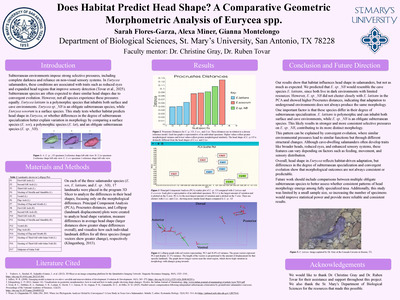
Subterranean environments impose strong selective pressures, including complete darkness and reliance on non-visual sensory systems. In Eurycea salamanders, these conditions are associated with traits such as reduced eyes and expanded head regions that improve sensory detection (Tovar et al., 2025). Subterranean species are often expected to share similar head shapes due to convergent evolution. However, not all species experience these pressures equally. Eurycea latitans is a polymorphic species that inhabits both surface and cave environments. Eurycea sp._NB is an obligate subterranean species, while Eurcyea sosorum is a surface species. This study tests whether habitat predicts head shape in Eurycea, or whether differences in the degree of subterranean specialization better explain variation in morphology by comparing a surface species (E. sos), a polymorphic species (E. lat), and an obligate subterranean species (E. sp._NB).
-
An investigation in the physiological effect of microplastic and chemical mixtures in the body length of C. elegans
Gregory Guantos, David M. Mares, and Jennifer C. Harr PhD
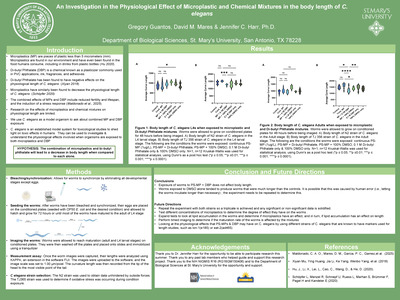
• Microplastics (MP) are pieces of plastic less than 5 micrometers (mm). Microplastics are found in our environment and have even been found in the food humans consume, including in drinks from plastic bottles (Hu 2020).
• Di-butyl Phthalate (DBP) is a chemical known as a plasticizer commonly used in PVC applications, ink, fragrances, and adhesives
• Di-butyl Phthalate has been found to have negative effects on the physiological length of C. elegans (Xiyan 2018)
• Microplastics have similarly been found to decrease the physiological length of C. elegans (Schöpfer 2020)
• The combined effects of MPs and DBP include reduced fertility and lifespan, and the induction of a stress response (Maldonado et al., 2025).
• Research on the effects of microplastics and chemical mixtures on physiological length are limited.
• We use C. elegans as a model organism to ask about combined MP and DBP exposure
• C. elegans is an established model system for toxicological studies to shed light on toxic effects in humans. They can be used to investigate & understand the physiological effects involved when organisms are exposed to both microplastics and DBP
-
Neurophenomenology: A Research Method Combining Neuroscience and Philosophy
Jonas Lokensgard
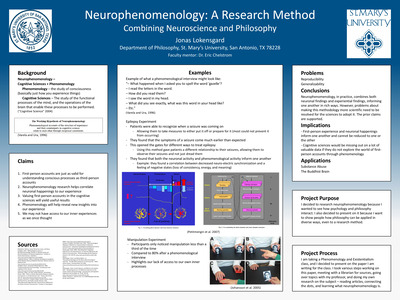
Neurophenomenology – Cognitive Sciences + Phenomenology Phenomenology – the study of consciousness (basically just how you experience things) Cognitive Sciences – The study of the functional processes of the mind, and the operations of the brain that enable these processes to be performed. (“Cognitive Science” 2004)
-

Silent Cries: Analyzing the Psychological Profiles of High School Shooters
Kayla Martinez
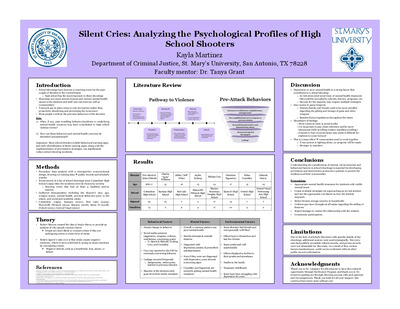
- School shootings have become a recurring event for the past couple of decades in the United States
- high school has the most exposure to these shootings
- Shootings can cause serious trauma and various mental health issues in the students and staff who survived (as well as communities)
- Protocols put in place seem to only be reactive rather than proactively identifying and preventing the occurrence
- Most people overlook the previous behaviors of the shooters
- School shootings have become a recurring event for the past couple of decades in the United States
-

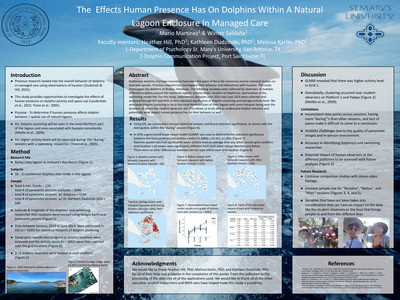
The Effects Human Presence has on Dolphins within a Natural Lagoon Enclosure in Managed Care
Mario Martinez and Winter Saldaña
● Previous research looked into the overall behavior of dolphins in managed care using observations of location (Dudzinski & Hill, 2025).
● This study provides opportunities to investigate the effects of human presence on dolphin activity and space use (Lauderdale et al., 2022; Trone et al., 2005).
● Purpose - To determine if human presence affects dolphin behavior / spatial use of natural lagoon.
● H1: Dolphin clustering will be seen in the most Northern part of the lagoon and area associated with humans consistently (Melillo et al., 2009).
● H2: Higher activity levels will be observed during the “during” sessions with a swimming researcher (Trone et al., 2005).
-
Nucleotide Excision Repair in Yeast
Kinleigh Mines, Larry Ramirez, Jacob Rodriguez, and Delynda Gonzalez
DNA damage occurs constantly in cells due to environmental factors and normal cellular processes, making DNA repair pathways essential for maintaining genomic stability (Hindi et al., 2021). One major repair mechanism is Nucleotide Excision Repair (NER), which is responsible for recognizing and removing bulky DNA lesions that distort the double helix structure (Scharer, 2013). In Saccharomyces cerevisiae (yeast), the RAD14 gene plays a critical role in this pathway by helping identify and initiate repair of damaged DNA (Scharer, 2013). Another source of instability comes from the formation of G-quadruplex (G4) structures, which are secondary DNA configurations that can interfere with replication and transcription (König et al., 2010; Gray et al., 2014). The small molecule drug CX-5461 is known to stabilize G4 structures, thereby increasing DNA stress and potentially leading to reduced cell survival (Xu et al., 2017). Because NER is involved in resolving helix-distorted damage, it is hypothesized that cells lacking functional NER (such as Rad14 mutants) would be more sensitive to CX-5461 compared to wild-type cells (Scharer, 2013; Xu et al., 2017).
-
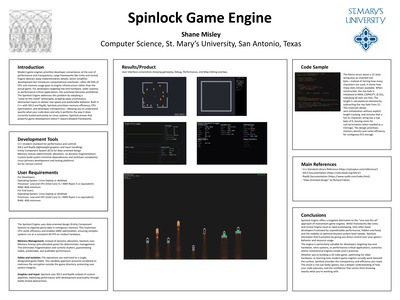
Spinlock Game Engine
Shane Misley
Modern game engines prioritize developer convenience at the cost of performance and transparency. Large frameworks like Unity and Unreal Engine abstract away implementation details, which simplifies development but introduces computational overhead—often 40-50% of CPU and memory usage goes to engine infrastructure rather than the actual game. For developers targeting low-end hardware, older systems, or performance-critical applications, this overhead becomes prohibitive. The Spinlock Engine addresses this problem by adopting a "close-to-the-metal" philosophy, stripping away unnecessary abstraction layers to deliver raw speed and predictable behavior. Built in C++ with SDL3 and Raylib, Spinlock prioritizes memory efficiency, CPU optimization, and developer transparency—allowing you to understand exactly what your code does and why it performs the way it does. Currently tested exclusively on Linux systems, Spinlock proves that powerful game development doesn't require bloated frameworks.
-
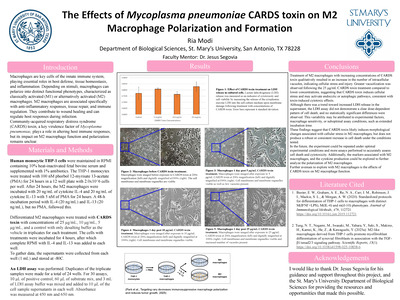
The Effects of Mycoplasma pneumoniae CARDS toxin on M2 Macrophage Polarization and Formation
Ria Modi
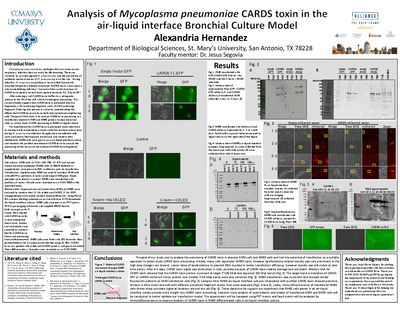
Macrophages are key cells of the innate immune system, playing essential roles in host defense, tissue homeostasis, and inflammation. Depending on stimuli, macrophages can polarize into distinct functional phenotypes, characterized as classically activated (M1) or alternatively activated (M2) macrophages. M2 macrophages are associated specifically with anti-inflammatory responses, tissue repair, and immune regulation. They contribute to wound healing and can regulate host responses during infection. Community-acquired respiratory distress syndrome (CARDS) toxin, a key virulence factor of Mycoplasma pneumoniae, plays a role in altering host immune responses, but its impact on M2 macrophage function and polarization remains unclear.
-
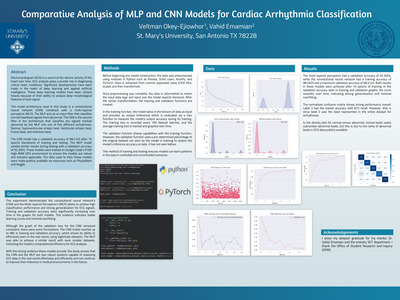
Comparative Analysis of MLP and CNN Models for Cardiac Arrhythmia Classification
Veltman Okey-Ejowhor and Vahid Emamian
Electrocardiogram (ECG) is a record of the electric activity of the heart over time. ECG analysis plays a pivotal role in diagnosing critical heart conditions. Significant developments have been made in the realm of deep learning and applied artificial intelligence. These deep learning models have been utilized heavily because of their ability to analyze deep morphological features of each signal. The model architecture used in this study is a convolutional neural network (CNN) combined with a multi-layered perceptron (MLP). The MLP acts as an input filter that classifies normal heartbeat signals from abnormal. The CNN is the second filter in the architecture that classifies any signals marked abnormal by the MLP into one of five different arrhythmias: Normal, Supraventricular ectopic beat, Ventricular ectopic beat, Fusion beat, and Unknown beat. The CNN model had a validation accuracy of 98.214% after 10 epochs (iterations) of training and testing. The MLP model yielded similar results during testing with a validation accuracy of 92.305%. These models were trained on Google Colab’s A100 High-RAM GPU environment to ensure the models are robust and industry-applicable. The data used to train these models were made publicly available via resources such as PhysioBank and Kaggle.
-
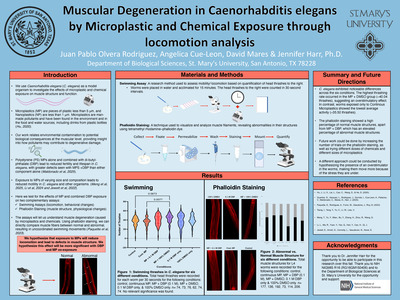
Muscular Degeneration in Caenorhabditis elegans by Microplastic and Chemical Exposure through locomotion analysis
Juan Pablo Olvera Rodriguez, Angelica Cue-Leon, and David Mares
We use Caenorhabditis elegans (C. elegans) as a model organism to investigate the effects of microplastic and chemical exposure on muscle structure and function.
• Microplastics (MP) are pieces of plastic less than 5 μm, and Nanoplastics (NP) are less than 1 μm. Microplastics are man-made pollutants and have been found in the environment and in the food and water sources, including drinks from plastic bottles (Hu, 2020). • Our work relates environmental contamination to potential biological consequences at the muscular level, providing insight into how pollutants may contribute to degenerative damage.
• Polystyrene (PS) MPs alone and combined with di-butyl-phthalate (DBP) lead to reduced fertility and lifespan in C. elegans, with greater defects seen with MPS +DBP than either component alone (Maldonado et al, 2025). • Exposure to MPs of varying size and composition leads to reduced motility in C. elegans and other organisms. (Meng et al, 2025, Li et al, 2024 and Jewett et al, 2022). • Here we test for the effects of MP and combined DBP exposure on two complementary assays: ü Swimming Assays (locomotion, behavioral changes) ü Phalloidin Staining (muscle structure, physiological changes) • The assays will let us understand muscle degeneration caused by microplastics and chemicals. Using phalloidin staining, we can directly compare muscle fibers between normal and abnormal, resulting in uncoordinated swimming movements (Paquette et al, 2023).
-
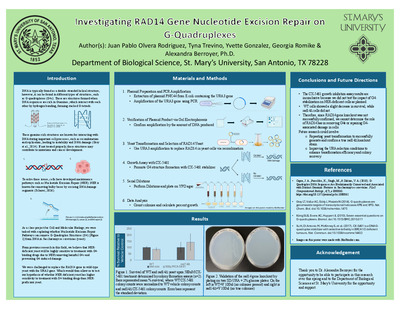
Investigating RAD14 Gene Nucleotide Excision Repair on G-Quadruplexes
Juan Pablo Olvera Rodriguez, Tyna Trevino, Yvette Gonzalez, and Georgia Romike
DNA is typically found as a double-stranded helical structure; however, it can be found in different types of structures, such as G-quadruplexes (G4s). These are structures formed when DNA sequences are rich in Guanines, which interact with each other by hydrogen bonding, forming stacked G-tetrads. These guanine-rich structures are known for interacting with DNA during important cell processes, such as recombination and replication, leading to instability and DNA damage (Grey et al., 2014). If not treated properly, these structures may contribute to mutations and cancer development. To solve these issues, cells have developed maintenance pathways such as Nucleotide Excision Repair (NER). NER is known for removing bulky bases by excising DNA damage segments (Scharer, 2026).
As a class project for Cell and Molecular Biology, we were tasked with exploring whether Nucleotide Excision Repair Pathways can remove G-Quadruplex Structures (G4) [Figure 1] from DNA in Saccharomyces cerevisiae (yeast). From previous research in this field, we believe that NER-deficient yeast will be highly sensitive to treatment with G4-binding drugs due to NER removing harmful G4s and preventing G4-induced damage. We were challenged to replace the RAD14 gene in wild-type yeast with the URA3 gene. Which would then allow us to test our hypothesis of whether NER-deficient yeast has higher sensitivity to treatment with G4-binding drugs than NER-proficient yeast.
-
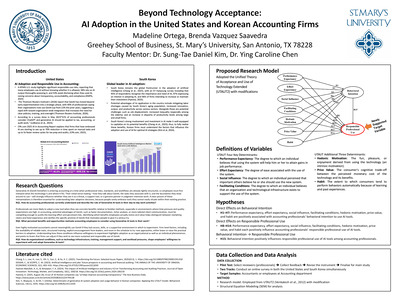
Beyond Technology Acceptance: AI Adoption in the United States and Korean Accounting Firms
Madeline Ortega and Brenda Vazquez Saavedra
A comparison of AI adoption between the United States and South Korea
-
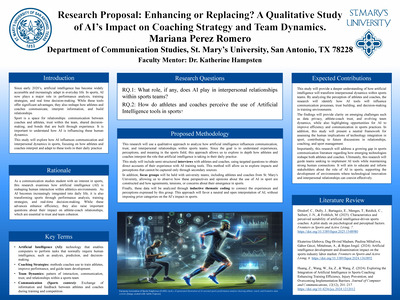
Research Proposal: Enhancing or Replacing? A Qualitative Study of AI's Impact on Coaching Strategy and Team Dynamics
Mariana Perez Romero
Since early 2020’s, artificial intelligence has become widely accessible and increasingly adapt in everyday life. In sports, AI now plays a major role in performance analysis, training strategies, and real time decision-making. While these tools offer significant advantages, they also reshape how athletes and coaches communicate, interpret information, and build relationships. Sport is a space for relationships: communication between coaches and athletes, trust within the team, shared decision-making, and bonds that are built through experience. It is important to understand how AI is influencing these human dynamics. This study will explore how AI influences communication and interpersonal dynamics in sports, focusing on how athletes and coaches interpret and adapt to these tools in their daily practice
Printing is not supported at the primary Gallery Thumbnail page. Please first navigate to a specific Image before printing.