


Files
Download Full Text (1.8 MB)
Contributor
Harr, Jennifer (Faculty Mentor)
Digital Publisher
Digital Commons at St. Mary's University
Publication Date
Spring 2026
Description
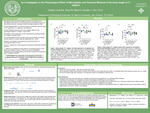
• Microplastics (MP) are pieces of plastic less than 5 micrometers (mm). Microplastics are found in our environment and have even been found in the food humans consume, including in drinks from plastic bottles (Hu 2020).
• Di-butyl Phthalate (DBP) is a chemical known as a plasticizer commonly used in PVC applications, ink, fragrances, and adhesives
• Di-butyl Phthalate has been found to have negative effects on the physiological length of C. elegans (Xiyan 2018)
• Microplastics have similarly been found to decrease the physiological length of C. elegans (Schöpfer 2020)
• The combined effects of MPs and DBP include reduced fertility and lifespan, and the induction of a stress response (Maldonado et al., 2025).
• Research on the effects of microplastics and chemical mixtures on physiological length are limited.
• We use C. elegans as a model organism to ask about combined MP and DBP exposure
• C. elegans is an established model system for toxicological studies to shed light on toxic effects in humans. They can be used to investigate & understand the physiological effects involved when organisms are exposed to both microplastics and DBP
Format
Size
1 poster
City
San Antonio, Texas
Creative Commons License

This work is licensed under a Creative Commons Attribution-NonCommercial-No Derivative Works 4.0 International License.
Included in
Cellular and Molecular Physiology Commons, Comparative and Evolutionary Physiology Commons, Environmental Health Commons, Molecular Biology Commons, Toxicology Commons