


Files
Download Full Text (1.2 MB)
Contributor
Hawkins, Mary Beth (Faculty Mentor), Karlin, Melissa (Faculty Mentor)
Digital Publisher
Digital Commons at St. Mary's University
Publication Date
Spring 2026
Keywords
Birds, Population factors, Abiotic stress, Biotic stress, Urban Development, Habitats
Description
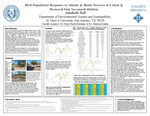
Birds are heavily impacted by urban development. Many experience habitat fragmentation and removal of food sources. However, other species can adapt to and even thrive in urban environments, thanks to certain tree species, bird feeders, and buildings. In North America, the house sparrow and the European starling are invasive species that benefit from urban environments (Bartelt, 2011; Fitzwater, 2014). Meanwhile, many habitats across the continent are experiencing restoration/rewilding efforts for the benefit of birds. One such habitat is the oak-savannah, which is characterized by 10-30% canopy cover and a mixture of prairie & woodland vegetation, supporting a high diversity of bird species. While this habitat is one of the most endangered in the world, it has great potential for restoration (NCRS, 2008; Brawn, 2006; Vander Yacht, et al., 2016; Au et al., 2008). I compared 3 bird-feeding sites on campus over a 12-week period, one of which is undergoing oak-savannah restoration. I tested the hypotheses that native bird diversity would be greatest in the restored treatment and that it would increase over time in the restored treatment.
Format
Size
1 poster
City
San Antonio, Texas
Creative Commons License

This work is licensed under a Creative Commons Attribution-NonCommercial-No Derivative Works 4.0 International License.
Included in
Biology Commons, Environmental Monitoring Commons, Population Biology Commons, Poultry or Avian Science Commons, Terrestrial and Aquatic Ecology Commons