

-
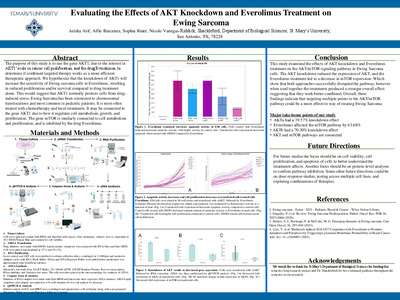
Everolimus Treatment Combined With AKT1 Knockdown Increased Apoptosis and Decreased Cell Proliferation in Ewing Sarcoma Cells
Arisha Arif, Alfie Barcenez, Sophia Ruter, Nicole Vanegas-Riddick, and Terry Jo Shackleford
The purpose of this study is to use the gene AKT1, due to the interest in AKT1’s role in cancer cell proliferation, and the drug Everolimus, to determine if combined targeted therapy works as a more efficient therapeutic approach. Ewing Sarcoma has been connected to chromosomal translocations and is most common in pediatric patients. It is most often treated with chemotherapy and local treatments. It may be connected to the gene AKT1 due to how it regulates cell metabolism, growth, and proliferation. The gene mTOR is similarly connected to cell metabolism and proliferation, and is inhibited by the drug Everolimus. It has been hypothesized that AKT1 knockdown may increase Ewing Sarcoma’s sensitivity to Everolimus, potentially leading to an increase in apoptosis and a reduction in cell proliferation compared to drug use alone. If this is the case, then it would suggest that AKT1 normally protects cells from drug-induced stress. To test this, the AKT gene was knocked down using siRNA transfection and AKT and mTOR expression were measured and compared. Afterwards, 0.1 or 1.0 μM of Everolimus was added to some of the cells, and cell proliferation and apoptosis was measured. There was a significant difference between the groups, with the transfected cells showing the lowest expression of AKT and mTOR, and when combined with Everolimus, displayed the least amount of cell proliferation and survival.
-
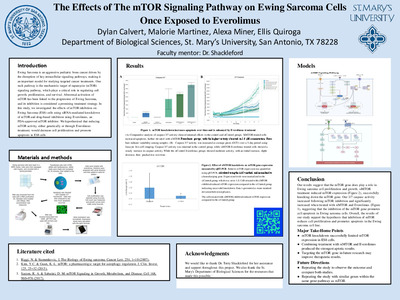
Everolimus and siRNA-Mediated mTOR Inhibition Reduces Proliferation and Promotes Apoptosis in Ewing Sarcoma Cells
Dylan Calvert, Malorie Martinez, Alexa Miner, Ellis Quiroga, and Terry Jo Shackleford
Ewing Sarcoma (ES) is an aggressive pediatric bone cancer characterized by rapid cell proliferation and poor prognosis, making the identification of therapeutic targets critical. One of the mechanistic targets is rapamycin (mTOR) signaling pathway, which is critical for regulating cell growth, proliferation, and survival. Abnormal activation of the mTOR signaling pathway has been linked to the progression of ES, as it drives uncontrolled cell growth and apoptosis resistance. Because mTOR represents a promising therapeutic target for ES treatment, we hypothesized that inhibiting mTOR activity through an siRNA-mediated knockdown or through Everolimus drug treatment, would reduce cell proliferation and promote ES cell apoptosis. Everolimus is an FDA-approved mTOR inhibitor that functions by binding to mTORC1 and blocking downstream signaling involved in cell growth and survival. To test this hypothesis, ES cells were treated with siRNA-mediated knockdown of mTOR and Everolimus at concentrations of 0.1µM and 1.0µM, and cell proliferation, apoptosis, and gene expression were measured using Incucyte live-cell imaging, Caspase 3/7 fluorescence, and qRT-PCR, respectively. Our results showed that mTOR inhibition successfully reduced mTOR gene expression and increased Caspase 3/7 activity, showing an increase in apoptosis, with the greatest effect observed at 1.0µM Everolimus together with siMTOR knockdown. Our findings support the hypothesis that mTOR inhibition reduces cell proliferation and promotes apoptosis in ES cells, suggesting that it is a potential therapeutic treatment for Ewing Sarcoma.
-
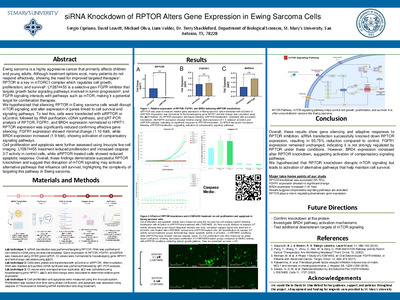
siRNA Knockdown of RPTOR Reduces RPTOR Expression, Increases BRD4 Expression, and Alters Proliferation and Apoptosis in Ewing's Sarcoma Cells
Sergio Cipriano, David Leavitt, Michael Olivia, Liam Valdez, and Terry Jo Shackleford
Ewing sarcoma is a highly aggressive cancer that primarily affects children and young adults. Although treatment options exist, many patients do not respond effectively, showing the need for improved targeted therapies. RPTOR is a key in mTORC1 complex which regulates cell growth, proliferation, and survival. LY2874455 is a selective pan-FGFR inhibitor that targets growth factor signaling pathways involved in tumor progression, and FGFR signaling interacts with pathways such as mTOR, making it a potential target for combination therapies. We hypothesized that silencing RPTOR in Ewing sarcoma cells would disrupt mTOR signaling and alter expression of genes linked to cell survival and signaling pathways. To test this, cells were transfected with siRPTOR or siControl, followed by RNA purification, cDNA synthesis, and qRT-PCR analysis of RPTOR, FGFR1, and BRD4 expression normalized to HPRT1. RPTOR expression was significantly reduced confirming effective gene silencing. FGFR1 expression showed minimal change (1.10-fold), while BRD4 expression increased (1.9-fold), showing activation of compensatory signaling pathways. Cell proliferation and apoptosis were further assessed using Incucyte live-cell imaging. LY2874455 treatment reduced proliferation and increased caspase 3/7 activity in control cells, while siRPTOR-treated cells showed reduced apoptotic response. Overall, these findings demonstrate successful RPTOR knockdown and suggest that disruption of mTOR signaling may activate alternative pathways that influence cell survival, highlighting the complexity of targeting this pathway in Ewing sarcoma.
-
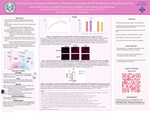
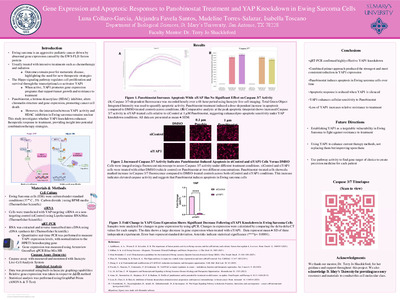
YAP1 Knockdown and Panobinostat Treatment Increase Apoptotic Response and Decrease Gene Expression in Ewing Sarcoma Cells
Luna Collazo-Garcia, Alejandra Favela Santos, Madeline Torres-Salazar, Isabella Toscano, and Terry Jo Shackleford
Ewing sarcoma (EWS) is considered to be one of the most aggressive pediatric malignancies, often characterized by its dysregulated gene expression driven by oncogenic fusion proteins. The Hippo signaling effector Yes-associated protein 1 (YAP1) has been known in promoting cell proliferation, survival, and therapeutic resistance in multiple cancers. However, its role in Ewing sarcoma response to treatment remains unclear. This study investigated whether YAP1 knockdown enhances the sensitivity of Ewing sarcoma cells to the histone deacetylase inhibitor Panobinostat. Ewing sarcoma, ES8, cells were transfected with a YAP1-targeting siRNA (siYAP1) or a non-targeting control (siControl) and treated with DMSO, 0.1 μM, or 1.0 μM Panobinostat. Cell proliferation and apoptosis were monitored over time using the Incucyte S3 Live-Cell Analysis System. Apoptosis was assessed through caspase 3/7 activity, and YAP1 gene expression was quantified using qRT-PCR. Panobinostat treatment resulted in a dose-dependent decrease in cell proliferation and increase in apoptotic activity. While YAP1 knockdown alone reduced proliferation and modestly increased apoptosis compared to controls. qRT-PCR confirmed a significant reduction in YAP1 expression following siRNA treatment. However, the combined effect of YAP1 knockdown and Panobinostat did not produce a strong increase in apoptosis beyond drug treatment alone.These findings suggest that while YAP1 contributes to Ewing sarcoma cell growth and survival, Panobinostat is the primary driver of apoptosis under these conditions. Thus, further studies are needed to determine whether YAP1 plays a context-dependent role in therapeutic sensitivity.
-
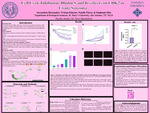
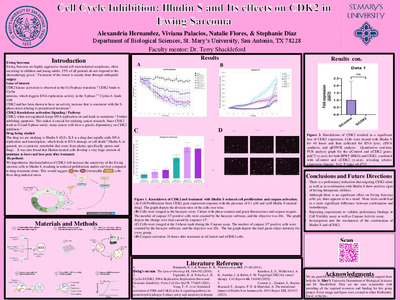
Cell Cycle Inhibition: Illudin S and Its Effects on CDK2 in Ewing Sarcoma
Stephanie Diez, Natalie Flores, Alexandria Hernandez, Viviana Palacios, and Terry Jo Shackleford
Ewing Sarcomas are aggressive round cell mesenchymal neoplasmas that have a high occurrence in children and young adults. CDK2 is a protein that is involved in the G1 phase of the cell cycle, which promotes the transition to the S phase. CDK2 kinase activation is mainly observed in the G1/S-phase transition.3 CDK2 binds to Cyclin proteins is responsible for entry and progression, thereby leading to maximal apoptosis activity in the S-phase. Illudin S is a drug that has been known to target cancer-specific cells, such as leukemia. Illudin S, in general are a cytotoxic metabolite that comes from plants, specifically spores and fungi. This study investigated whether knockdown of CDK2 would increase the sensitivity of the Ewing sarcoma cells to Illudin S, resulting in reduced proliferation and/or survival compared to drug treatment alone. This would suggest that the CDK2 normally protects cells from drug-induced stress. Cells were transfected with CDk2 and Illudin S for 48 hours and were then used for cell proliferation, qRT-PCR, and caspase 3/7 assays. Although it's preliminary data, there is an indication suggesting that targeting CDK2 alone as well as in combination with Illudin S shows positive signs of having therapeutic abilities. Although there is no significant effect on Ewing Sarcoma cells yet, there appears to be a trend. More trials could lead to a more significant difference between combination and monotherapy.
-
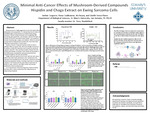
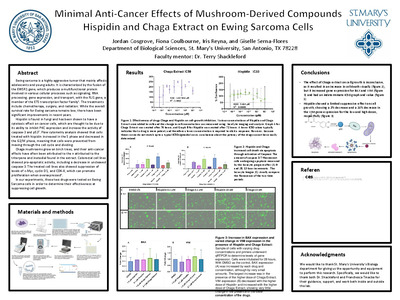
Minimal Anti-Cancer Effects of Mushroom-Derived Compounds Hispidin and Chaga Extract on Ewing Sarcoma Cells
Jordan Cosgrove, Fiona Coulbourne, Iris Reyna, Giselle Serna-Flores, and Terry Jo Shackleford
Ewing sarcoma is a rare and aggressive cancer of adolescents and young adults driven by the EWSR1–FLI1 gene fusion. Standard treatments include chemotherapy, surgery, and radiation, though survival rates remain low. Natural compounds such as hispidin, derived from fungi, and Chaga mushroom extract have shown potential anti-cancer effects by disrupting cell cycle progression and promoting apoptosis in other cancer models. In this study, we tested the effects of hispidin and Chaga extract on Ewing sarcoma cells to evaluate their ability to suppress cell growth and identify potential therapeutic benefits.
-
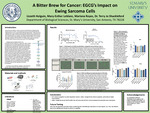
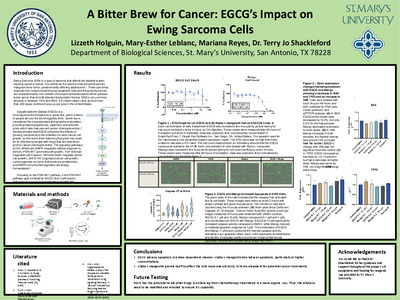
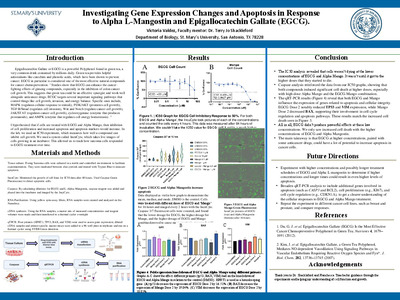
A Bitter Brew For Cancer: EGCG’s Impact on Ewing Sarcoma Cells
Lizzeth Holguin, Mary-Esther Leblanc, Mariana Reyes, and Terry Jo Shackleford
Epigallocatechin Gallate (EGCG), a powerful antioxidant found in green tea, is an abundant treatment to treat Ewing Sarcoma cells, a pediatric cancer affecting the skeletal system. Given EGCG’s known role in other cancer treatments, these tests aim to investigate its effects as a standalone natural compound on Ewing Sarcoma cells. Focusing on the PI3K/AKT pathway, if the PI3K/AKT pathway is inhibited by EGCG, then it will lead to reduced cell survival and proliferation of EW8 cells. Using cell culture techniques, IncuCyte-based IC50 analysis, caspase 3/7, RNA purification, cDNA synthesis, and qRT-PCR, EGCG’s impact was assessed on cell apoptosis and gene expression. Results showed that EGCG did affect Ewing sarcoma cells by inducing apoptosis in a dose-dependent manner, though its effects were less potent than hypothesized. These findings suggest that while EGCG exhibits anticancer properties, it may be more effective in a synergistic manner rather than as a standalone therapy.
-
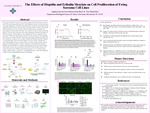
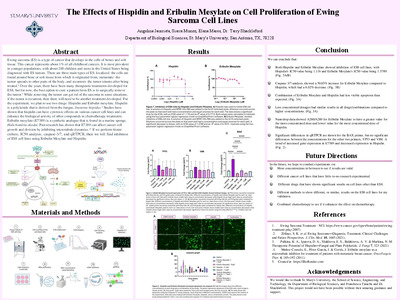
The Effects of Hispidin and Eribulin Mesylate on Cell Proliferation of Ewing Sarcoma Cell Lines
Elena Mares, Angelina Juarrita, Sierra Munoz, and Terry Jo Shackleford
Ewing sarcoma is a type of cancer that targets the cells within bones and soft tissue and is most prevalent in younger populations. It is important to look at this specific cancer because there is no cure yet, and the risks increase, even after a patient has completed their treatment. We hypothesize that if we treat Ewing sarcoma cell lines with natural compounds, specifically Hispidin and Eribulin Mesylate, then the cell lines will decrease in cell viability and there will be an increase in apoptosis of the cancerous cell lines. We performed a series of experiments, which included IC50 analysis, Caspase-3/7 analysis, and qRTPCR. Our results showed that there was cell inhibition for both Hispidin and Eribulin Mesylate, apoptosis was induced for both Hispidin and Eribulin Mesylate, and there were changes in gene expression for both Hispidin and Eribulin Mesylate. With our gathered data, we were able to prove our hypothesis was supported due to the decrease in viable cells, increase in apoptosis, and changes in gene expression.
-
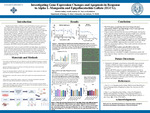
The Effect of Epigallocatechin Gallate (EGCG) and Alpha L-Mangostin on TP53, BAX, and VIM Gene Expression and Apoptosis in Ewing Sarcoma Cells
Victoria Valdez and Terry Jo Shackleford
Ewing Sarcoma (ES) is a malignant pediatric bone tumor driven by chromosomal translocations and fusion oncogenes with limited targeted treatment options. This study investigated the chemopreventive potential of two natural compounds, Epigallocatechin Gallate (EGCG) found in green tea, and Alpha L-Mangostin from mangosteen, on apoptosis and gene expression in ES cells. We hypothesized that EGCG and Alpha L-Mangostin treatment would induce apoptosis and downregulate cancer-promoting genes. To test this, we performed tissue culture, IC50 assays, caspase-based apoptosis detection, RNA purification, cDNA synthesis, and qRT-PCR on ES cell lines treated with a high and low concentration of the two compounds. Our findings showed that both compounds induced caspase-mediated apoptosis and altered the expression of target genes such as TP53, BAX, and VIM. Notably higher concentrations of EGCG reduced TP53 and VIM expression, while Alpha L-Mangostin significantly reduced BAX expression. These results support our hypothesis and suggest that EGCG and Alph L-Mangostin may contribute to cancer treatment strategies via gene regulation and apoptosis induction in Ewing Sarcoma cells.
-
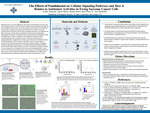
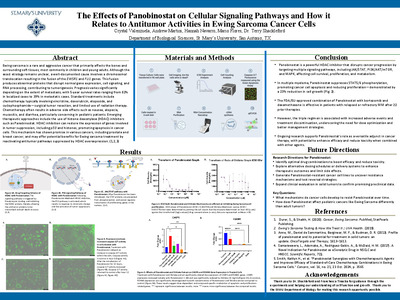
The Effects of Panobinostat on Cellular Signaling Pathways and How it Relates to Antitumor Activities in Ewing Sarcoma Cancer Cells
Crystal Valenzuela, Andrew Martini, Hannah Navarro, Mario Flores, and Terry Jo Shackleford
Ewing sarcoma is a rare and aggressive cancer that primarily affects the bones and surrounding soft tissues, most commonly in children and young adults. Although the exact etiology remains unclear, a well-documented cause involves a chromosomal translocation resulting in the fusion of the EWSR1 and FLI1 genes. This fusion produces abnormal proteins that disrupt normal gene expression, cell signaling, and RNA processing, contributing to tumorigenesis. Prognosis varies significantly depending on the extent of metastasis, with 5-year survival rates ranging from 82% in localized cases to 39% in metastatic cases. Standard treatments include chemotherapy typically involving vincristine, doxorubicin, etoposide, and cyclophosphamide—surgical tumor resection, and limited use of radiation therapy. Chemotherapy often results in adverse side effects such as nausea, alopecia, mucositis, and diarrhea, particularly concerning in pediatric patients. Emerging therapeutic approaches include the use of histone deacetylase (HDAC) inhibitors such as Panobinostat. HDAC inhibition can restore the expression of genes involved in tumor suppression, including p53 and histones, promoting apoptosis in cancer cells. This mechanism has shown promise in various cancers, including prostate and breast cancer, and may offer potential benefits for Ewing sarcoma treatment by reactivating antitumor pathways suppressed by HDAC overexpression.
-
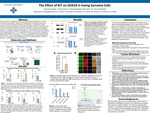
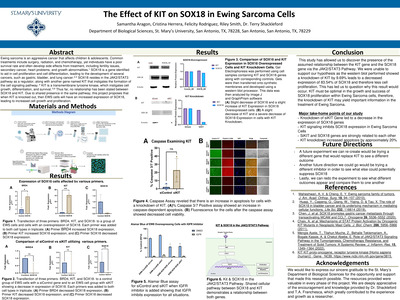
The Effect of Knockdown of Gene KIT on SOX18 Gene Expression Through the JAK2/STAT3 Signaling Pathway Within an Ewing Sarcoma Cell
Samantha Aragon, Cristina Herrera, Felicity Rodriguez, Riley Smith, and Terry Jo Shackleford
Ewing sarcoma is an aggressive cancer that affects children & adolescents. Common treatments include surgery, radiation, and chemotherapy, yet individuals have a poor survival rate and often develop side effects from treatment, including fertility issues, secondary cancer, heart problems, and growth abnormalities.1SOX18 is a gene identified to aid in cell proliferation and cell differentiation, leading to the development of several cancers, such as gastric, bladder, and lung cancer.2,3 SOX18 resides in the JAK2/STAT3 pathway as a regulator, along with another gene named KIT that instigates the formation of the cell signaling pathway.4KIT is a transmembrane tyrosine kinase, which instigates cell growth, differentiation, and survival.5,6Thus far, no relationship has been stated between SOX18 and KIT. Due to shared presence in the same pathway, this project proposes that when KIT is knocked out, then EWS cells will have an increased expression of SOX18, leading to increased cell growth and proliferation.
-
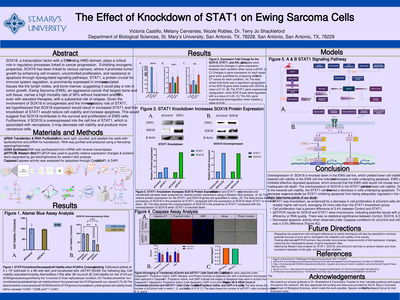
The Effects of Ewing Sarcoma Through the Overexpression and Knockdown of Transcription Factors SOX18 and STAT1
Victoria Castillo, Melany Cervantes, Nicole Robles, and Terry Jo Shackleford
SOX18, a transcription factor with a DNA-binding HMG domain, plays a critical role in regulatory processes linked to cancer progression. Exhibiting oncogenic properties, SOX18 has been linked to various cancers, where it promotes tumor growth by enhancing cell invasion, uncontrolled proliferation, and resistance to apoptosis through dysregulated signaling pathways. STAT1, a protein crucial for immune system regulation, is prominently expressed in immune-associated tissues like the lymph nodes, and bone marrow, suggesting it could play a role in tumor growth. Ewing Sarcoma (EWS), an aggressive cancer that targets bone and soft tissue, carries a high mortality rate of 90% without treatment and 75-85% even with standard therapies, with a substantial risk of relapse. Given the involvement of SOX18 in oncogenesis and the immune-regulatory role of STAT1, we hypothesized that SOX18 expression would result in increased STAT1 and that knockdown of STAT1 would reduce cell viability and increase apoptosis. This would suggest that SOX18 contributes to the survival and proliferation of EWS cells. Furthermore, if SOX18 is overexpressed into the cell line of STAT1, which is associated with necroptosis, it may decrease cell viability and produce more cancerous cells.
-
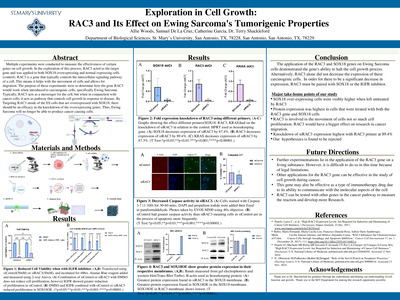
Exploration in Cell Growth: RAC3 and Its Effect on Ewing Sarcomas Tumorigenic Properties
Allie Woods, Samuel De La Cruz, Catherine Garcia, and Terry Jo Shackleford
Multiple experiments were conducted to measure the effectiveness of certain genes on cell growth. In the exploration of this process, RAC3 acted as the target gene and was applied to both SOX18 overexpressing and normal expressing cells (control). RAC3 is a gene that typically controls the intercellular signaling pathway of a cell. This means it helps with the movement of cells and allows for migration.The purpose of these experiments were to determine how the gene RAC3 would work when introduced to carcinogenic cells, specifically Ewing Sarcoma. Typically, RAC3 acts as a messenger for the cell, but when in conjunction with cancer cells, it acts as pathway that controls cell growth in response to disease. By Targeting RAC3 inside of the ES cells that are overexpressed with SOX18, there should be an efficacy in the knockdown of the overexpressing genes. Thus, Ewing Sarcoma will no longer be able to produce cancer causing cells.
Printing is not supported at the primary Gallery Thumbnail page. Please first navigate to a specific Image before printing.