

Files
Download Full Text (1.2 MB)
Publication Date
5-15-2025
Keywords
Cancer, Ewing Sarcoma, EGCG, Epigallocatechin Gallate, Green Tea, Incucyte, Cancer Therapeutics, Pediatric Cancer
Description
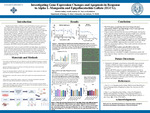
Ewing Sarcoma (ES) is a malignant pediatric bone tumor driven by chromosomal translocations and fusion oncogenes with limited targeted treatment options. This study investigated the chemopreventive potential of two natural compounds, Epigallocatechin Gallate (EGCG) found in green tea, and Alpha L-Mangostin from mangosteen, on apoptosis and gene expression in ES cells. We hypothesized that EGCG and Alpha L-Mangostin treatment would induce apoptosis and downregulate cancer-promoting genes. To test this, we performed tissue culture, IC50 assays, caspase-based apoptosis detection, RNA purification, cDNA synthesis, and qRT-PCR on ES cell lines treated with a high and low concentration of the two compounds. Our findings showed that both compounds induced caspase-mediated apoptosis and altered the expression of target genes such as TP53, BAX, and VIM. Notably higher concentrations of EGCG reduced TP53 and VIM expression, while Alpha L-Mangostin significantly reduced BAX expression. These results support our hypothesis and suggest that EGCG and Alph L-Mangostin may contribute to cancer treatment strategies via gene regulation and apoptosis induction in Ewing Sarcoma cells.
Collection
Cell and Molecular Methods
Format
Medium
Lab report, poster
Size or Duration
13 Pages
City
San Antonio, Texas
Creative Commons License

This work is licensed under a Creative Commons Attribution 4.0 International License.
Recommended Citation
Valdez, Victoria and Shackleford, Terry Jo, "The Effect of Epigallocatechin Gallate (EGCG) and Alpha L-Mangostin on TP53, BAX, and VIM Gene Expression and Apoptosis in Ewing Sarcoma Cells" (2025). Cell and Molecular Methods. 8.
https://commons.stmarytx.edu/biostulab25/8