

Files
Download Full Text (2.0 MB)
Publication Date
Spring 5-10-2026
Keywords
Ewing Sarcoma, Pediatric Cancer, Illudin, CDK2, Apoptosis, Proliferation, Migration, qRTPCR, Incucyte, Tissue Culture
Description
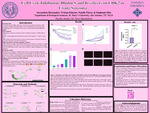
Ewing Sarcomas are aggressive round cell mesenchymal neoplasmas that have a high occurrence in children and young adults. CDK2 is a protein that is involved in the G1 phase of the cell cycle, which promotes the transition to the S phase. CDK2 kinase activation is mainly observed in the G1/S-phase transition.3 CDK2 binds to Cyclin proteins is responsible for entry and progression, thereby leading to maximal apoptosis activity in the S-phase. Illudin S is a drug that has been known to target cancer-specific cells, such as leukemia. Illudin S, in general are a cytotoxic metabolite that comes from plants, specifically spores and fungi. This study investigated whether knockdown of CDK2 would increase the sensitivity of the Ewing sarcoma cells to Illudin S, resulting in reduced proliferation and/or survival compared to drug treatment alone. This would suggest that the CDK2 normally protects cells from drug-induced stress. Cells were transfected with CDk2 and Illudin S for 48 hours and were then used for cell proliferation, qRT-PCR, and caspase 3/7 assays. Although it's preliminary data, there is an indication suggesting that targeting CDK2 alone as well as in combination with Illudin S shows positive signs of having therapeutic abilities. Although there is no significant effect on Ewing Sarcoma cells yet, there appears to be a trend. More trials could lead to a more significant difference between combination and monotherapy.
Collection
Cell and Molecular Methods
Format
Size or Duration
11 Pages
City
San Antonio
Creative Commons License

This work is licensed under a Creative Commons Attribution-NonCommercial-No Derivative Works 4.0 International License.
Recommended Citation
Diez, Stephanie; Flores, Natalie; Hernandez, Alexandria; Palacios, Viviana; and Shackleford, Terry Jo, "Cell Cycle Inhibition: Illudin S and Its Effects on CDK2 in Ewing Sarcoma" (2026). Cell and Molecular Methods. 13.
https://commons.stmarytx.edu/biostulab25/13
Included in
Biology Commons, Cancer Biology Commons, Cell Biology Commons, Research Methods in Life Sciences Commons