


Files
Download Full Text (1.4 MB)
Contributor
Enslow, Benjamin T. (Faculty Mentor)
Digital Publisher
Digital Commons at St. Mary's University
Publication Date
Spring 2026
Keywords
Melatonin, B Cells, Pathogens, Antibodies, Glucose
Description
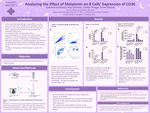
• B cells specifically target pathogens and proliferate to make a plasma cell and secrete antibodies when stimulated. They use glucose as a main energy source but can also use fatty acids. • CD36 is a glycoprotein involved in the transportation and metabolism of fatty acids. • B cells express CD36 in unusually high levels in autoimmune patients. It is unknown as to how this occurs. • Melatonin is a hormone produced in the pineal gland, commonly known for its function in regulating the circadian rhythm. • Melatonin is also known as a master cell regulator and is believed to regulate almost all cell functions including the movement of energy to and from storage and its role in activating the immune system. The effects of melatonin on CD36 expression in B cells is still untested.
Format
Size
1 poster
City
San Antonio, Texas
Creative Commons License

This work is licensed under a Creative Commons Attribution-NonCommercial-No Derivative Works 4.0 International License.