


Files
Download Full Text (1.8 MB)
Contributor
Tovar, Ruben (Faculty Mentor)
Digital Publisher
Digital Commons at St. Mary's
Publication Date
Spring 2026
Keywords
Salamanders, Central Texas, Environmental factors, Habitats, Evolution
Description
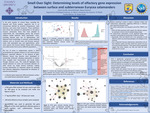
In the karst aquifers of central Texas, including the Edwards and Trinity systems, organisms live in an environment defined by constant temperatures, total darkness, and scarce food resources. These conditions have driven the evolution of salamanders in the genus Eurycea, particularly those that have adapted to subterranean life. Cave-dwelling species like Eurycea rathbuni exhibit hallmark “blind salamander” traits, including educed eyes, loss of pigmentation, and flattened head morphology. In contrast, surface-dwelling relatives such as Eurycea nana and Eurycea sosorum retain fully developed eyes and pigmentation, while some species like Eurycea latitans display both surface and subterranean forms across different populations.
Format
Size
1 poster
City
San Antonio, Texas
Creative Commons License

This work is licensed under a Creative Commons Attribution-NonCommercial-No Derivative Works 4.0 International License.