

Files
Download Full Text (1.3 MB)
Publication Date
12-10-2025
Keywords
Ewing Sarcoma, Pediatric Cancer, CXCR4, Chemokine Receptor, Extracellular Matrix, CRISPR, Apoptosis, Proliferation, Migration, qRTPCR, Incucyte, Tissue Culture
Description
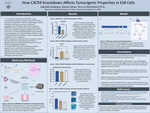
C-X-C chemokine receptor type 4 (CXCR4) is a seven-transmembrane G-protein–coupled receptor (GPCR). When activated by its ligand SDF-1 (CXCL12), CXCR4 triggers signaling pathways that promote cell survival, proliferation, angiogenesis, and chemotaxis. Many cancers exploit the CXCR4/SDF-1 axis to support tumor growth and metastasis. Ewing sarcoma (ES8) is an aggressive pediatric bone and soft-tissue cancer, and elevated CXCR4 signaling has been linked to increased migration and metastatic behavior. ES8 cells, a well-established ES8 cell line, provided a model to study how CXCR4contributes to tumor progression. CRISPR-Cas9 genome editing was used to knock down CXCR4 in ES8 cells, delivered through lipid-based transfection. Lipofection allows Cas9 and guide RNA to enter the cell and introduce targeted gene disruption. This project evaluated how CXCR4 loss affects tumorigenic properties, including proliferation, colony formation, migration, and survival. We hypothesized that reducing CXCR4 expression would decrease these behaviors, given its established role in promoting aggressive and metastatic phenotypes in Ewing sarcoma.
Collection
Mechanisms of Disease Lab Reports
Format
Medium
Poster
Size or Duration
1 Page
City
San Antonio, Texas
Creative Commons License

This work is licensed under a Creative Commons Attribution-Share Alike 4.0 International License.
Recommended Citation
Galdeano, Gabriella; James, Damon; and Shackleford, Terry Jo, "How CXCR4 Knockdown Affects Tumorigenic Properties in ES8 Cells" (2025). Mechanisms of Disease. 5.
https://commons.stmarytx.edu/mecofdis/5