

Files
Download Full Text (1.2 MB)
Publication Date
12-10-2025
Keywords
Ewing Sarcoma, Pediatric Cancer, PTK2, Extracellular Matrix, CRISPR, Apoptosis, Proliferation, Migration, qRTPCR, Incucyte, Tissue Culture
Description
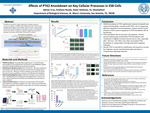
Ewing sarcoma is an aggressive form of pediatric cancer characterized by rapid growth and metastatic potential, with limited treatment options available. PTK2 is a key regulator of many pathways involved in tumor behavior, including integrin-mediated adhesion, survival, and migration. This research lab investigated how CRISPR-Cas9 knockdown of PTK2 can affect cellular processes in ES8 Ewing sarcoma cells. To assess the effectiveness of reducing PTK2 expression, we utilized live-cell imaging, wound-healing assays, measurements of caspase activity, colony formation, and qRT-PCR. Our results showed that incomplete knockdown decreased cell proliferation and colony formation, while also increasing apoptotic activity. Additionally, migratory ability was not reduced. Rather, the knockdown cells maintained normal-or even enhanced-wound closure rates, suggesting a compensatory mechanism to preserve motility. The findings indicate that though PTK2 is an important regulator of key survival pathways, Ewing sarcoma cells appear to rely on alternate pathways to preserve migration when PTK2 levels are diminished. Further research is needed to more accurately identify the mechanisms impacted by PTK2 inhibition.
Collection
Mechanisms of Disease Lab Reports and Posters
Format
Medium
Poster
Size or Duration
1 Page
City
San Antonio, Texas
Creative Commons License

This work is licensed under a Creative Commons Attribution-Share Alike 4.0 International License.
Recommended Citation
Cruz, Adrian; Rueda, Emiliano; Andrews, Dylan; and Shackleford, Terry Jo, "Effects of PTK2 Knockdown on Key Cellular Processes in ES8 Cells" (2025). Mechanisms of Disease. 2.
https://commons.stmarytx.edu/mecofdis/2