


Files
Download Full Text (4.8 MB)
Contributor
Tovar, Ruben (Faculty Mentor)
Digital Publisher
Digital Commons at St. Mary's
Publication Date
Spring 2026
Keywords
Salamanders (Eurycea), Phenotype, Habitats, Environmental impacts
Description
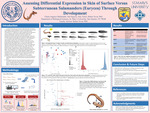
In salamanders, previous findings have shown that subterranean environments impose different selection pressures on sensory systems than surface environments do (1). Differences in ocular development between phenotypes is part of ongoing research to better understand the evolutionary and molecular underpinnings. Studies have shown that parallel ocular development occurred in subterranean and surface phenotypes, while pax6 expression decreased in latter stages of development of subterranean species (2). These insights of gene labeling and expression as well as reduction of ocular structures in latter stages of development provide a stage for understanding evolutionary processes and genetic mechanisms as well as having potential clinical applications (2). There are many other phenotypic and physiological characteristics that can be analyzed to further these differential expression findings from the ocular structures. Some phenotypic differences include fully formed functioning eyes, small robust limbs, and pigmentation in surface species; in contrast subterranean species have dorsally ventrally compressed heads, reduced non-functioning eyes, and highly reduced pigmentation (2).
Considering the preliminary findings about sensory systems selections, skin is another potentially insightful area of investigation due to the mechanoreception differences between surface and subterranean species (1). Using previous gene sequencing data from tissue sampling, the species E. sosorum, E. rathbuni, E. latitans, E. nana, E. pterophila CS, and E. pterophila PC were utilized for our skin analysis.
We aimed to explore the developmental process to learn which genes are differentially expressed in skin tissue between subterranean and surface species.
We hypothesize that skin tissue from subterranean salamander species will exhibit a distinct gene expression profile compared with surface species, including differential expression of genes related to sensory function, mechanoreception, and skin-associated developmental pathways, reflecting adaptation to subterranean environments.
Format
Size
1 poster
City
San Antonio, Texas
Creative Commons License

This work is licensed under a Creative Commons Attribution-NonCommercial-No Derivative Works 4.0 International License.
Included in
Developmental Biology Commons, Genetics and Genomics Commons, Other Ecology and Evolutionary Biology Commons, Terrestrial and Aquatic Ecology Commons