

Files
Download Full Text (1.4 MB)
Publication Date
12-10-2025
Keywords
Ewing Sarcoma, Pediatric Cancer, SNAI1, Extracellular Matrix, CRISPR, Apoptosis, Proliferation, Migration, qRTPCR, Incucyte, Tissue Culture
Description
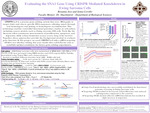
Ewing sarcoma is a pediatric cancer with limited therapeutic options and poor long-term survival. CRISPR–Cas9–mediated gene editing provides a powerful tool for investigating tumor molecular behavior and identifying potential therapeutic targets. In this study, we worked with CRISPR–Cas9 in Ewing sarcoma ES8 cells to evaluate the roles of the transcription factors SNAI1 and SNAI2, both implicated in epithelial–mesenchymal transition and cancer progression. Using guide RNAs targeting each gene, we assessed proliferation, apoptosis, migration, and long-term survival through Incucyte live-cell imaging and colony-formation assays. Knockout of SNAI1 resulted in decreased cell proliferation and reduced migratory capacity compared with controls, suggesting a pro-tumorigenic role in Ewing sarcoma. In contrast, SNAI2 targeting achieved effective mRNA knockdown, but it produced a mild increase in migration without a significant trend. Overall, this work demonstrates successful implementation of CRISPR–Cas9 editing in ES8 cells and highlights differential contributions of SNAI1 and SNAI2 to Ewing sarcoma cell behavior.
Collection
Mechanisms of Disease Lab Reports
Format
Medium
Poster
Size or Duration
1 Page
City
San Antonio, Texas
Creative Commons License

This work is licensed under a Creative Commons Attribution-Share Alike 4.0 International License.
Recommended Citation
Jees, Rosanna; Cerrillo, Sonia; and Shackleford, Terry Jo, "Evaluating the SNA1 Gene Using CRISPR Mediated Knockdown in Ewing Sarcoma Cells" (2025). Mechanisms of Disease. 4.
https://commons.stmarytx.edu/mecofdis/4
Included in
Biology Commons, Cancer Biology Commons, Cell Biology Commons, Research Methods in Life Sciences Commons