


Files
Download Full Text (1.2 MB)
Contributor
Wang, Solomon (Faculty Mentor)
Digital Publisher
Digital Commons at St. Mary's University
Publication Date
Spring 2026
Keywords
Budgeting, Mobile Apps, Household finances, United States households, Financial Literacy, Financial Distress
Description
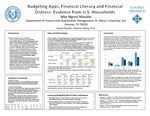
• First, it provides the first large-scale, nationally representative evidence on how budgeting app usage relates to household financial distress in the United States. Contrary to the intended purpose of these tools, we find that app users, especially frequent users, experience significantly higher levels of financial strain. • Second, we show that financial literacy is a critical moderating factor. The adverse association between budgeting apps and financial distress is substantially stronger among low-literacy individuals, highlighting financial literacy as an essential safeguard against harmful fintech outcomes. • Third, we identify behavioral mechanisms through which budgeting apps may exacerbate financial difficulties. App usage is linked to higher self-satisfaction, greater overconfidence, and increased reliance on mobile payments—behaviors associated with impulsive spending and loss of financial control. These mechanisms help explain why budgeting apps may inadvertently intensify financial distress rather than reduce it.
Format
Size
1 poster
City
San Antonio, Texas
Creative Commons License

This work is licensed under a Creative Commons Attribution-NonCommercial-No Derivative Works 4.0 International License.