


Files
Download Full Text (1.9 MB)
Digital Publisher
Digital Commons at St. Mary's University
Publication Date
Spring 2024
Contributor
Ocampo, Juan (Faculty Mentor)
Keywords
Hand injuries, Deformities, Proximal Interphalangeal Joint Flexion Contracture
Description
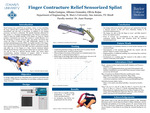
Hand traumas may result from an accident, a burn, or even something far more common like a jammed finger. Due to the pain, the hand is immobilized and this lack of movement, in addition to the healing processes, can lead to a deformity. The specific deformity addressed in this project is a Proximal Interphalangeal Joint Flexion Contracture, which is when the middle knuckles of the fingers are stuck in a flexed position. Contractions can occur after trauma or certain illnesses. It is the shortening of muscles, tendons, skin, and nearby soft tissues that causes the joints to become very stiff. Additionally, injuries to the proximal interphalangeal joint (PIPJ), the middle knuckle of the finger, are one of the most common hand injuries. Flexion contractures are the most common contracture for the PIPJ, and these contractures typically only affect one or two fingers at a time. Current treatment options include physical therapy using dynamic splints that are expensive, bulky, can only be used at a physical therapy facility, and cannot detect overstretching. Another treatment is surgery, which is invasive, expensive, and can lead to scarring and further complications.
Format
Size
1 page
City
San Antonio, Texas
Creative Commons License

This work is licensed under a Creative Commons Attribution-NonCommercial-No Derivative Works 4.0 International License.
Included in
Biomedical Devices and Instrumentation Commons, Other Physiology Commons, Physical Therapy Commons