


Files
Download Full Text (1.4 MB)
Digital Publisher
Digital Commons at St. Mary's University
Publication Date
Spring 2024
Contributor
Segovia, Jesus (Faculty Mentor)
Keywords
Mycoplasma Pneumonia, Bacteria, Respiratory Infections, Community-Acquired Respiratory Distress Syndrome Toxin
Description
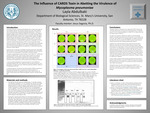
Mycoplasma pneumonia is a human bacterial pathogen known to induce chronic upper and lower respiratory infections. This bacterium commonly causes acute, chronic infections, such as atypical pneumonia, and spreads through droplet transmission (> 5 microns). M. pneumoniae damages cells by attacking the epithelium of the respiratory tract, resulting in epithelium shedding. Infection of the airway tract by M. pneumoniae will usually express itself in people with chronic symptoms such as coughing, dyspnea, diarrhea, and epiphora. With this being said, this bacterium is ambit, meaning that it is versatile in who it affects (children to adults), how it manifests (pneumonia, tracheobronchitis, etc.), and severity (mild to life-threatening). It is speculated that M. pneumoniae is responsible for 4 to 8% of community-acquired bacterial pneumonia (CABP)2 ; however, the generally moderate nature of M. pneumoniae, inherently close disposition to other leading causes of pneumonia, and insufficient point-of-care diagnostic tests to verify microbiological diagnostics lead many M. pneumonia induced infections to go undetected. As a result, the true extent of this bacterium is currently unknown.
In previous years, M. pneumoniae was thought to not produce typical toxins, which further lead to uncertainty as to how this bacterium damaged the epithelium cells of the respiratory tract. However, as of current studies, it is known that M. pneumoniae produces Community-Acquired Respiratory Distress Syndrome Toxin (CARDS TX)1 . CARDS toxin, encoded by the MPN372 gene, binds to specific receptors within the cell, resulting in hyperinflammation, mucus hyperplasia, and other airway injuries associated with M. pneumonia. Overall, M. pneumoniae CARDS TX plays an instrumental role in the transmission process through means of ADP-ribosylation and vacuolating toxin production.
As such, the virulence determinant of M. pneumonia and how it can be inhibited was investigated through the study of the CARDS toxin within Mycoplasma pneumoniae. One main question was explored: How does CARDS toxin expression contribute to virulence of M. Pneumoniae in A549 cells?
To answer this question, A549 lung cells were induced with the CARDS toxin protein and the response of these lung cells to M. pneumoniae was observed. Therefore, we hypothesized that when the A549 lung cells are induced with CARDS toxin they will produce vacuoles and part of the CARDS toxin fragments, D2 and D3, will expel from the cell.
Format
Size
1 page
City
San Antonio, Texas
Creative Commons License

This work is licensed under a Creative Commons Attribution-NonCommercial-No Derivative Works 4.0 International License.
Included in
Bacteriology Commons, Circulatory and Respiratory Physiology Commons, Pathogenic Microbiology Commons