


Files
Download Full Text (1.6 MB)
Contributor
Shackleford, Terry (Faculty Mentor)
Digital Publisher
Digital Commons at St. Mary's University
Publication Date
Spring 2026
Keywords
Ewing sarcoma, Genes, Cancer, Cellular Biology
Description
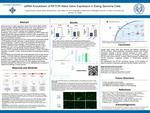
Ewing sarcoma is a highly aggressive cancer that primarily affects children and young adults. Although treatment options exist, many patients do not respond effectively, showing the need for improved targeted therapies¹. RPTOR is a key in mTORC1 complex which regulates cell growth, proliferation, and survival². LY2874455 is a selective pan-FGFR inhibitor that targets growth factor signaling pathways involved in tumor progression³, and FGFR signaling interacts with pathways such as mTOR, making it a potential target for combination therapies. We hypothesized that silencing RPTOR in Ewing sarcoma cells would disrupt mTOR signaling and alter expression of genes linked to cell survival and signaling pathways. To test this, cells were transfected with siRPTOR or siControl, followed by RNA purification, cDNA synthesis, and qRT-PCR analysis of RPTOR, FGFR1, and BRD4 expression normalized to HPRT1. RPTOR expression was significantly reduced confirming effective gene silencing. FGFR1 expression showed minimal change (1.10-fold), while BRD4 expression increased (1.9-fold), showing activation of compensatory signaling pathways. Cell proliferation and apoptosis were further assessed using Incucyte live-cell imaging. LY2874455 treatment reduced proliferation and increased caspase 3/7 activity in control cells, while siRPTOR-treated cells showed reduced apoptotic response. Overall, these findings demonstrate successful RPTOR knockdown and suggest that disruption of mTOR signaling may activate alternative pathways that influence cell survival, highlighting the complexity of targeting this pathway in Ewing sarcoma.
Format
Size
1 poster
City
San Antonio, Texas
Creative Commons License

This work is licensed under a Creative Commons Attribution-NonCommercial-No Derivative Works 4.0 International License.