


Files
Download Full Text (1.3 MB)
Contributor
Shackleford, Terry (Faculty Mentor); St. Mary's University Department of Biological Sciences
Digital Publisher
Digital Commons at St. Mary's University
Publication Date
Spring 2026
Keywords
Ewing sarcoma, Genes, Cancer, Cellular Biology
Description
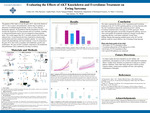
The purpose of this study is to use the gene AKT1, due to the interest in AKT1’s role in cancer cell proliferation, and the drug Everolimus, to determine if combined targeted therapy works as a more efficient therapeutic approach. We hypothesize that the knockdown of AKT1 will increase the sensitivity of Ewing sarcoma cells to Everolimus, resulting in reduced proliferation and/or survival compared to drug treatment alone. This would suggest that AKT1 normally protects cells from drug-induced stress. Ewing Sarcoma has been connected to chromosomal translocations and most common in pediatric patients. It is most often treated with chemotherapy and local treatments. It may be connected to the gene AKT1 due to how it regulates cell metabolism, growth, and proliferation. The gene mTOR is similarly connected to cell metabolism and proliferation, and is inhibited by the drug Everolimus.
Format
Size
1 poster
City
San Antonio, Texas
Creative Commons License

This work is licensed under a Creative Commons Attribution-NonCommercial-No Derivative Works 4.0 International License.