

Files
Download Full Text (2.5 MB)
Publication Date
Spring 2026
Keywords
Geochemical elemental analysis, sharks, shark teeth, evolution
Contributor
Turner, David (Faculty Mentor)
Description
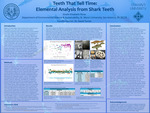
Sharks (Chondrichthyes) have hunted in the oceans for over 400 million years, their teeth leaving history behind, constantly becoming a part of the fossilization process (Worm et al. 2013). Their survival throughout 5 major extinctions is due to their ability to adapt easily with slow metabolism, a wide range of diet, and an efficient physiology. Shark teeth are vital to the hunting and consumption of their prey, making it a point for scientists to study them. Their tooth minerals contain fluorapatite in their enameloid, and dentin in the “root” of the tooth, with extinct species containing dentin and hydroxyapatite in more recent shark species (Lübke et al. 2015). As environmental changes occur, teeth analysis can become prominent in learning how prehistoric and modern shark species differ in their environments. This geochemical elemental analysis will examine the trace element chemistry of 127 shark teeth from geologic eras and geographic locations. The non-destructive analytical technique uses a portable Niton X-Ray fluorescence (XRF) analyzer.
Collection
Culminating Research Experiences
Format
Medium
Poster
Size or Duration
1 page
City
San Antonio, Texas
Creative Commons License

This work is licensed under a Creative Commons Attribution-NonCommercial-No Derivative Works 4.0 International License.
Recommended Citation
Perez, Gisele-Elizabeth, "Teeth that Tell Time: Elemental Analysis from Shark Teeth" (2026). Culminating Research Experiences. 2.
https://commons.stmarytx.edu/culresexp/2
Included in
Aquaculture and Fisheries Commons, Marine Biology Commons, Terrestrial and Aquatic Ecology Commons