

-
Mapping Sensory Landscapes: Distribution and Arrangement of the Anterior Lateral Line System in Texas Catfish
Tatiana K. Flores and Ruben U. Tovar
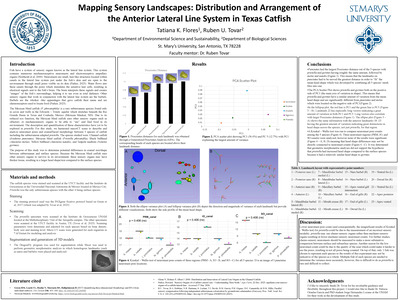
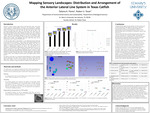
Fish have a system of sensory organs known as the lateral line system. This system contains numerous mechanoreceptive neuromasts and electroreceptive ampullary organs (Northcutt et al, 2000). Neuromasts are small, hair-like structures located within canals in the lateral line system just under the fish’s skin and are open to the environment through small pores visible on its skin (Parker, 2025). Water flows into these canals through the pores which stimulates the sensitive hair cells, resulting in electrical signals sent to the fish’s brain. The brain interprets these signals and creates “images” of the fish’s surroundings, helping it to see even in total darkness. Other sensory organs that work in conjunction with the lateral line system are the barbels. Barbels are the whisker -like appendages that gave catfish their name and are chemoreceptors used to locate food (Parker, 2025). The Mexican blind catfish (P. phreatophila) is a rare subterranean species found only in caves and wells in the Edwards – Trinity aquifer which stretches beneath the Rio Grande Basin in Texas and Coahuila, Mexico (Mexican blindcat, ND). Due to its reduced eye function, the Mexican blind catfish uses other sensory organs such as olfactory or mechanosensory organs to be able to “see” and find food in its environment. The description and quantification of these characteristics have yet to be explored in prietella. For this study, we harnessed microCT scans to describe and analyze neuromast pores and cranial/facial morphology between 5 species of catfish including the subterraneun adapted prietella. The species studied were: Channel catfish (Ictalurus punctatus), Mexican blind catfish (Prietella phreatofila), Black bullhead (Ameiurus melas), Yellow bullhead (Ameiurus natalis), and Tadpole madtom (Noturus gyrinus). The purpose of this study was to determine potential differences in cranial size/shape between subterranean and surface species. Because the Mexican blind catfish uses other sensory organs to survive in its environment, these sensory organs may have thicker tissue, resulting in a larger head shape/size compared to the surface species.
-
Sustainable Mitigation of Microplastic Pollutants Using Native Plant Species
Antonio Martinez
Microplastics (MPs) are defined as small plastic particles that come from the degradation of plastics [Ziani et al. 2023], that hold a regular or irregular shape, ranging from 1μm to 5 mm [Campanale et al. 2025]. This diminutive size makes them virtually impossible to remove once released into the environment[Lee et al. 2023]. Furthermore, biological, chemical, and physical processes break MP's further down in the environment, causing them to exist in nano-level sizes (1nm-1μm) [Lee et al. 2023], further exacerbating their threat to critical habitats. However, recent studies have shown MP contamination expands beyond the natural environment as recent studies revealed the presence of MPs in tap water systems (TWS) worldwide, including treated drinking water, distributed water and household/public tap water [Sun et al. 2024].
As a method of mitigation, enhanced coagulation-flocculation, rapid sand filtration, membrane bioreactors, have been implemented in water filtration systems to remove microplastics, showing a 99% removal rate. However, as these filtration methods are designed to remove biological contaminants and sediment greater than 1um, nano-size microplastics quickly bypass these barriers, inevitably reaching our household taps.
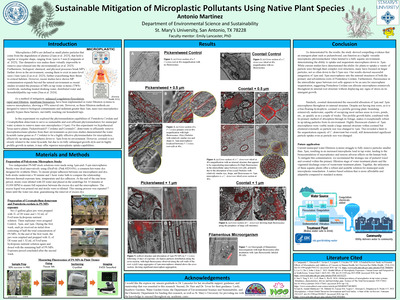
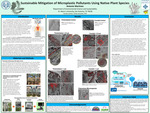
In this experiment we explored the phytoremediation capabilities of Pontederia Cordata and Ceratophyllum demersum to serve as sustainable and cost-efficient phytoremediators for municipal water systems to remove nano-size microplastics (< 1μm). For this experiment we hypothesized Texas native plants; Pickerelweed(P. Cordata) and Coontail(C. demersum) to efficiently remove microplastics/nano-plastics from their environments as previous studies demonstrated the water hyacinth (same genus as P. Cordata) to be a highly effective phytoremediator for microplastics, effectively up taking microspheres down to .5μm from its environment. However, coontail is not closely related to the water hyacinth, but due to its fully submerged growth style and its highly prolific growth in nature, it may offer superior microplastic uptake capabilities.
-
Teeth that Tell Time: Elemental Analysis from Shark Teeth
Gisele-Elizabeth Perez
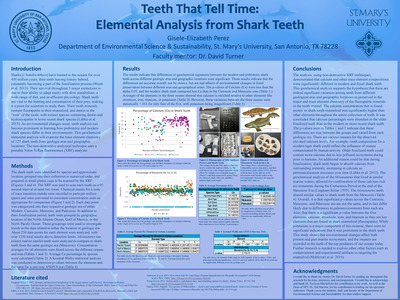
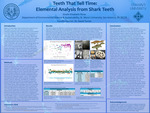
Sharks (Chondrichthyes) have hunted in the oceans for over 400 million years, their teeth leaving history behind, constantly becoming a part of the fossilization process (Worm et al. 2013). Their survival throughout 5 major extinctions is due to their ability to adapt easily with slow metabolism, a wide range of diet, and an efficient physiology. Shark teeth are vital to the hunting and consumption of their prey, making it a point for scientists to study them. Their tooth minerals contain fluorapatite in their enameloid, and dentin in the “root” of the tooth, with extinct species containing dentin and hydroxyapatite in more recent shark species (Lübke et al. 2015). As environmental changes occur, teeth analysis can become prominent in learning how prehistoric and modern shark species differ in their environments. This geochemical elemental analysis will examine the trace element chemistry of 127 shark teeth from geologic eras and geographic locations. The non-destructive analytical technique uses a portable Niton X-Ray fluorescence (XRF) analyzer.
-
"Leaf it to the Trees": Assessing the Cooling Effects of Tree Canopy on Campus Microclimates
Andrea Sophia Realyvasquez
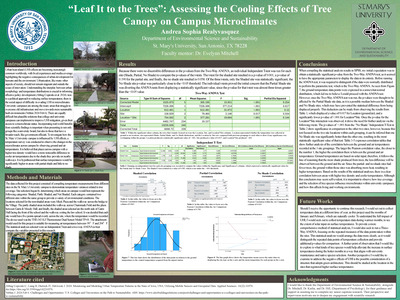
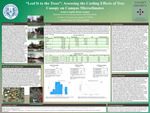
Urban heat island (UHI) effects are becoming increasingly common worldwide, with lived experiences and media coverage highlighting the negative consequences of urban development for humans and the environment. Urbanization, like many other aspects of society, should not remain stagnant and outside the scope of innovation. Understanding the interplay between urban morphology and temperature distributions is crucial in informing effective policy development (AbbegCoproski et al. 2024). tion to a political approach to reducing surface temperatures, there is the social aspect of difficulty in evading UHI in microclimates. University campuses are among the many areas that struggle to overcome old infrastructure and move towards more sustainable built environments (Veblen 2024 Feb 6). There are equally difficult but plausible solutions that college and university campuses can implement to improve UHI mitigation, given their access to a microclimate status. Incorporating real-world benefits from scientific findings is important when presenting to not only groups like a university board, but also to those that have a broader reach, like government officials. To investigate how the St. Mary’s University campus is influenced by UHI effects, a temperature survey was conducted to observe the changes in the microclimates across campus by observing ground and air temperatures. It is believed that places across campus with a higher tree density would have a more noticeable difference in cooler air temperatures due to the shade they provide on nearby walkways. It is hypothesized that surface temperatures would be significantly higher in areas with partial shade and little to no shade.
Printing is not supported at the primary Gallery Thumbnail page. Please first navigate to a specific Image before printing.